Privacy enforcement in the United States is shifting fast. For years, regulators mainly checked whether companies offered an opt-out option. Now they are asking a more practical question:
Does the opt-out actually stop the data sharing?
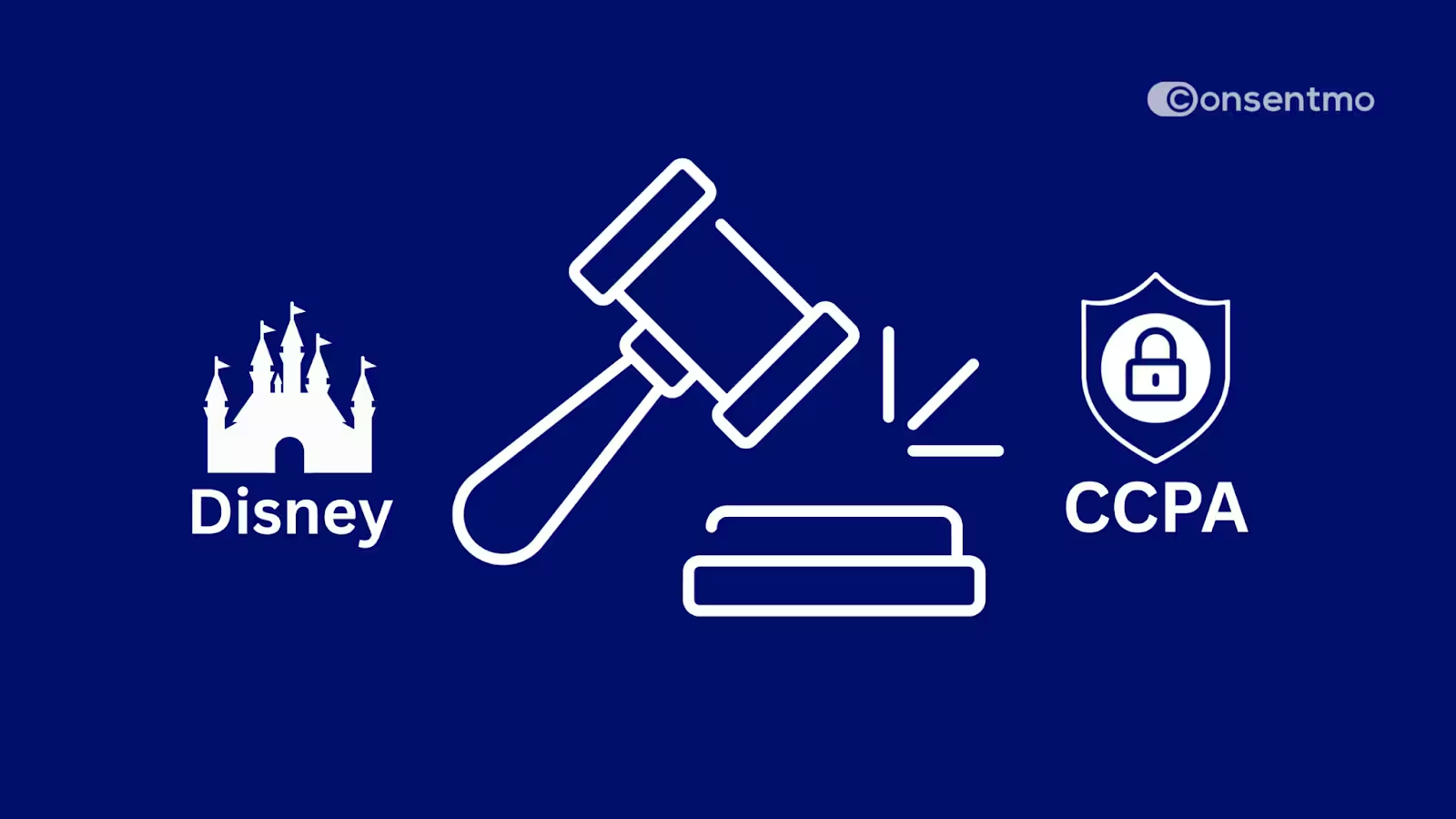
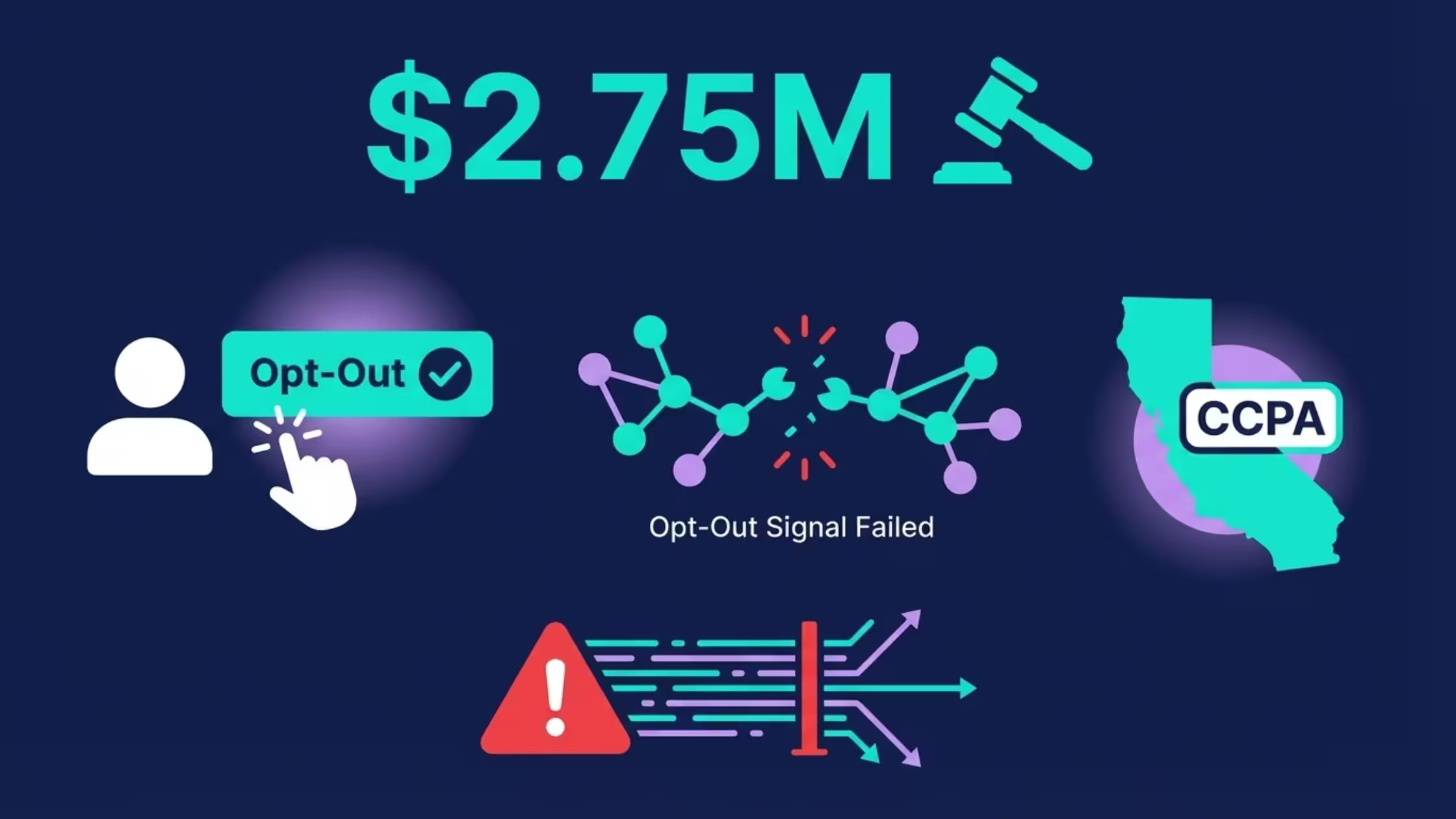
A recent enforcement action involving Disney shows why this matters. The company agreed to pay $2.75 million to resolve claims tied to alleged violations of the California Consumer Privacy Act (CCPA). Regulators argued that when consumers opted out of data sharing, the request did not fully apply across all systems that processed their data.
For Shopify merchants, the takeaway is clear. A "Do Not Sell or Share My Personal Information" request must apply across the entire data ecosystem connected to the store.
If even one tracking system continues sharing data after a user opts out, the business may still face compliance risks.
TL;DR
- The Disney CCPA settlement ($2.75M) focused on opt-outs that did not apply across all systems
- Under CCPA and CPRA, opt-outs must stop the sale or sharing of personal data everywhere it appears
- Partial opt-outs, like blocking cookies but still sharing data through marketing tools, can violate the law
- Businesses must honor Global Privacy Control (GPC) signals automatically
- Shopify stores often struggle because many apps, pixels, and integrations collect customer data
- Tools like Consentmo help merchants apply unified opt-outs, detect GPC signals, and log consent records across their store
What the Disney CCPA Settlement Shows
The California Consumer Privacy Act gives residents the right to tell businesses not to sell or share their personal data. Most companies respond by adding a "Do Not Sell or Share My Personal Information" link somewhere on their website.
But the law requires more than a button.
When a user submits an opt-out request, businesses must make sure the request actually stops the relevant data processing. That means any system that collects, shares, or transfers consumer data must respect the request.
In the Disney case, regulators argued that opt-out choices did not always carry through across different internal systems. Even though a consumer had exercised their rights, some data processing allegedly continued through other channels.
That disconnect is what triggered the enforcement action.
The settlement sends a clear signal to other businesses: privacy compliance is not about surface-level controls. It is about whether those controls actually affect the data behind the scenes.
Why Partial Opt-Outs Often Break Compliance
Most ecommerce stores already provide some form of privacy control. The problem is that these controls often affect only one layer of data collection.
For example, a cookie banner may block certain advertising cookies. But the store might still send data through other tools running on the site, such as analytics scripts, marketing integrations, or attribution platforms.
From the visitor's perspective, they opted out. From a technical perspective, the store only stopped one part of the tracking system.
Another issue appears when customers interact with the store across devices. Someone may opt out while browsing on their laptop, then return later on a mobile phone or through a logged-in account. If the store can identify the same user but still processes their data for advertising, regulators may view the opt-out as incomplete.
Modern ecommerce stacks make this even harder. Shopify merchants often rely on multiple integrations at the same time. Advertising pixels, analytics tools, email marketing systems, and affiliate tracking platforms can all collect data independently. Each one must follow the user's privacy choice.
If even one of those tools ignores the opt-out request, the merchant may still be responsible.
Why Shopify Stores Need Global Opt-Out Controls
Shopify makes it incredibly easy to connect marketing tools and third-party apps. While this flexibility helps merchants grow their business, it also creates complex data flows.
A typical store may send customer data to advertising platforms, analytics tools, email systems, and marketing automation software at the same time. From a privacy law perspective, each of these systems represents a potential data-sharing pathway.
Under CCPA and CPRA, if a consumer opts out of the sale or sharing of their personal data, that choice must apply across all of those pathways.
This is why regulators now emphasize global opt-out enforcement. The user's decision should follow their data wherever it flows.
The Role of Global Privacy Control (GPC)
Another requirement that many businesses overlook is Global Privacy Control, often called GPC.
GPC is a browser-level privacy signal. Instead of clicking opt-out buttons on every website they visit, users can enable a setting in their browser that automatically tells websites they do not want their data sold or shared.

When a website detects this signal, it must treat the user as opted out under CCPA.
That means disabling advertising-related tracking and avoiding data sharing with third-party advertising platforms.
Several enforcement cases have already cited businesses for ignoring GPC signals, which means it is quickly becoming a standard expectation for compliance.
How Consentmo Helps Shopify Stores Handle CCPA Opt-Outs
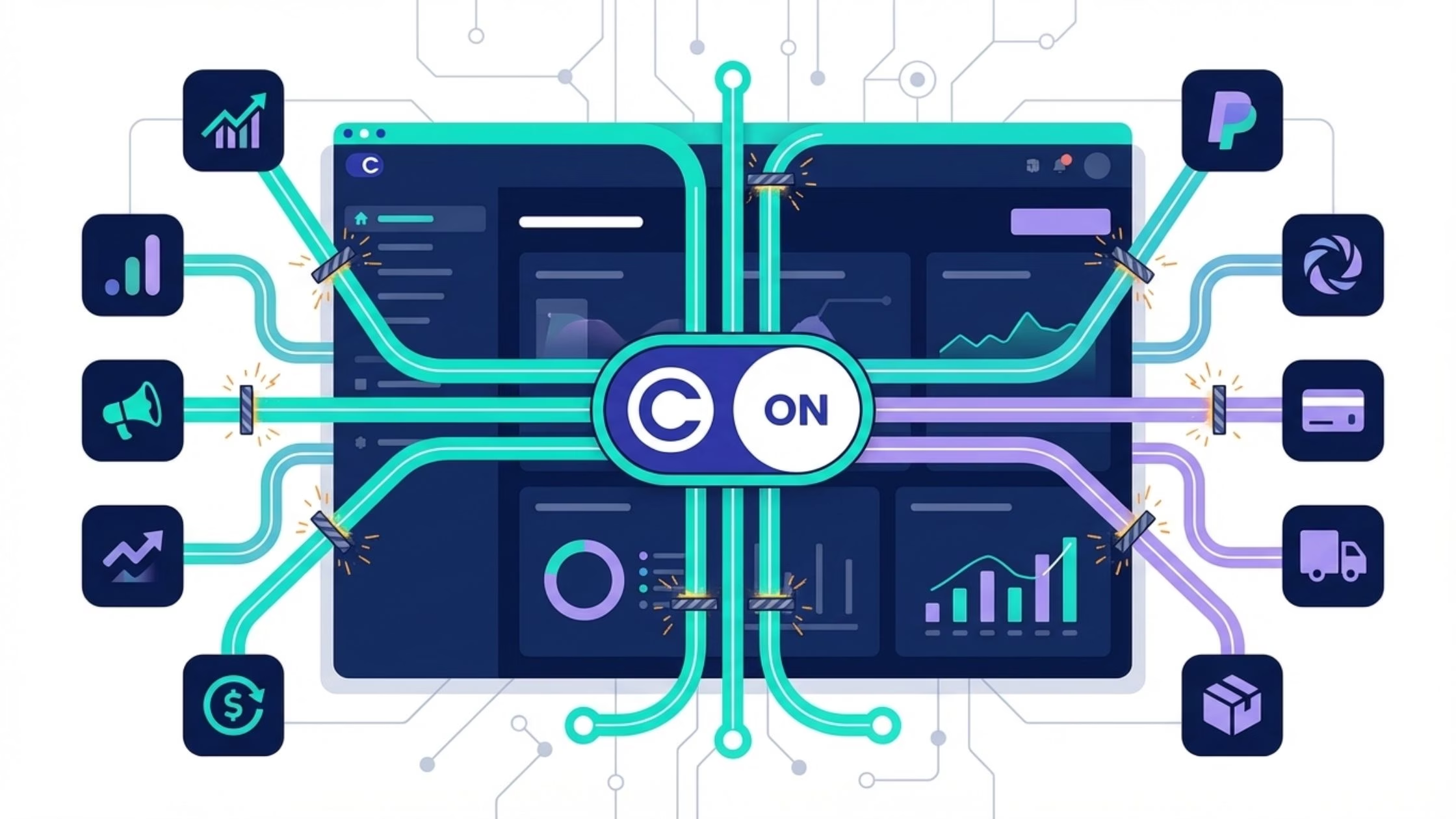
Managing privacy controls across multiple apps and tracking systems can be difficult for Shopify merchants. Consent management platforms simplify this process by coordinating how privacy choices are applied across the entire storefront.
Consentmo is designed specifically for Shopify stores and helps merchants meet CCPA opt-out requirements by connecting user privacy choices with their tracking systems.
With Consentmo, merchants can:
- Detect Global Privacy Control signals automatically
Visitors who send a GPC signal are immediately treated as opted out of data sale or sharing. - Apply store-wide consent management
User privacy choices control how cookies, scripts, and tracking tools behave across the store. - Generate a compliant "Do Not Sell or Share My Personal Information" page
Shopify merchants can create the required page in one click and collect opt-out requests directly. - Maintain detailed consent records
Each consent interaction is logged with timestamps, IP address, and consent state to help merchants prove compliance if needed. - Opt-out confirmation message on banner level
Consentmo focuses on turning every consent interaction into a moment of transparency between businesses and customers. The idea behind the platform is simple: each moment of consent is an opportunity to build trust while staying compliant.
What This Means for Shopify Stores in 2026
Privacy enforcement is becoming more practical and more technical at the same time. Regulators are no longer satisfied with privacy controls that only look correct on the surface.
They want to know whether the underlying systems actually follow the user's choice.
The Disney settlement shows how expensive that gap can become.
For Shopify merchants, the safest approach is to treat privacy controls as part of the store's infrastructure. If a customer opts out of data sharing, that decision must apply across cookies, advertising pixels, analytics tools, and marketing platforms.
Stores that build this system now will be in a much stronger position as privacy enforcement continues to grow.
Frequently Asked Questions
What are CCPA opt-out requirements for Shopify stores?
Under CCPA and CPRA, Shopify stores must allow California consumers to opt out of the sale or sharing of their personal data. This usually requires a visible "Do Not Sell or Share My Personal Information" link and a system that stops advertising-related tracking and data sharing when a user opts out.
What is the Disney CCPA settlement about?
The Disney CCPA settlement involved alleged failures to fully apply consumer opt-out choices across all systems handling personal data. Regulators argued that some data processing continued even after users exercised their rights. The company agreed to pay $2.75 million to resolve the claims.
What is Global Privacy Control (GPC)?
Global Privacy Control is a browser signal that automatically tells websites a user does not want their personal data sold or shared. Businesses that operate under CCPA must treat visitors sending a GPC signal as opted out of data sharing.
How can Shopify merchants manage CCPA opt-outs across multiple apps?
Many Shopify stores rely on several marketing and analytics integrations at the same time. Consent management platforms like Consentmo help coordinate privacy choices across cookies, scripts, and tracking tools so opt-outs apply across the entire storefront.