_converted.avif)
Privacy enforcement across the EU is entering a new phase. With the release of its 2026–2027 Work Programme, the European Data Protection Board (EDPB) has outlined the priorities that will shape how GDPR is applied and enforced over the next two years.
For Shopify merchants, these developments matter directly. Online stores handle customer information across many touchpoints — from checkout forms and marketing tools to analytics and third-party apps. The EDPB’s upcoming initiatives aim to ensure that businesses explain these data practices clearly and manage them responsibly.
In this article, we break down the key priorities of the EDPB’s rules and what they mean in practice for Shopify stores preparing for the next phase of GDPR enforcement.
Key Takeaways
- Transparency matters more than ever. Your privacy policy and data notices should be easy to understand and accessible wherever you collect customer data.
- Shopify stores must clearly list the tools they use. If apps access customer data (email marketing, shipping, loyalty tools), they should be mentioned in your privacy policy.
- Expect more active audits. Regulators may use automated scans and questionnaires to check whether privacy notices and consent tools are implemented correctly.
- Consent banners need to offer a fair choice. “Reject All” should be just as visible as “Accept All,” and checkboxes cannot be pre-selected.
- If you use AI, tell your customers. Chatbots, automated recommendations, or profiling tools should be clearly disclosed in your privacy notice.
- Collect only the data you actually need. Keeping unnecessary or old customer data can create compliance risks, so regular data cleanup is important.
1. The 2026 Spotlight: Transparency (Articles 12, 13, & 14)
In 2026, the EDPB is moving from general oversight to a coordinated "deep dive" into how businesses communicate with users. For Shopify merchants, this means the era of "Copy-Paste Privacy Policies" is officially over.
The Three Pillars of the Audit
The enforcement action focuses on three specific Articles that dictate the who, what, and how of data information:
- Article 12 (The "How"): Information must be concise, transparent, and easy to access. If a customer needs a law degree to understand your data usage, you are failing Article 12.
- Article 13 (Direct Collection): This is important for Shopify merchants. When a customer fills out a checkout form or signs up for a newsletter, you must provide specific info at that exact moment.
- Article 14 (Indirect Collection): If you use third-party tools to "enrich" customer data or buy lead lists, you have a duty to inform those individuals even if they never visited your site directly.
.jpeg)
Why Shopify Stores are "High Risk"
Shopify stores are unique because they are data hubs. In a 2026 sweep, regulators will look for these specific "transparency gaps":
- Third-Party app disclosures: As a merchant, you need to list the specific apps (for upsells, loyalty, or shipping) that access your customer data.
- International Transfers: If a merchant uses a US-based app for email marketing, they must explicitly state that data is leaving the EU and explain the safeguards in place.
- Instant transparency: A quick summary at the point of collection (e.g., a short text under the "Sign Up" button) highlighting the purpose, the controller, and a link to the full policy.
Now is a good time to review your Privacy policy, sign up forms, newsletters, check out extensions and add-ons.
What to Expect During An Audit
As far as information from the EDPB goes, here are some of their stated efforts into enforcing the GDPR articles:
- Standardized Questionnaires: Merchants might receive a mandatory survey from their national DPA asking to prove how they ensure transparency.
- Automated Website Sweeps: DPAs will use "crawlers" to check if privacy notices are present, reachable, and updated.
- The Cost of "Gibberish": Since transparency is a "Core Principle" of the GDPR, violations in 2026 are expected to carry higher-tier fines than simple administrative errors.
Taking the time to review these areas now can significantly reduce compliance risk ahead of potential audits. More importantly, transparent data practices build trust with your customers which is just as valuable as compliance itself.
4 Key Pillars of the EDPB's 2026-2027 Work Programme
The EDPB’s 2026–2027 Work Programme is a clear signal that the "grace period" for digital businesses is over. For Shopify merchants, the focus has shifted from high-level theory to practical, day-to-day enforcement. Here is a deeper look at the four pillars that will define the regulatory landscape for the next two years.
%2520(1).jpeg)
Pillar 1: Promoting Compliance
The EDPB is moving away from just fines and warnings and toward becoming a "compliance partner" for businesses. Recognizing that the GDPR can be a maze for small-to-medium enterprises (SMEs), they are prioritizing the creation of practical tools like templates, checklists, and "how-to" guides designed for non-experts.
However, this "help" comes with stricter definitions. They are tackling the "grey areas" of modern e-commerce - specifically "Consent or Pay" models and the topic of anonymization vs. pseudonymization.
For a Shopify store, this means the Board will soon provide a definitive answer on whether you can offer discounts in exchange for data tracking. Additionally, new guidelines on children’s data will force any store selling to minors to adopt "privacy by default" settings, moving beyond simple age-gates.
Pillar 2: Faster Enforcement
One of the biggest frustrations for merchants and consumers alike has been the "fragmented" nature of enforcement - where a complaint in one EU country might take years to resolve while another is handled in weeks.
The recently adopted Regulation on GDPR now streamlines how different Data Protection Authorities (DPAs) work together on cross-border cases.
For a Shopify merchant operating across multiple EU markets, this means a single complaint can trigger a much faster, more coordinated response from multiple authorities. The "wait and see" approach to legal disputes is being replaced by a much more efficient, high-speed enforcement.
Pillar 3: The AI Landscape
As Shopify stores increasingly integrate AI-driven chatbots, personalized marketing, and automated product descriptions, the EDPB is calling for a "human-centric" approach. This pillar focuses on the connection between the GDPR and the new AI Act.
The Board is proactively developing guidelines on Generative AI and data scraping, ensuring that the data used to train or fuel these models is collected legally.
If you are using AI to profile customers or predict buying habits, 2026 may bring the specific rules how to use this safely and legally.
Pillar 4: Safe Global Data Transfer
For the international Shopify merchant, Pillar 4 is the most critical. The EDPB is doubling down on international data transfer mechanisms. As data flows between the EU and third countries (like the US, UK, or Canada) the Board wants to ensure those transfers remain safe and consistent with EU standards.
They are focusing on providing clearer guidance on the practical implementation of transfer tools. For example, if you are using a US-based app for your email marketing or fulfillment, how to make sure the data of your EU customers remains protected to the same high standard as if it never left the continent.
2026 Compliance Checklist for Shopify Merchants
.jpeg)
1. Audit your Privacy Policy
- "Plain language" rule of Article 12: Can a customer find who you are, what you collect, and how to delete their data in under two minutes? If not, the policy is likely non-compliant.
- Layer 1 (Snapshot): Use a high-level summary at the footer of your site or during signup that covers who is the controller, what is the main purpose, who gets the data (third-party apps), and what are the user's rights.
- Layer 2 (Deep Dive): This is your full policy. For 2026, ensure you explicitly name categories of third-party apps (e.g., "Email Marketing," "Fulfillment Partners") rather than just saying "service providers."
2. Review "Consent" Checkboxes on your Cookie Banner
The EDPB’s 2026 focus on "harmonization" means they are going after inconsistent consent banners across different EU countries.
- No Pre-ticked Boxes: This is a classic trap. Whether it’s for a newsletter or a "save my info for next time" feature, the box must be empty. Here is where to check this in your Consentmo admin:
.jpeg)
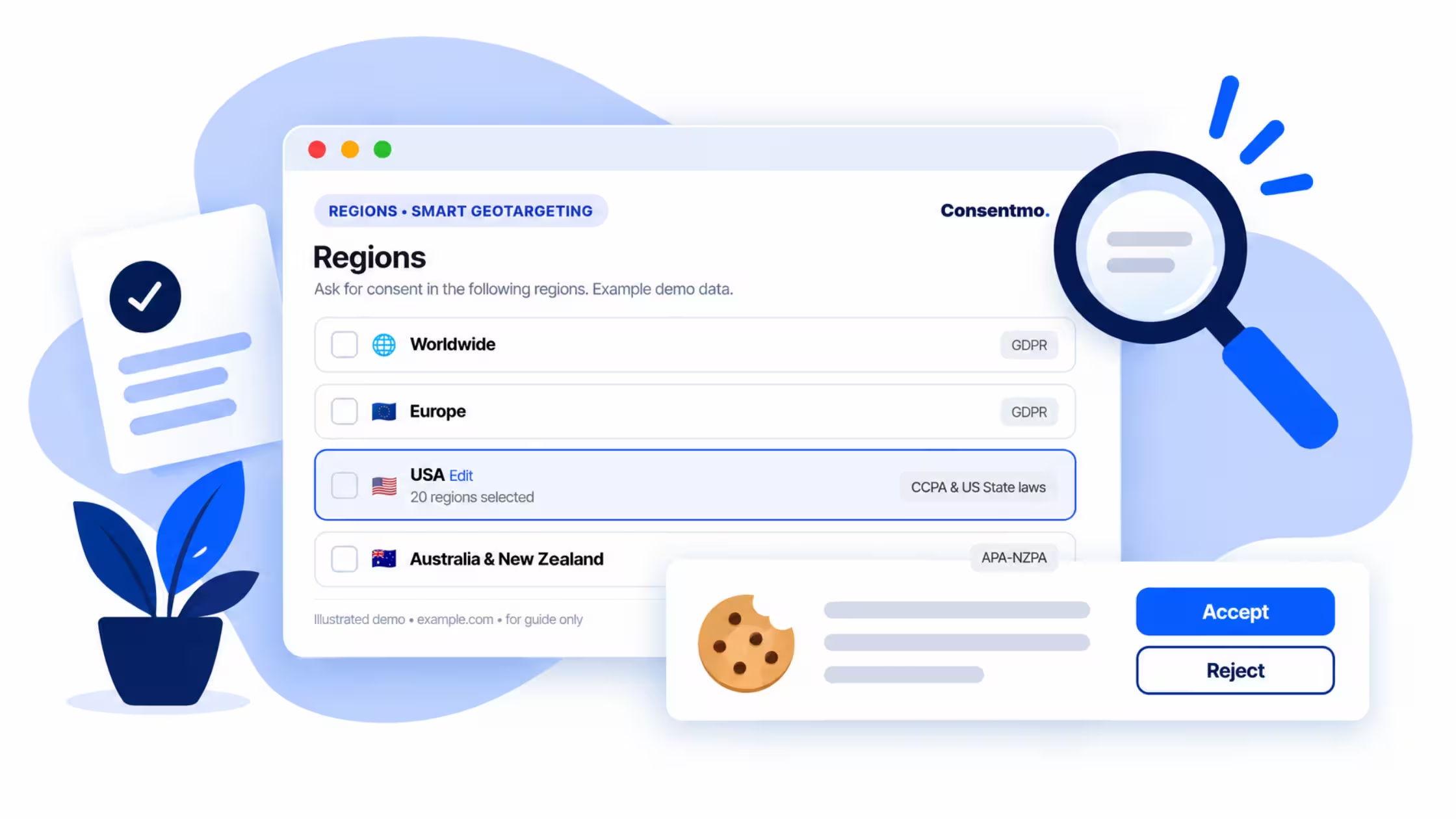
- Fair Choice: If you use a cookie banner, the "Reject All" button must be as prominent and easy to click as the "Accept All" button. Example of a compliant Consentmo banner above!
3. AI Transparency: The "Bot Disclosure" Rule
With the interplay between the AI Act and the GDPR becoming a major focus in 2026.
- Identify the AI: If you use an AI chatbot for customer support or "AI-generated product recommendations," you must disclose this. Customers have a right to know they are interacting with an algorithm, not a human.
- Explain the Logic: If you use automated tools to offer different prices or "personalized" shipping rates based on customer profiles (profiling), you must explain the "logic involved" in your privacy notice. 2026 enforcement will prioritize the "human-centric" approach - customers should never feel "tricked" by an algorithm.
4. Data Minimization: Stopping the "Data Hoarding"
One of the easiest ways for a Shopify store to get flagged is by keeping data they no longer need.
- The "Purpose Limitation" Check: If you collected an email address for a one-time shipping notification three years ago, and that customer hasn't returned, you shouldn't still be "hoarding" that data for marketing.
- Set Expiration Dates: 2026 audits will look for Retention Schedules. Merchants should have a clear rule: "We delete inactive customer data after X years."
- Minimalism as a Feature: Don’t ask for birthdays, genders, or phone numbers unless they are strictly necessary for the transaction. In 2026, every extra data point you collect is a liability, not an asset.
Conclusion
The GDPR landscape in 2026 is becoming more practical and enforcement-driven. Regulators are no longer focusing only on theory — they are looking at how privacy actually works inside real businesses.
For Shopify merchants, this means clearer privacy notices, fair consent choices, responsible use of AI, and smarter data practices will become everyday requirements, not optional improvements. The good news is that by reviewing your policies, banners, and data collection points now, you can stay ahead of audits while also building stronger trust with your customers.
If you want an easier way to manage consent, keep your cookie banner compliant, and stay prepared for evolving GDPR requirements, explore the Consentmo app on the Shopify App Store and see how it can help simplify privacy compliance for your store.