The EU just announced one of the biggest shifts in data rules since the GDPR. It’s called the Digital Omnibus, and one of its goals is to fix something merchants and shoppers complain about every day:
Too many cookie banners.
Instead of asking users for consent on every website, the EU wants browsers and operating systems to let people save their preferences once - and let websites read that state automatically.
Sounds neat. But the obvious question is:
Does this replace cookie banner apps like Consentmo? Short answer: No. It actually makes our role bigger.
Here’s what Shopify merchants need to know.
Key Takeaways
- The EU wants browsers/OS to store users’ consent choices so shoppers don’t see popups on every website.
- This does not remove the need for consent tools - merchants still need region logic, logs, script blocking, DSAR pages, and integrations with Google/Meta/TCF/etc.
- Browsers will provide a signal. Consentmo handles the compliance workflow.
- Preference centers will matter even more as sync, overrides, and region rules get layered on top.
- This rollout will take years - browsers still need standards, adoption, and enforcement.
- Consentmo already acts as the “translation layer” between user preferences and all ad/analytics platforms, so we’re well-positioned.
Why the Digital Omnibus Is a Big Deal (But Not a Threat)
1. Cookie banners won’t disappear
Browser-level consent sounds futuristic, but it only solves one problem: storing and passing the user’s choice.
That’s it.
Merchants still need:
- region-specific compliance (GDPR, CCPA/CPRA, LGPD, APPI, etc.)
- detailed consent logs for audits
- script blocking
- DSAR pages
- Google Consent Mode v2
- TCF 2.2 for EU advertising
- Amazon Ads + Microsoft integrations
- Shopify ecosystem compatibility (Themes, Checkout Extensibility, Hydrogen)
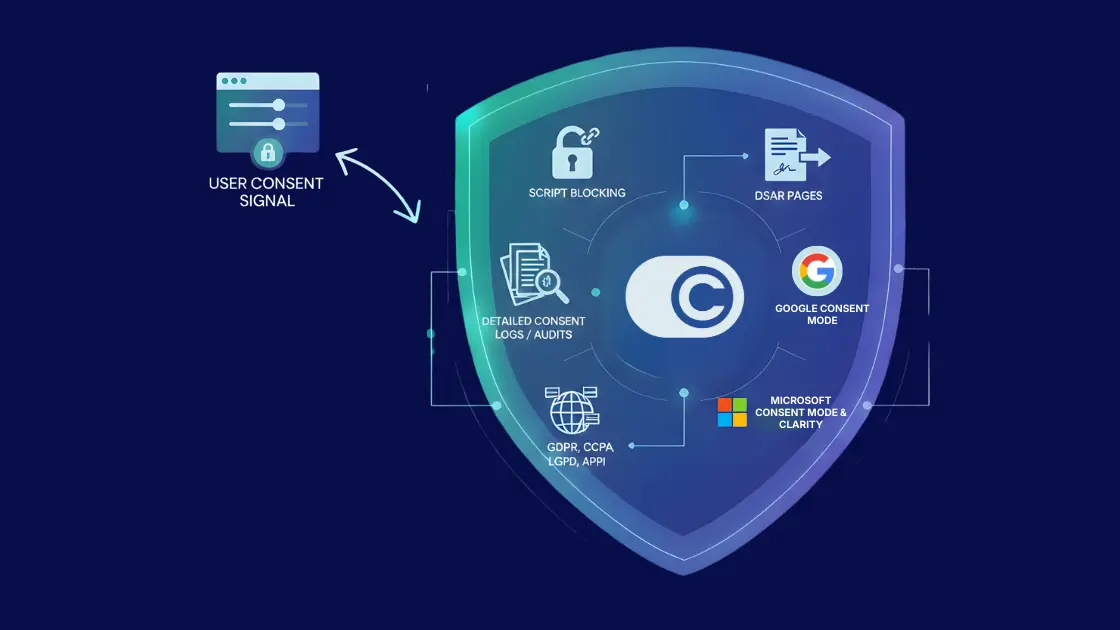
Browsers won’t handle any of these. They can’t - because compliance depends on the merchant’s use of data, partners, ad tools, and tracking stack.
So even in this “central consent” future, a CMP like Consentmo remains the compliance engine behind the scenes.
2. Someone still needs to translate the signal
Imagine a browser sends this message to the website: “This user doesn’t want marketing cookies.”
Great - but now what?
A store has to:
- block Meta Pixel
- adjust Google’s Consent Mode parameters
- hold back TikTok, Pinterest, Amazon Ads, UET
- update the Shopify Customer Events API
- log that choice
- show a preferences option for later updates
- trigger DSAR/opt-out logic if needed
Browser APIs don’t do any of that.
Consentmo already does - for Google, Meta, Microsoft, TCF vendors, Amazon Ads, and every custom script a merchant loads.
A browser-level signal becomes just one more signal we translate into real compliance actions.
3. Merchants won’t risk relying on browsers alone
Ask any Shopify merchant this simple question: “If the browser makes a mistake, who pays the fine?”
That’s why relying solely on Chrome, Safari, or Edge to get compliance right is a gamble most businesses won’t take.
Merchants still need:
- audits
- stored consent records (consent logs)
- visible proof of compliance
- a preferences center
- versioned banner texts
- region-based enforcement
- DSAR handling
If a regulator comes knocking, “Chrome said it was fine” won’t be a valid excuse.
Consentmo gives merchants a defensible compliance setup, not just a banner.
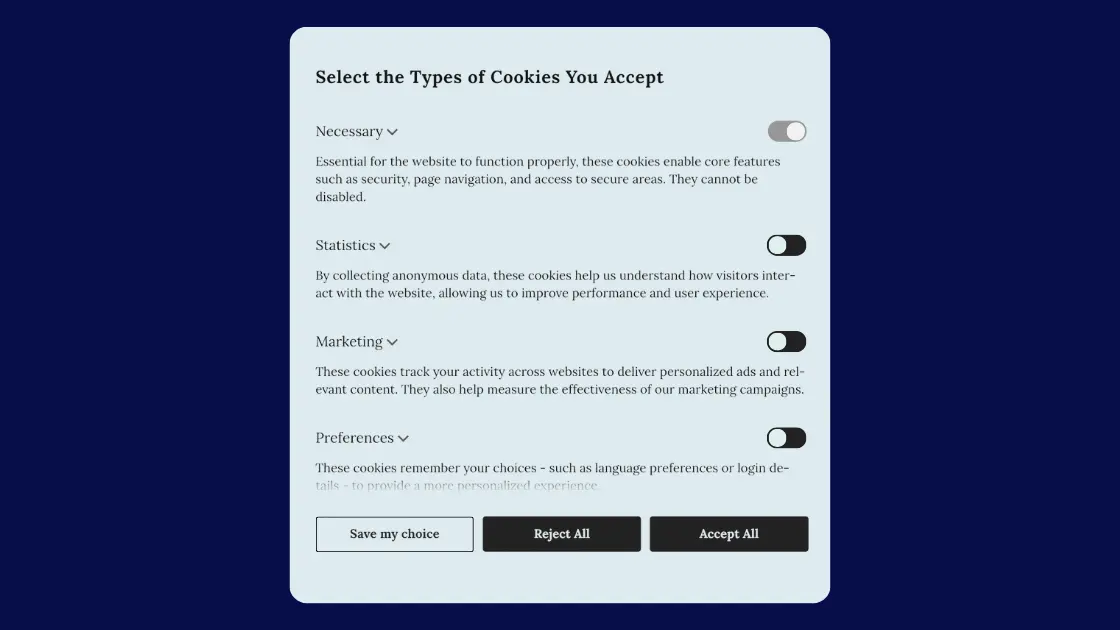
4. Preference centers become more important
If browsers start storing user preferences globally, merchants will expect:
- syncing between browser state and site state
- overrides for legal reasons (e.g., when US and EU rules differ)
- a clear interface for editing preferences
- logic to handle multiple laws at once
- role-specific behavior for checkout, accounts, and apps
Consentmo already has a full Preferences Popup and the infrastructure around it.
This update makes preference infrastructure more, not less, important.
5. Don’t expect this to go live in 2025
The EU announcement is big, but turning it into reality requires:
- agreement across all major browsers
- technical standards
- legal compatibility with GDPR + ePrivacy
- merchant adoption
- testing across thousands of platforms
- coordination with Google, Meta, Shopify, ad tech, and CMPs
This is a multi-year rollout. Think 2026–2028 for broad support.
Merchants still need a banner today to comply with:
- GDPR
- ePrivacy
- Google Consent Mode v2
- CPRA
- TCF 2.2
- Amazon Ads policies
- Microsoft requirements
- Shopify policies
Nothing changes overnight.
6. CMPs who don’t adapt will struggle
The Digital Omnibus is great for users - fewer annoying popups. But it will expose which CMPs rely on the “banner popups = product” model.
Consentmo’s value has never been the banner itself.
It’s the compliance layer behind it:
- Smart Geotargeting
- Consent Logs
- DSAR Pages
- Script Blocking
- Shopify Customer Events support
- Google, Meta, TikTok, Microsoft, Amazon Ads integrations
- TCF 2.2
- Native Mobile Banner
- Accessibility Widget
- Region overrides
These don’t go away. If anything, they become the core of consent management in the “central settings” future.
How Consentmo Adds Value on Top of Browser-Level Consent
Here’s where our positioning becomes even stronger.
✔ We’re already the “translation engine”
Consentmo turns user choices into:
- correct Google Consent Mode parameters
- correct Meta data-processing options
- correct Microsoft UET consent states
- correct Amazon Ads signals
- blocked/allowed scripts
- logs and audit trails
- region-based behavior
Browser preferences slot neatly into this existing workflow.
✔ We already support multi-signal consent
We deal with:
- GCM v2
- TCF strings
- Shopify Consent API
- Browser privacy sandbox
- Server-side tracking flows
A browser signal is just one more input.
✔ Your Consent Records Still Live in the CMP, Not the Browser
When regulators ask:
“Show me proof that you collected valid consent.”
Consentmo - not the browser - provides:
- timestamp
- region
- banner version
- user decision
- vendor purposes
- audit logs
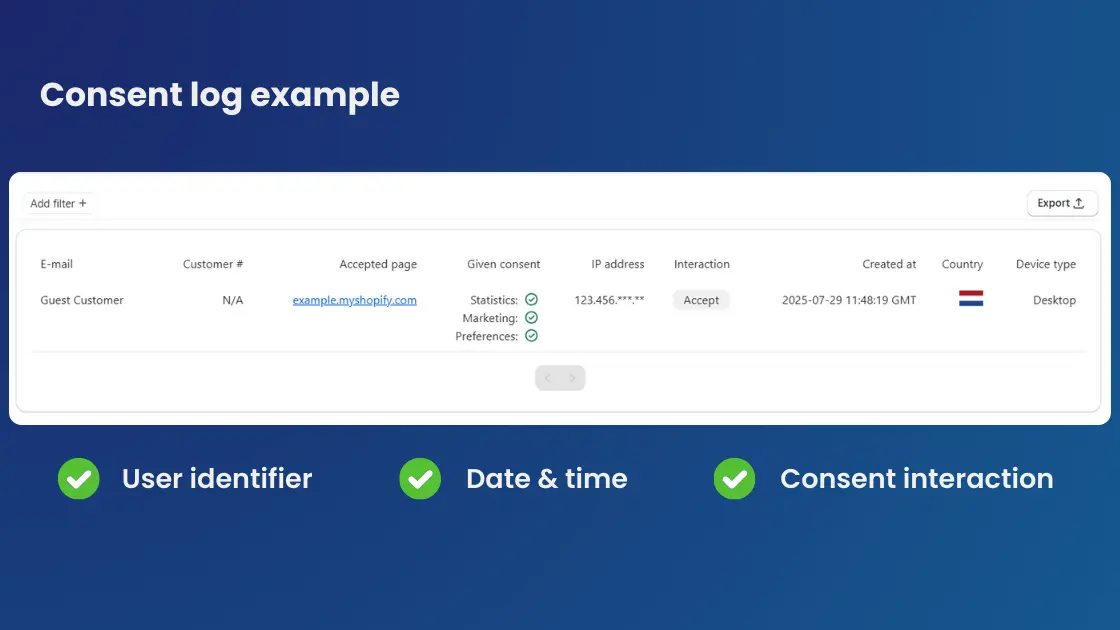
A browser store doesn’t provide legally admissible evidence.
✔ We help merchants everywhere (not just the EU)
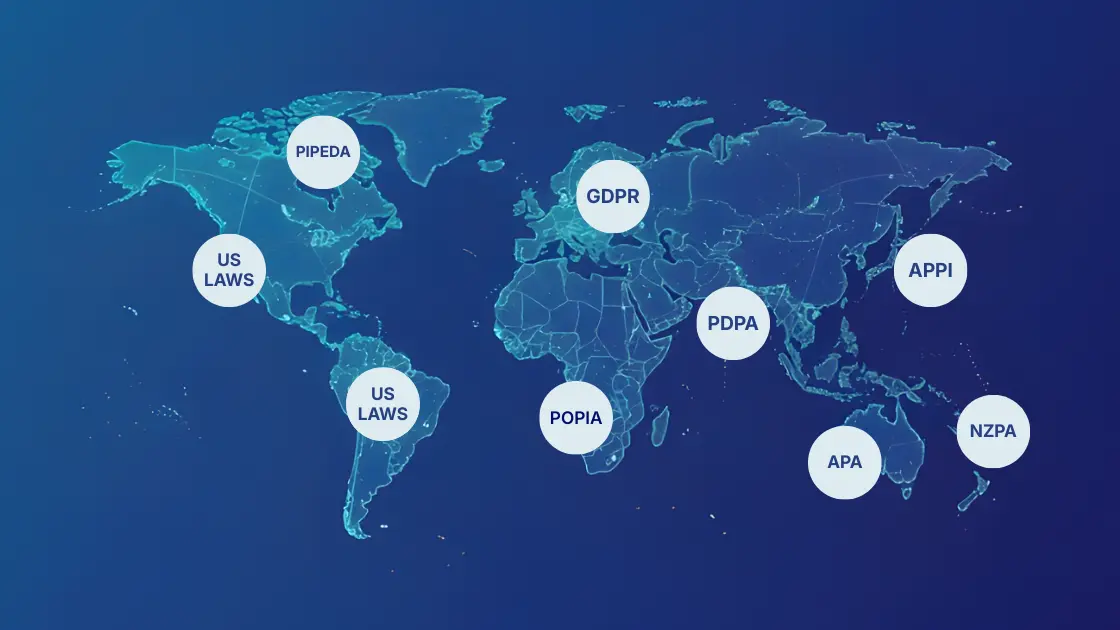
The Digital Omnibus covers EU privacy experience. Consentmo covers:
- CCPA/CPRA
- GDPR
- LGPD
- APPI
- PIPEDA
- PDPA (Thailand)
- South Africa POPIA
- Australia
- Brazil
- UAE
- and more
Browsers won’t solve that complexity.
So is the Digital Omnibus good or bad for CMPs?
It’s good. Extremely good.
This update tackles what everyone’s tired of - constant cookie banners - while making the compliance layer behind the scenes even more important.
The CMPs that will stay relevant are the ones that can read browser-level consent signals, connect the dots between multiple privacy laws, and work cleanly with Google, Meta, Microsoft, Amazon Ads, and whatever comes next.
They’ll need to give merchants real logs they can show during audits, a reliable preference center, DSAR tools, region logic, and the kind of flexibility that lets stores adapt as rules keep shifting.
That’s exactly how Consentmo is built.
Final Thoughts: This Is a Step in the Right Direction
Cookie banners aren’t disappearing - they’re maturing.
The Digital Omnibus moves the internet toward a smoother experience: fewer interruptions, clearer choices, more predictable behavior, and a simpler way for people to manage their privacy. At the same time, the bar for apps like ours gets higher, and that’s a good thing.
For Shopify merchants, nothing changes today. You still need a banner, DSAR pages, accurate logs, and proper consent signals flowing to Google, Meta, TikTok, Amazon Ads, and every other platform your store relies on.
But the direction is clear: we’re heading toward cleaner, smarter consent.
And Consentmo is in the ideal position to power that next phase.


.png)