If you run a Shopify store, you may have noticed something quietly shift under the hood in late May 2026. Routes like /llms.txt and /llms-full.txt - which merchants and developers had been customizing for AI crawler visibility - stopped working as expected. No big announcement, no advance warning in the changelog. Just a silent redirect to a new file: /agents.md.
Here's what actually happened, why it matters, and what you need to do about it.
Key Takeaways
/agents.mdis now Shopify's primary AI discovery file. Both/llms.txtand/llms-full.txtredirect to it by default as of May 2026.- Previous redirect workarounds no longer work. If you had custom
llms.txtcontent set up via URL redirects or app proxies, you need to migrate that content to a Liquid template. - Customization is done via theme templates. Add
templates/agents.md.liquid,templates/llms.txt.liquid, ortemplates/llms-full.txt.liquidin your theme's code editor. - The fallback chain matters. Missing templates fall back to
agents.md, then to Shopify's generated default — so at minimum, customizeagents.md.liquidto maintain control. - Headless stores and theme-switching are edge cases to watch. The theme-layer approach has real limitations for non-standard setups.
- This is part of a broader Shopify push into agentic commerce. Expect more changes in this space as AI shopping assistants become a bigger part of the commerce ecosystem.
What Are /llms.txt, /llms-full.txt, and /agents.md?
These are plain-text files served at the root of your storefront, similar in concept to robots.txt. Their purpose is to describe your store's content to AI systems — large language models (LLMs), AI shopping assistants, and agentic browsers that crawl the web on behalf of users.
The llms.txt format gained traction as a community-driven standard for helping AI tools understand what a site is about, what products it sells, and how its content is structured. For Shopify merchants, having a well-crafted llms.txt had become a real SEO and discoverability lever, particularly as AI-powered search and shopping experiences started to mature.
agents.md is Shopify's own answer to this need. It functions as the primary storefront discovery file for agentic and AI-driven experiences within the Shopify ecosystem.
What Changed and When
On or around May 20, 2026, Shopify made /agents.md the canonical AI discovery file for all storefronts. The platform now natively serves this file by default, and both /llms.txt and /llms-full.txt redirect to it.
The practical impact was immediate and disruptive for developers and app builders:
- Existing customizations broke. Merchants who had set up custom
llms.txtcontent via URL redirects or app proxies found their overrides silently ignored. The redirect rules still appeared in the Shopify admin, but Shopify's platform-level routing was taking precedence. - No prior changelog notice. The community forum lit up with frustration — not just about the change itself, but about the lack of communication. Several developers only found out because they were actively monitoring their stores' AI files for changes.
- App integrations went down overnight. SEO and LLM-optimization apps that had built features around
/llms.txtand/llms-full.txtwere suddenly serving broken or stripped-back content to crawlers.
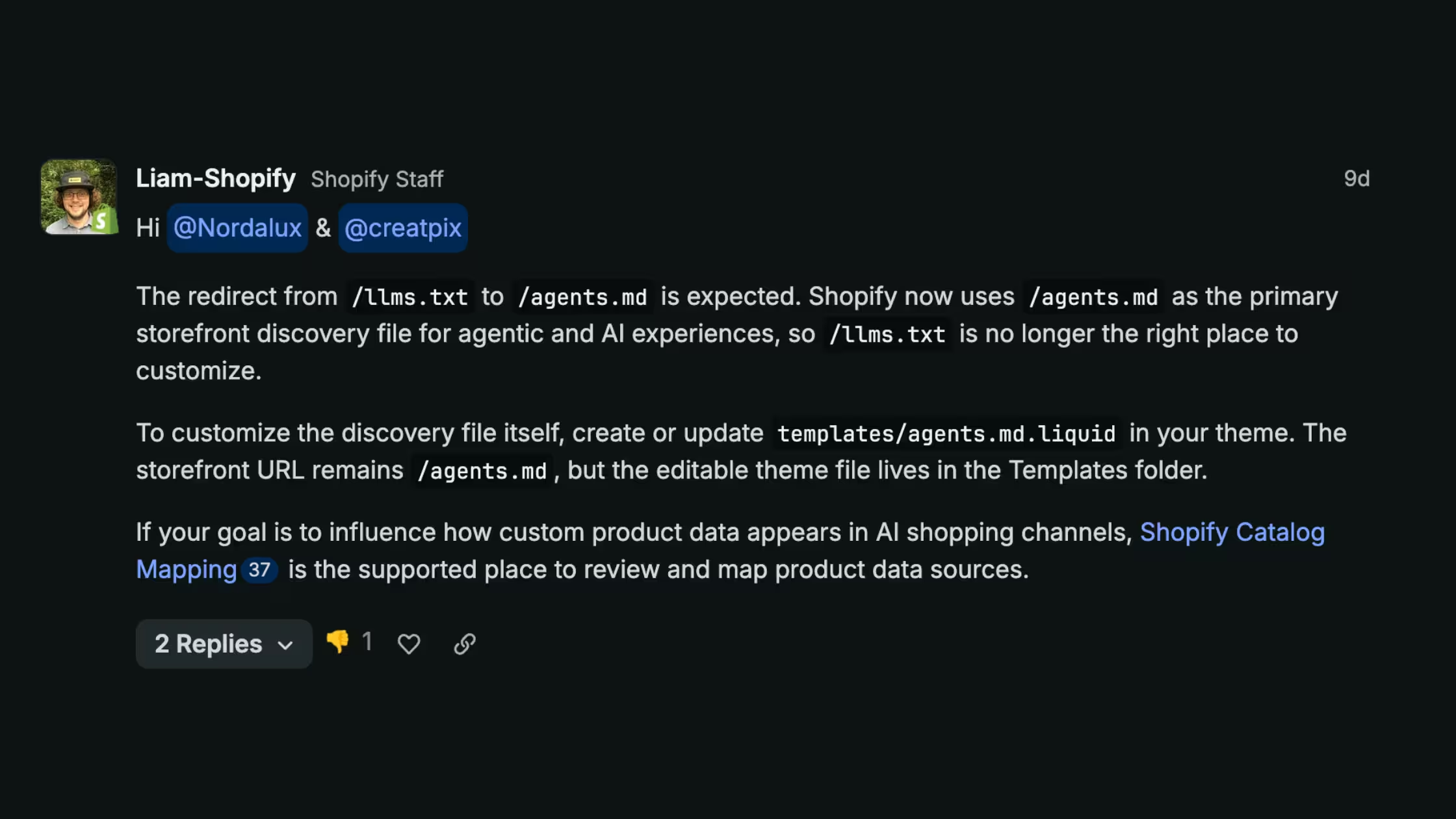
A Shopify team member eventually confirmed on the community forum that the redirect from /llms.txt to /agents.md is expected behavior. The official position: /agents.md is now the right place to customize your store's AI discoverability, and /llms.txt is no longer the supported customization point.
How to Customize Your AI Discovery Files
The good news: Shopify does give you control over all three paths through Liquid templates. Here's how it works.
Navigate to Online Store > Themes > Edit code and add the relevant template files:
If a template file is missing for a given path, Shopify falls back first to your agents.md template, then to the platform-generated default.
This approach mirrors how robots.txt customization works in Shopify themes, which is a familiar pattern for most theme developers. The key change is that any customization you want to persist across paths now needs to live in templates/agents.md.liquid as the primary source.
If your goal is shaping how your product data surfaces in AI shopping channels specifically, Shopify points to Shopify Catalog Mapping as the supported mechanism for reviewing and mapping product data sources.
The Community Reaction: Legitimate Concerns Worth Hearing
The developer community's response has been measured but pointed. A few themes worth noting:
The theme-layer limitation. Tying a platform-level agent discovery file to a theme template means it gets wiped on a theme switch and doesn't work for headless stores. For many merchants, this is a meaningful architectural concern, not just a complaint.
The Google Lighthouse angle. At least one developer raised the fact that Google recently included llms.txt in its Lighthouse agentic browsing scoring. That makes the decision to redirect /llms.txt away from its own content worth scrutinizing, particularly for stores optimizing for AI-driven search visibility.
The lack of notice. Multiple developers echoed the same frustration: overnight changes to platform behavior, without any changelog entry, create real operational problems for apps and agencies managing multiple client stores. The community has asked Shopify to at least restore /llms.txt and /llms-full.txt as independent paths when the corresponding .liquid templates exist.
Shopify's internal team appears to be listening. Conversations are ongoing, and it wouldn't be surprising to see some of these concerns addressed in a future update.
Stay Ahead of What's Changing in Commerce
Shopify's shift to /agents.md is just one piece of a much bigger story: the rise of agentic commerce and what it means for merchants, developers, and compliance teams alike.
If this update caught your attention, these posts go deeper into the themes behind it:
- Navigating Privacy Compliance in the Age of Agentic Commerce — how AI-driven shopping is reshaping what compliance actually requires
- Best 10 AI Agents & AI Chatbots for Shopify (GDPR-Friendly Options) — a practical look at AI tools you can use without running into privacy issues
- Shopify's AI Tools & Recommendations vs. Privacy Laws — where Shopify's native AI features sit against GDPR, CCPA, and beyond
We track Shopify's changelog, developer forums, and the regulatory shifts shaping ecommerce so you always know what's coming before it affects your store. Bookmark the Consentmo blog for ongoing coverage.


_converted.avif)