The clock is ticking. If your Shopify store uses AI-powered product recommendations, personalized search, chatbots, or dynamic pricing to reach European customers, a set of transparency obligations under the EU AI Act is moving from theory into enforceable reality this summer. With key provisions and Commission guidance landing in August 2026, now is the moment to understand where your store sits on the risk spectrum - and what "explainable AI" actually requires of a merchant, not just a hyperscaler.
This isn't legal advice, but it is a practical, forward-looking map of what's coming and how to get ahead of it.
Why This Matters to Shopify Sellers Specifically
There's a common misconception that the EU AI Act targets only companies building AI models - the OpenAIs and Googles of the world. In reality, the Act uses a broad definition of "deployer": any natural or legal person using an AI system in a professional capacity. If you've installed an app that recommends "Customers also bought…" or uses machine learning to rank search results, you are almost certainly a deployer.
The territorial scope makes this unavoidable for many merchants. The Act applies whenever an AI system's output is used within the EU - regardless of where your business is registered. A Shopify store in Austin selling to customers in Amsterdam is squarely in scope.
The good news: obligations scale with risk. Most e-commerce personalization tools fall into lighter-touch categories. The bad news: "lighter touch" is not "no touch," and documentation is now the price of admission.
Understanding the Risk Tiers
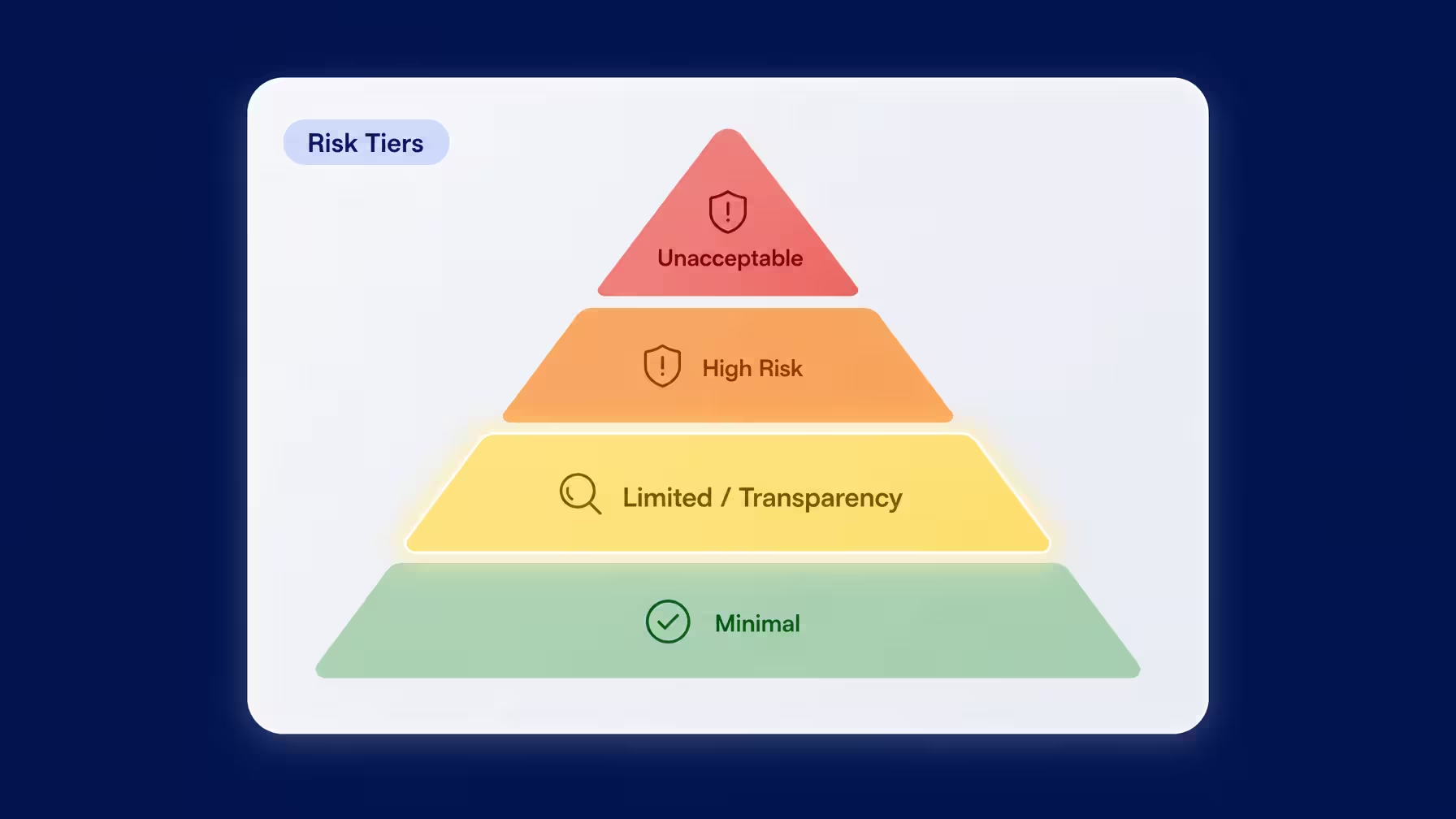
The AI Act sorts systems into four tiers. Here's how typical Shopify tools map onto them.
For the overwhelming majority of sellers, the action lives in the Limited / Transparency tier. But two edge cases deserve caution:
- Dark patterns and manipulation. Personalization that deliberately exploits psychological vulnerabilities - say, aggressively targeting users flagged as impulsive or financially stressed - can slide toward the "unacceptable" tier. Aggressive urgency tactics powered by behavioral AI are a genuine risk zone.
- Emotion recognition or biometric categorization. If any app infers mood, age brackets, or demographics from images or video to personalize offers, you may face high-risk obligations.
Takeaway: Audit your app stack now. For each AI-enabled app, ask the vendor in writing: What tier does this fall under, and what documentation do you provide?
What "Transparency" Actually Requires
The transparency tier is refreshingly concrete compared to the heavier high-risk regime. The core obligations that matter to Shopify sellers:
1. Tell people they're interacting with AI
When a customer chats with an AI assistant, they must be informed it's a machine - clearly and at the first point of interaction. No burying it in a footer.
2. Label AI-generated content
Product descriptions, marketing images, or review summaries generated by AI should be disclosed as such where it isn't already obvious. This is where "AI-generated" badges are becoming standard practice.
3. Explain automated decision-making (ADMT)
This is the big one for personalization. Where AI meaningfully shapes what a customer sees - and especially where it intersects with GDPR Article 22 on automated decisions - customers have a right to meaningful information about the logic involved. In plain terms: you should be able to explain, in accessible language, why your store shows a given customer certain products or prices.
4. Honor and document preferences
Transparency without control is hollow. Customers increasingly have the right to opt out of AI-driven profiling and personalization. You need a mechanism to (a) capture that preference and (b) prove you honored it.
The GDPR Overlap: Where AI Meets Consent
Here's what many merchants miss: the AI Act doesn't replace GDPR - it layers on top of it. AI personalization typically relies on processing personal data (browsing history, purchase patterns, location). That processing already needed a lawful basis and, in most cases, consent.
The AI Act raises the stakes by adding a transparency and explainability dimension to that same processing. So a compliant setup now needs to:
- Obtain valid consent for AI-driven profiling (GDPR).
- Disclose the use of AI at the point of interaction (AI Act).
- Explain the logic behind automated decisions (both).
- Record and enforce the customer's choices (both).
This convergence is precisely where preference-management infrastructure becomes essential - not as a nice-to-have, but as your evidence trail.
What to Disclose in Your Store's Privacy Policy About AI
Your Privacy Policy is the single most important document for demonstrating good-faith compliance - it's where both regulators and customers look first. Update it to include a dedicated "How We Use Artificial Intelligence" section. At a minimum, we recommend covering the following:
1. That you use AI, and for what purposes.
State plainly which activities are AI-driven: product recommendations, personalized search results, chatbots/customer support, dynamic pricing, fraud detection, or AI-generated content (descriptions, images).
2. What data feeds the AI.
Identify the categories of personal data used - browsing behavior, purchase history, cart activity, location/region, device information. Avoid vague catch-alls; be specific about what actually powers each feature.
3. The logic, in plain language.
Explain how the AI reaches its outcomes without exposing trade secrets. For example: "Our recommendation engine analyzes the products you view and purchase to suggest similar or complementary items." This satisfies the "meaningful information about the logic" standard.
4. The lawful basis and consent.
State the legal basis for processing (typically consent for personalization/profiling) and confirm that AI personalization is optional.
5. Automated decision-making rights.
Explicitly address GDPR Article 22: tell customers they have the right to opt out of automated profiling, to obtain human intervention, to express their point of view, and to contest decisions that significantly affect them.
6. How to opt out or change preferences.
Provide a clear, working path - link to your preference center or consent tool. Don't describe a right you don't operationally support.
7. Third-party AI providers and data sharing.
Disclose that certain features may rely on third-party AI apps or subprocessors, and where relevant, that data may be processed by them.
8. AI-generated content labeling.
Note that some content on your store may be AI-generated and how it is identified.
9. Data retention and safeguards.
State how long AI-related data is kept and what protections are in place.
Sample opening line you can adapt: "We use artificial intelligence to personalize your shopping experience, including product recommendations and search results. This section explains what data we use, how our AI works, and how you can control or opt out of AI-driven personalization at any time."
How Consentmo + ADMT Features Fit In
Documentation is the recurring theme across every obligation above. Regulators won't just ask whether you honor preferences - they'll ask you to prove it. This is where a consent and preference platform earns its keep.
Tools like Consentmo, combined with ADMT (Automated Decision-Making Transparency) features, help Shopify sellers operationalize compliance in three practical ways:
1. Capturing granular AI consent.
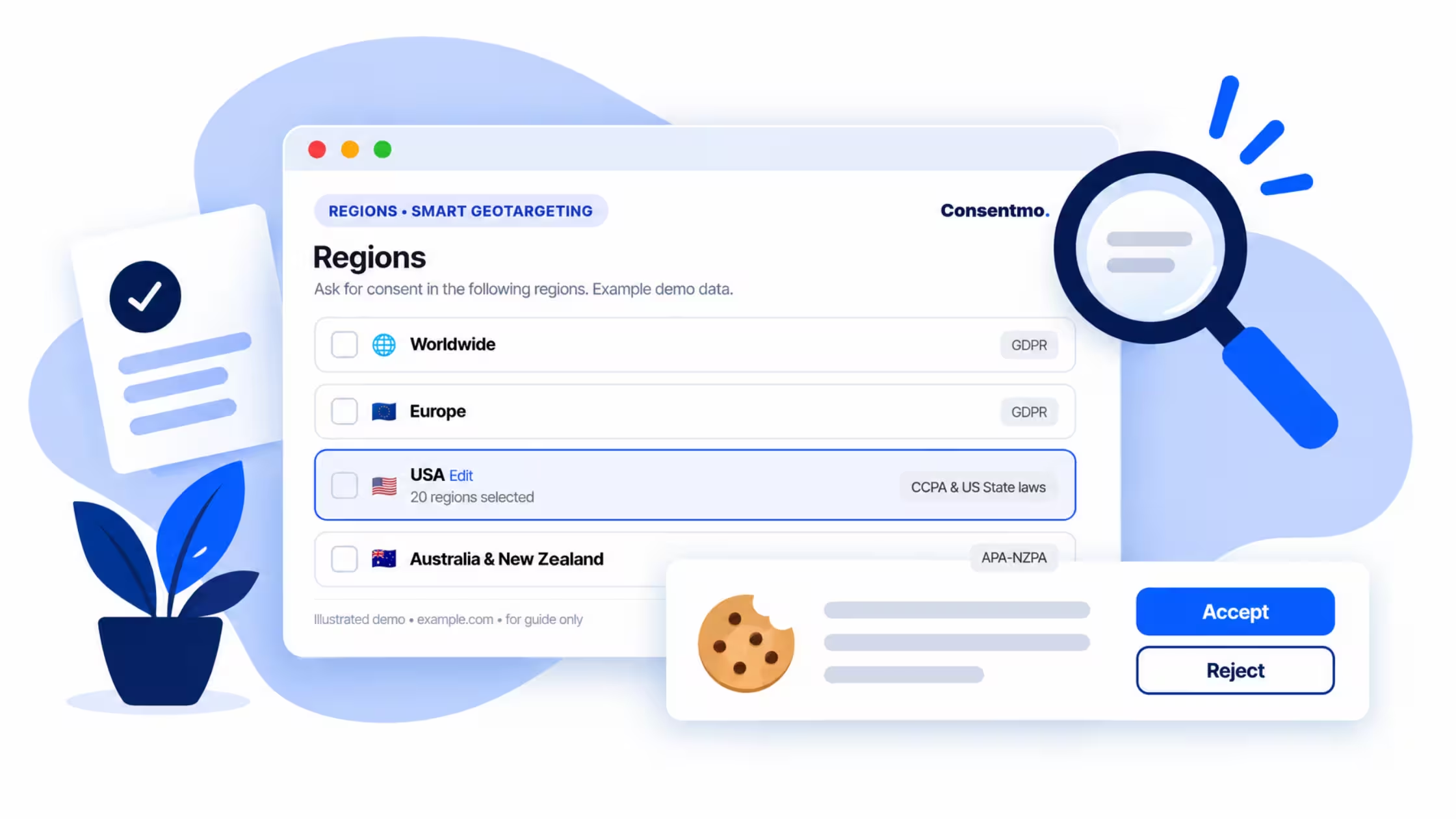
Rather than a single blanket cookie banner, granular consent lets customers opt in or out of specific processing purposes - including AI-driven personalization and profiling. This directly supports both the GDPR consent requirement and the AI Act's expectation that personalization is optional and transparent.
2. Documenting and honoring preferences automatically.
The ADMT layer creates an auditable record of what each customer was told, what they consented to, and when. If a shopper opts out of AI recommendations, the system enforces that choice across sessions and logs the enforcement. When a regulator or customer asks "did you respect my preference?", you have a timestamped answer.
3. Surfacing meaningful explanations.
Transparency notices and "why am I seeing this?" style disclosures can be delivered at the right moments - first chatbot interaction, personalized product blocks, and consent flows - satisfying the "meaningful information about the logic" requirement without a legal team drafting bespoke copy for every touchpoint.
The strategic value isn't just avoiding fines. It's that a clear, honest AI disclosure framework increasingly builds trust - and trust converts.
Your Timeframe: What to Do and When
With the August 2026 provisions and guidance solidifying, you have a narrow but workable window. Here's a realistic timeline built around six weeks of runway from mid-July:
Bottom line on timing: Aim to have your Privacy Policy, disclosures, and preference-logging live before the end of August 2026. These are not overnight tasks - consent-flow changes and policy drafting typically take one to three weeks including review, so starting now leaves comfortable margin.
Pre-August Action Checklist
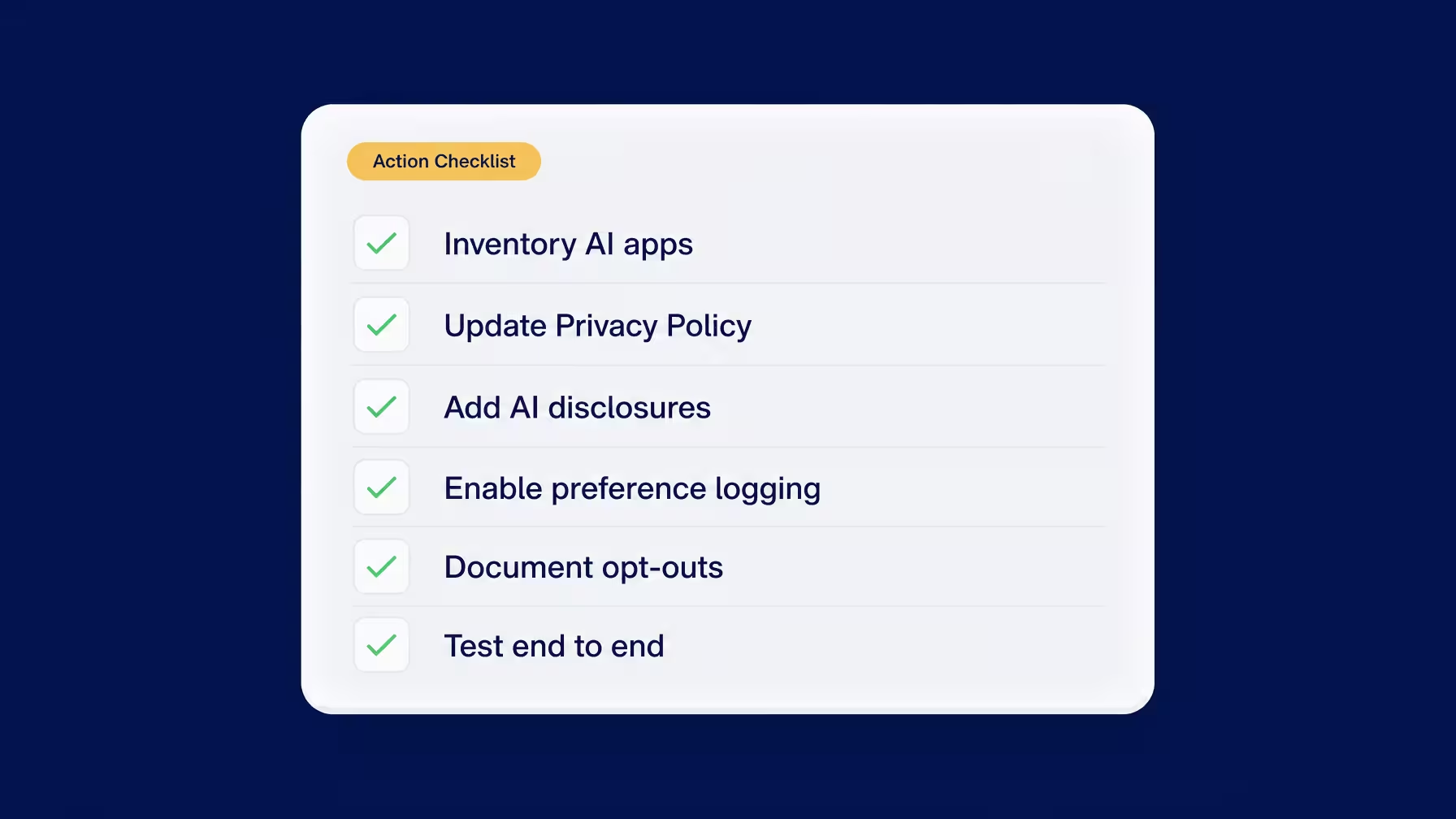
- Inventory your AI apps. List every Shopify app touching recommendations, search, chat, pricing, or content generation.
- Request vendor documentation. Ask each provider for their AI Act risk classification and transparency support.
- Flag edge cases. Screen for anything involving emotion, biometrics, demographics, or manipulative urgency tactics.
- Audit your consent flow. Confirm AI personalization is covered by granular, revocable consent - not buried in a generic banner.
- Update your Privacy Policy. Add the dedicated "How We Use Artificial Intelligence" section.
- Add AI disclosures. Label chatbots and AI-generated content; add "why am I seeing this?" explanations to personalized blocks.
- Enable preference logging. Deploy Consentmo + ADMT (or equivalent) so choices are recorded and enforced.
- Write a plain-language AI statement. A short page explaining how and why your store uses AI goes a long way with both regulators and customers.
Frequently Asked Questions
Does the EU AI Act apply to my store if I'm not based in the EU?
Yes, if your AI system's output reaches customers in the EU. The Act follows the output, not your business address. A US or UK store selling to EU shoppers is in scope.
I only use Shopify's built-in recommendations. Am I still affected?
Likely yes, but at the lighter transparency tier. You should still disclose that AI powers your recommendations and give customers a way to opt out. Confirm with Shopify and any app vendors what documentation they provide.
What are the penalties for non-compliance?
The AI Act carries significant fines - up to the tens of millions of euros or a percentage of global turnover for the most serious violations (like prohibited practices). Transparency-tier breaches carry lower but still meaningful penalties. GDPR fines can apply in parallel for consent failures.
Do I need to hire a lawyer?
For most small-to-mid stores using standard personalization apps, following a solid checklist and updating your policies goes a long way. If you use biometric, emotion-recognition, or high-risk tools - or operate at large scale - professional legal review is strongly advised.
Is updating my Privacy Policy enough on its own?
No. The policy is essential documentation, but it must be backed by working mechanisms - real consent capture, functioning opt-outs, and logged enforcement. Regulators expect you to honor what you promise.
What's the single most important thing to do before August?
Make sure customers can opt out of AI personalization and that you can prove you honored it. That combination of consent + documentation satisfies the core of both the AI Act and GDPR.
Will these rules keep changing?
Yes. Expect additional Commission guidance and codes of practice to roll out through 2026 and beyond. Build flexible processes now so updates are refinements, not overhauls.
The Forward View: Transparency as Competitive Advantage
It's tempting to treat the AI Act as another compliance tax - a box to check before returning to growth. That framing misses the larger shift underway.
European consumers are becoming markedly more literate about how their data drives what they see. Over the next 18 months, expect "AI transparency" to migrate from a legal obligation to a marketing differentiator, much as "cookie consent" and "privacy-first" did before it. Stores that explain their personalization openly - "We use AI to suggest products based on what you've browsed; here's how to turn it off" - will read as trustworthy. Stores that hide it will read as suspect.
The merchants who win won't be the ones who did the bare minimum by August. They'll be the ones who recognized that transparent, consent-respecting AI is simply better commerce: fewer creepy experiences, more customer control, and a defensible foundation as the rules keep tightening.
The August deadline is the starting line, not the finish. Build your documentation habits now, lean on tools that make honoring preferences automatic, and you'll spend the rest of 2026 competing on trust while others scramble to catch up.