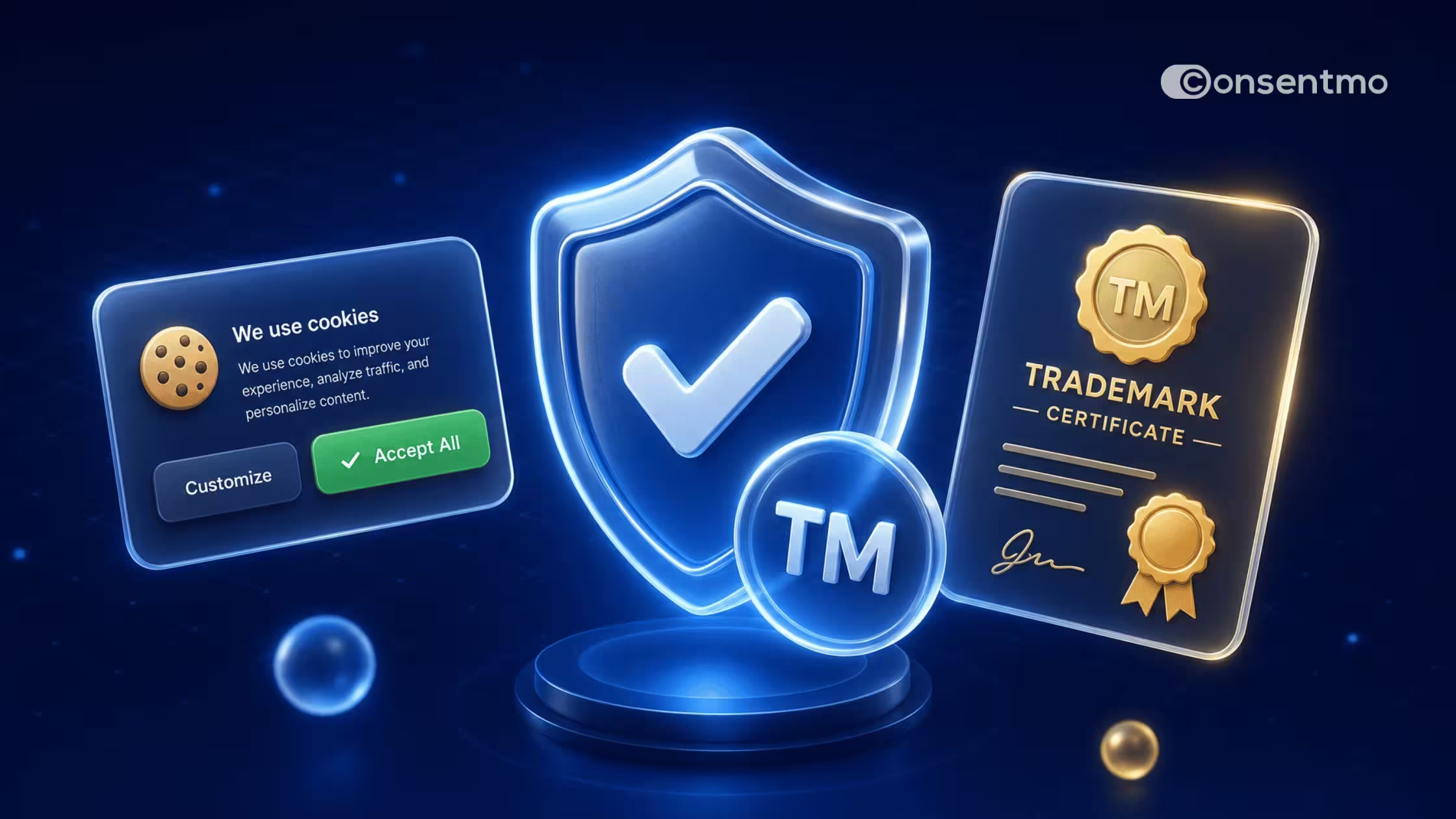
Quick answer: A trademark protects your right to own your brand name, logo, or slogan, while privacy compliance protects the customer trust that makes your brand valuable. Strong brands need both. A trademark stops others from using your name, and privacy compliance stops your name from becoming a legal or reputational liability. This guide explains how the two work together and what US merchants should do about each.
You built something real: a product people love, a brand name people remember, and a store that's finally gaining traction. But the trust that fuels your growth is fragile, and a single privacy misstep can erode it faster than any competitor.
You can own the perfect trademark and still lose customers if people don't trust you with their data. Today, your brand is not just your name and your logo. It is the promise you make every time a customer hands you their email, their address, or their payment details.
Is a Trademark the Same as Privacy Compliance?
No. A trademark and privacy compliance protect two different parts of your brand.
- A trademark protects ownership. It gives you the exclusive legal right to use your brand name, logo or slogan in your industry.
- Privacy compliance protects reputation. It governs how you collect, use, and disclose customer data, and it keeps your brand from becoming a liability.
You could have a federally registered trademark, a loyal following, and thousands invested in marketing, and still face a regulator's fine, a customer backlash, or a platform suspension because your privacy practices did not hold up.
These are not competing priorities. They are two halves of the same asset: your brand's defensibility. One without the other leaves you exposed.
What Does Privacy Compliance Do for Your Brand?
A clear, compliant privacy setup delivers five concrete benefits:
- Customer trust at the point of decision. Visible consent banners and transparent policies tell visitors their data is respected, which directly improves conversion.
- Legal protection where you do business. California's CCPA/CPRA and a growing list of state laws (Virginia, Colorado, Connecticut, Texas, and more) carry real penalties, and they apply to far more businesses than most merchants assume.
- Marketplace and ad-platform safety. Meta, Google, and major marketplaces increasingly require demonstrable consent and sound data-handling practices.
- A defensible paper trail. Documented consent and policies are your evidence if a complaint or regulator inquiry arrives.
- Reputation insurance. Trust that takes years to build can be lost in a single headline about mishandled data.
Without compliance, your trademark protects a name that customers may no longer trust.
What Are the Privacy Compliance Risks for US Merchants?
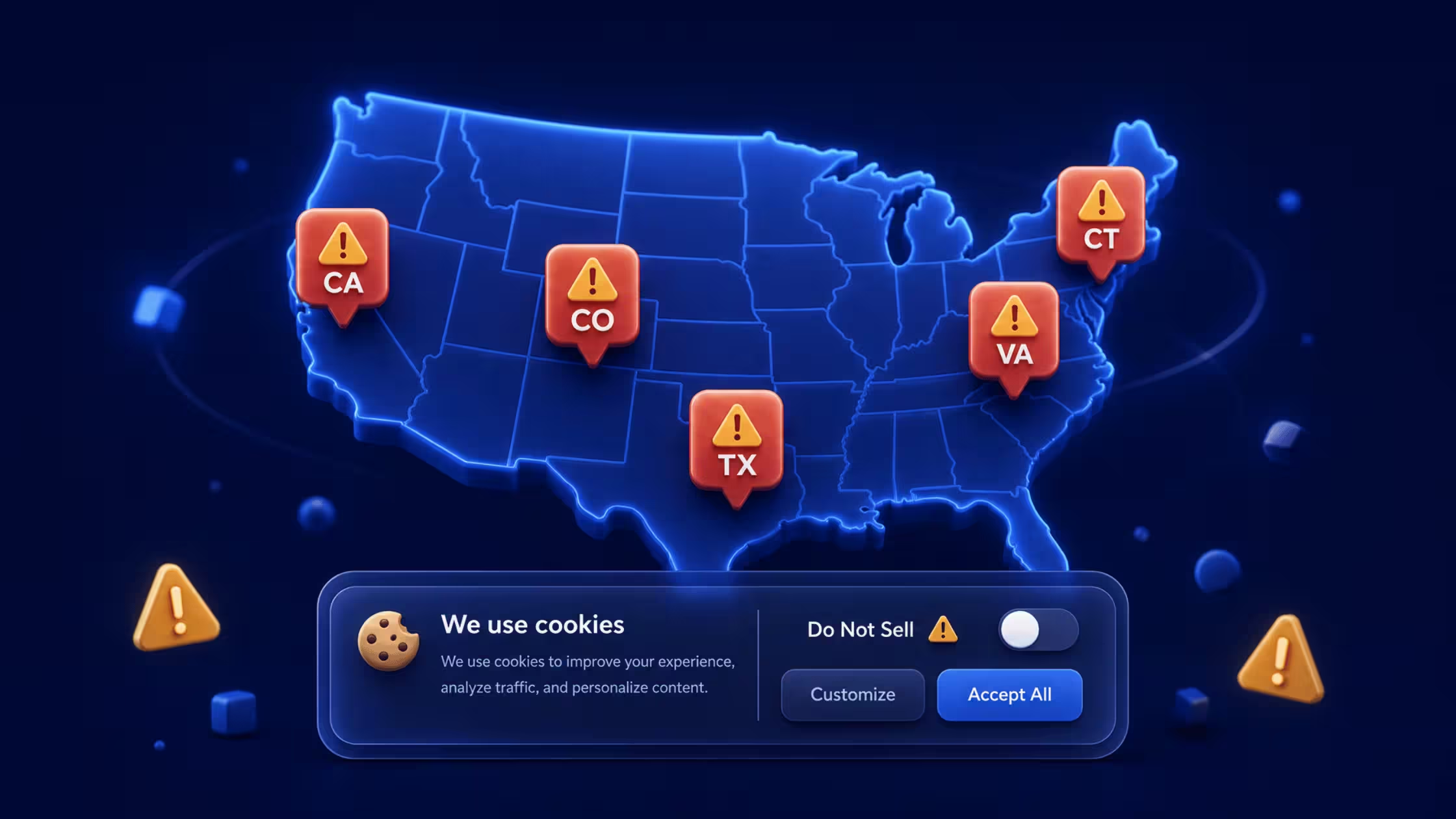
For years, US merchants treated privacy law as a "European problem." That is no longer true. The patchwork of US state privacy laws expands every legislative session, and enforcement is increasing. The main risks are:
- Regulatory fines. California's CPRA allows penalties on a per-violation basis. With thousands of affected consumers, those numbers add up quickly. The California Privacy Protection Agency and state attorneys general are actively enforcing, not just legislating.
- The state-law patchwork. If you sell across state lines (and almost every online store does), you may be subject to multiple state privacy laws at once, each with its own consent and disclosure rules. A single generic policy rarely satisfies all of them.
- Cookie consent complaints. Running tracking, analytics, and ad pixels without documented consent is one of the most common compliance failures and a frequent trigger for complaints and opt-out demands.
- Ad-account and marketplace suspensions. Platforms are tightening data-handling requirements. Stores without clear consent flows risk losing ad accounts or having listings restricted.
- Customer churn and reputation damage. US shoppers are increasingly privacy-aware. A missing policy, an aggressive tracker, or a data scare sends them to a competitor.
The merchants who get hit are not careless. They are busy. They assumed they would get to compliance eventually, then a new state law took effect, a complaint landed, or a platform flagged them first.
How Do You Make Your Store Privacy-Compliant?
This is where Consentmo comes in. Most merchants do not have a privacy attorney on retainer, and they should not need one. Consentmo makes the compliance process simple, affordable, and accurate, from your first consent banner to ongoing policy updates as laws change. There are two main steps.
Step 1: Know Where You Stand
Before you fix gaps, you need to see them. Many merchants do not realize how much data their store collects through cookies, analytics, pixels, and third-party apps, or which laws apply to the states they sell into.
Start with a clear picture of:
- Which tracking scripts and cookies are active on your store
- Which privacy laws apply based on where your customers live
- Whether your current policies and banners meet those requirements
- Where consent is collected, and whether it is documented
Consentmo maps all of this in one place, so you are not guessing about your exposure.
Step 2: Put Compliant Consent and Policies in Place
Once you know where you stand, close the gaps. Compliance is full of details that are easy to get wrong:
- Geo-targeted consent banners. Different states (and countries, if you sell abroad) require different consent behaviors. A one-size-fits-all banner often is not compliant anywhere.
- Auto-generated, up-to-date policies. Privacy policies, cookie policies, and terms that reflect your actual data practices and current US law.
- Documented consent and opt-out records. Proof of consent and honored "do not sell or share" requests, in case they are ever questioned.
- Ongoing updates. US privacy laws change constantly, so your setup needs to keep pace automatically rather than going stale.
Consentmo handles consent management, policy generation, cookie scanning, and automatic compliance updates, so protecting customer trust becomes part of how your store runs.Make your store privacy-compliant in minutes.
Start with Consentmo →
How Do Trademarks and Privacy Compliance Work Together?
Owning your brand name and protecting your customers' data are two sides of the same coin: brand defensibility. A trademark locks down your identity. Privacy compliance protects the trust behind it. Together, they make your brand both legally yours and worth being yours.
That is why we partnered with Trademark Engine. While Consentmo secures the trust side of your brand, Trademark Engine secures the ownership side, making sure no one can take the name you have worked to build.
Trademark Engine makes federal trademark protection simple and affordable: a free trademark search to confirm your name is available, attorney-reviewed filing options, and ongoing monitoring after registration. If you have protected your customers' data but never secured your brand name, you are only halfway covered.
Protect Your Brand with a Trademark
Get 20% off Package Prices
Brand-Protection Checklist for US Merchants
If you are not sure where you stand, run this checklist.
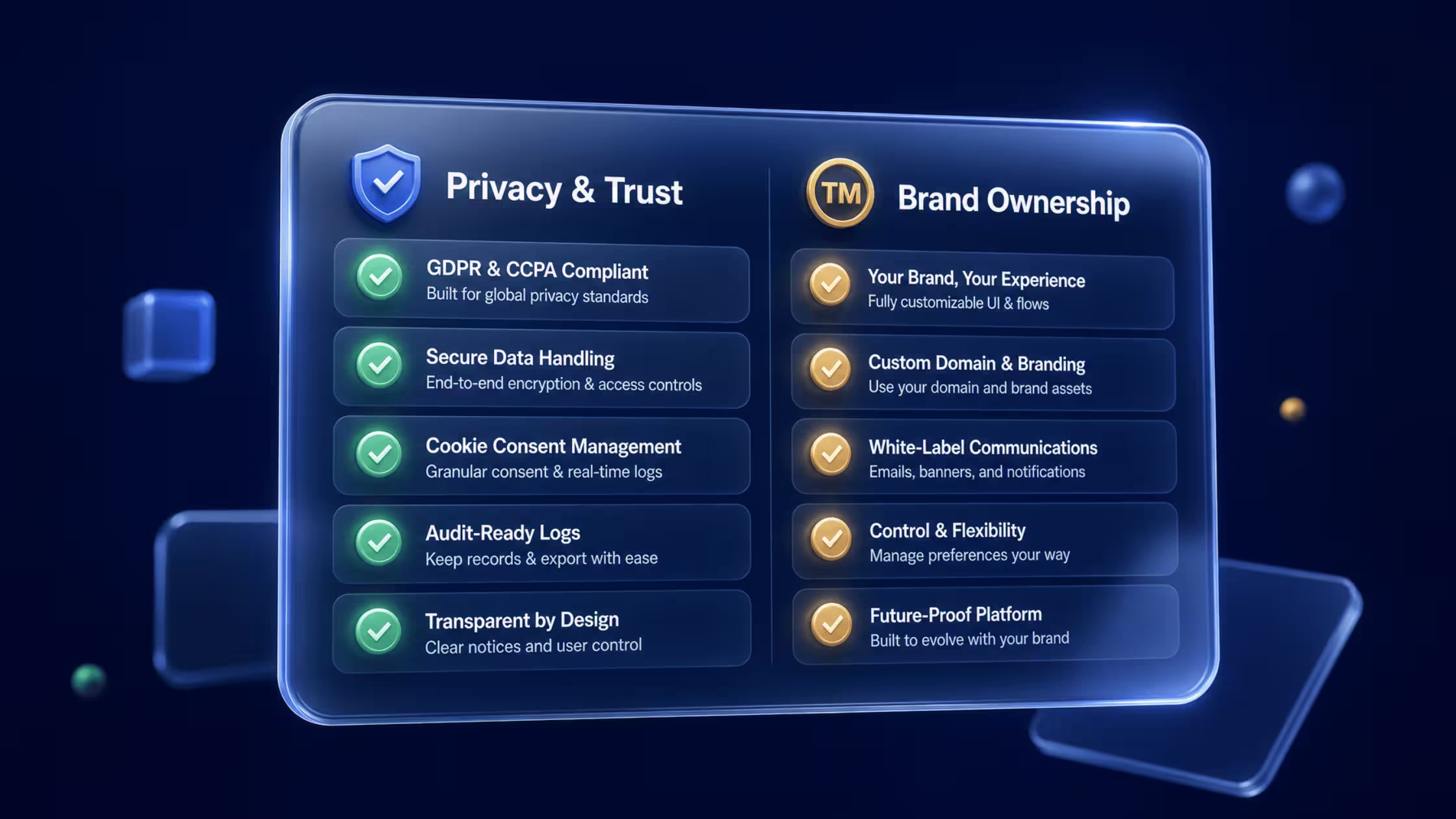
Privacy and trust (Consentmo)
- Do you have a compliant, geo-targeted cookie consent banner?
- Are your privacy and cookie policies current and accurate under US state laws?
- Are you documenting consent and honoring opt-out or "do not sell" requests?
- Do your practices cover every state you sell into (CCPA/CPRA and beyond)?
- Are your policies updated automatically as laws change?
Brand ownership (Trademark Engine)
- Have you searched the USPTO database for your brand name?
- Do you have a federally registered trademark?
- Is your logo trademarked separately from your name?
- Are you monitoring for conflicting filings?
If you cannot check every box, you have real exposure right now.
Don't Wait Until It Becomes a Crisis
The merchants who regret skipping compliance are not the ones who never thought about it. They are the ones who kept telling themselves they would get to it.
Then a new state law took effect. Then came the complaint, the platform flag, or the customer who did not come back. Then came the scramble: the rushed policy, the lawyer's bill, and the rebuild of trust that is far harder to repair than it ever was to protect.
It is not hard to solve before it happens. It is expensive and painful to solve later.
Protect the trust behind your brand with Consentmo, and protect the name itself with Trademark Engine.
Together, that is a brand that is both trusted and truly yours.