How translations work in Consentmo
Consentmo localizes the compliance layer on your Shopify store: the cookie banner, preferences popup, and privacy request pages. Storefront product copy still needs a separate translation app. This short guide covers how banner language is set, how multilingual mode works, and how to translate privacy request pages.
For the full step-by-step UI paths, use the help center articles linked in each section.
Default cookie banner language
After you install Consentmo, the app sets a default cookie banner language for you. That default matches the language set as default for the store in Shopify settings.
To confirm it in the app:
- Open the Cookie banner tab
- Open the Content section
- Check the language marked as default at the top of the section
You can edit banner and preferences popup text in the same Content area so the wording matches your brand voice in that language.
Help article: Initial translation of the cookie bar
Multilingual cookie banner setup
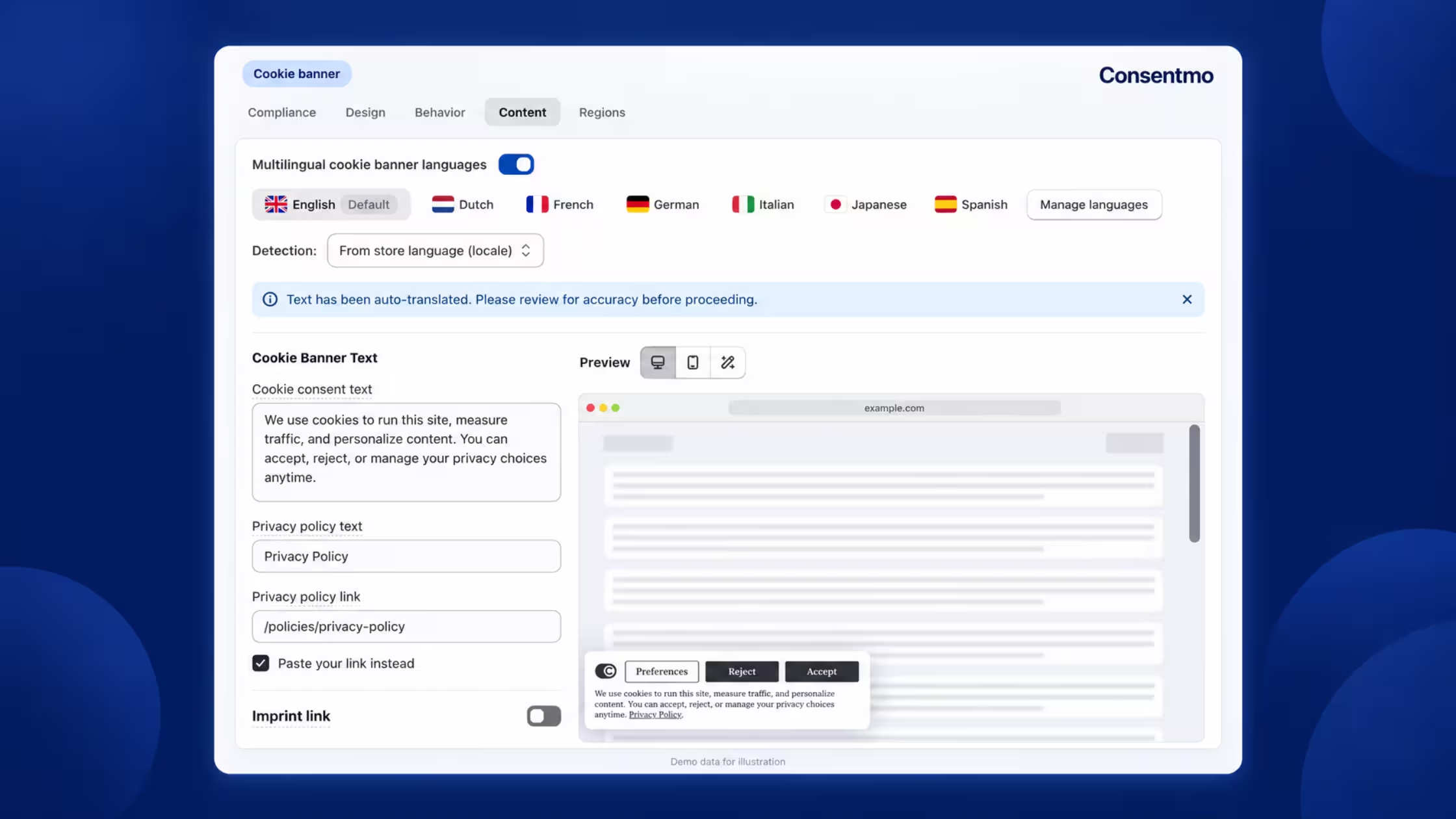
If the store has more than one language, enable multilingual support under Cookie banner → Content → Multilingual cookie banner languages.
Choose how Consentmo detects which language to show:
- From store language (locale), recommended if you already use a third-party translation app
- From browser preferences
- From IP address (geolocation)
- From URL (for example domain.myshopify.com/en)
Use Manage languages to add extra languages that are already published for the store. Once selected, those languages are enabled. On a paid plan, languages already published in the store at install time can be fetched, translated, and enabled automatically.
For each extra language you can set it as the new default or remove it from the list. To change copy for one language, select that language in Content and edit the fields (banner text, privacy policy link, imprint or other links).
Help article: Multilingual translation setup for Consentmo
Language suggestions from traffic
Consentmo can suggest additional banner languages based on recent visitor traffic. When a new market generates enough activity, a suggestion may appear under Cookie Banner → Content.
For each suggestion you can:
- Add & auto-translate, add the language, auto-translate banner content, and enable multilingual mode if needed
- Review whether the traffic makes the language worth enabling
- Dismiss the suggestion if it is not relevant
You can still add languages manually with Manage languages when you prefer full control.
Translating privacy request pages
Privacy request pages need clear copy in the languages your customers use. Consentmo supports two approaches:
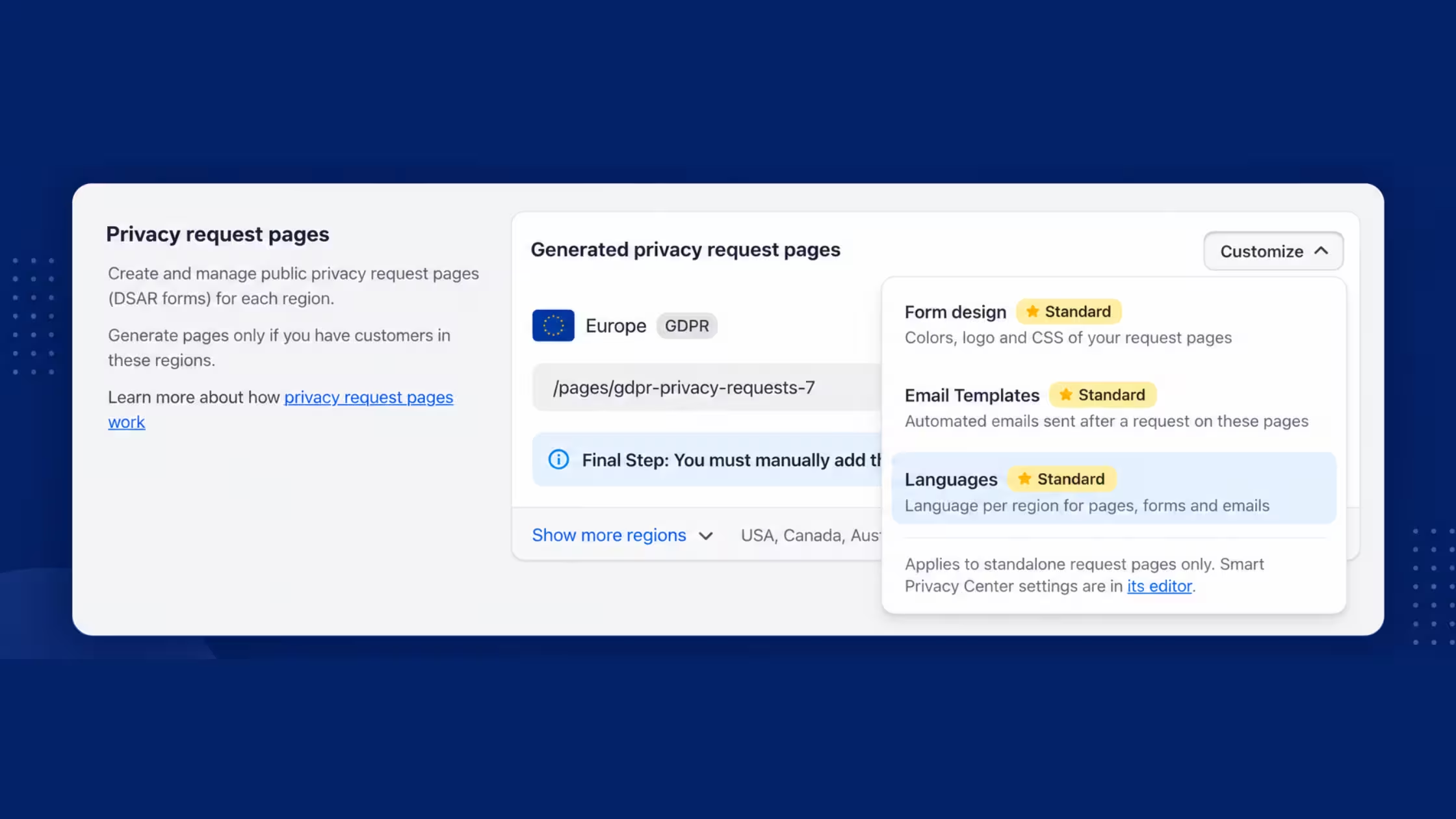
Automated translation (paid)
- Go to Privacy Center
- Open Privacy request pages
- Click Customize
- Open Language
- Translate the pages that show a translation option in Languages
Manual translation (free)
- In Shopify, go to Online Store → Pages
- Open the compliance page and switch to HTML view
- Translate only the content between the closing
</style>tag and the opening<script>tag - Do not change HTML elements, or the page can break
Help article: Translating the privacy request pages
Quick checklist
- Confirm the default banner language matches Shopify’s store default
- Enable multilingual mode and pick a detection method that fits your translation stack
- Add published store languages (or accept paid-plan auto-fetch at install)
- Review language suggestions from real traffic
- Edit per-language banner and link fields where needed
- Translate privacy request pages (automated on paid, or manual HTML on free)
Conclusion
Consentmo keeps compliance UI in the languages your visitors actually use: default banner language from Shopify, multilingual detection and extra languages, traffic-based suggestions, and privacy request page translation. Product catalog translation stays with your storefront translation app; Consentmo covers the consent and request layer.
Need a hand with a specific language setup? Contact support via live chat or [email protected]. To try the full stack on your store, install Consentmo.