


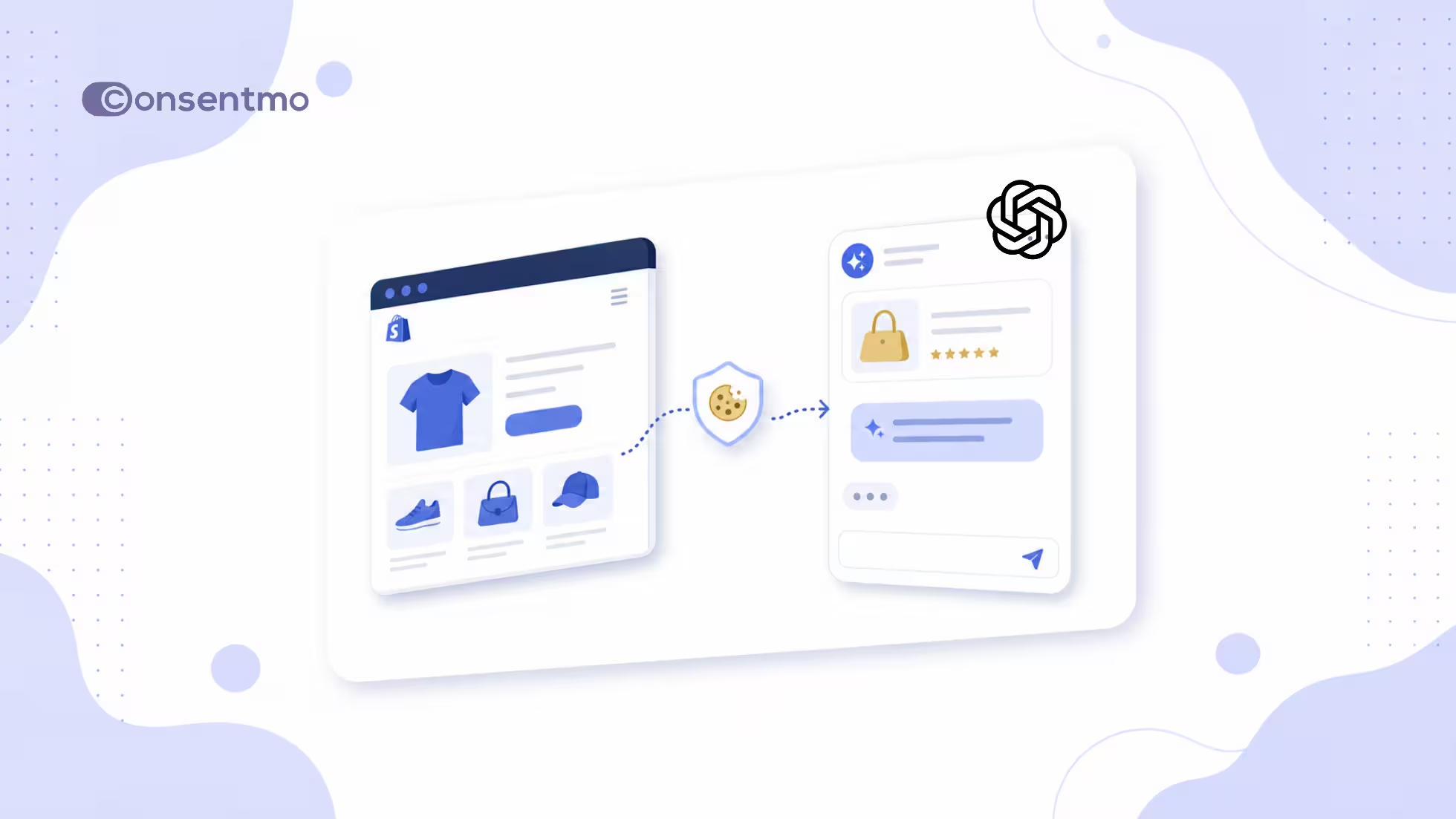
AI assistants are no longer only writing product descriptions or summarizing reviews. For eligible Shopify stores, they can act as real product discovery channels. Customers find items in ChatGPT, then finish the purchase on your Shopify checkout, either in ChatGPT’s in-app browser or in a new tab.
That shift raises a practical privacy question for merchants:
Do ChatGPT cookies suddenly belong in my Shopify cookie policy?
Short answer: usually no, not simply because your products appear in ChatGPT. The stronger merchant question is what loads once that shopper reaches your storefront, and how you handle consent for analytics, ads, and third-party apps.
This guide separates OpenAI’s environment from your Shopify store, explains what Shopify shares through Catalog, and ends with a checklist you can run this week.
Key Takeaways
- ChatGPT is a discovery/referral channel for Shopify. Checkout stays on your online store checkout for ChatGPT traffic.
- OpenAI cookies live primarily on OpenAI domains. They do not automatically become cookies on your Shopify storefront just because Catalog lists your products.
- Shopify Catalog shares product data such as titles, descriptions, images, pricing, and availability. It does not hand AI channels your full customer database or private admin data by default.
- Your normal privacy rules still apply when a visitor lands on your store from ChatGPT, Google, Instagram, or anywhere else.
- Embedded AI widgets on your theme are different from external ChatGPT discovery. If a tool sets cookies or sends visitor data from your domain, treat it like any other third-party integration.
- Scan and disclose what actually runs on your storefront. Keep policies current. Consentmo helps with scanning, consent UX, geotargeting, records, and cookie/privacy pages.
What are “ChatGPT cookies”?
OpenAI publishes a Cookie Policy covering cookies and similar technologies used with its services. The policy groups technologies into familiar buckets such as necessary cookies, and it also covers analytics and marketing/performance-style uses. OpenAI explicitly treats related tools such as pixels, local storage, and identifiers shared through APIs as part of the same “cookies” terminology for simplicity.
That background is useful. It is not a list you should paste into every Shopify cookie table.
OpenAI’s cookies and similar technologies operate in connection with OpenAI’s services and domains (for example chatgpt.com and related OpenAI properties). Your Shopify store is a separate processing environment, with its own theme scripts, Shopify Customer Privacy settings, pixels, and apps.
Does ChatGPT place cookies on your Shopify store?
Usually no, not merely because your products appear in ChatGPT.
Think of two environments:
- OpenAI’s product and chat experience Session, security, preference, analytics, and marketing technologies described in OpenAI’s own cookie policy.
- Your Shopify storefront and checkout Shopify platform cookies, your analytics stack, ad pixels, affiliate tools, chat widgets, recommendation engines, and any other scripts your theme or apps inject.
When ChatGPT surfaces a product via Shopify’s agentic flow, customers are guided to buy on your online store checkout. Shopify describes ChatGPT as a discovery-focused referrer channel. Purchases complete in a ChatGPT in-app browser or a new browser tab on your checkout. Your branding, payment methods, and store customizations still apply. See Shopify’s guide: Selling on ChatGPT.
So Consentmo’s job is not to “block ChatGPT cookies inside ChatGPT.” Consentmo helps you manage the consent experience when visitors hit your Shopify store, including traffic that started in an AI chat.
How ChatGPT shopping works with Shopify
Shopify’s agentic storefronts let customers discover and buy through AI channels such as ChatGPT, Google AI Mode / Gemini, Microsoft Copilot, and Meta. For eligible stores, agentic storefronts can be active by default.
At a high level for ChatGPT:
- Eligible product data is available to AI channels through Shopify Catalog (and products may also be found through ordinary web crawling or other feeds).
- A shopper asks ChatGPT for recommendations.
- Matching products can appear in the chat experience.
- The shopper completes purchase on your Shopify checkout, not a separate ChatGPT-owned checkout flow in the same way some other channels support direct checkout.
Shopify also notes eligibility details for ChatGPT selling (for example selling to customers in the United States, Catalog eligibility, accepting the Agentic Storefronts supplemental terms, and completed store policies). Always check the latest requirements in Shopify admin help, because channel rules can change.
What data does Shopify share with ChatGPT?
This is one of the most important clarifications for merchants.
According to Shopify’s data sharing and privacy documentation for agentic storefronts, AI channels accessing products through Catalog can receive product data such as:
- Titles
- Descriptions
- Images
- Pricing
- Availability
Shopify states that private Shopify admin data and protected information remain confidential and are not shared. AI channels do not get access to your full order history, orders from other sales channels, or your general customer database simply because Catalog access is on.
What happens when the shopper lands on your store?
Once the customer reaches your Shopify storefront or checkout, your normal privacy environment applies.
That includes:
- Shopify Customer Privacy configuration
- Theme scripts and app embeds
- Google Analytics / ads tags
- Meta, TikTok, Microsoft, and other advertising pixels
- Affiliate and recommendation tools
- Support chat and on-site AI widgets
- Consent banners, preference centers, and cookie disclosures
_converted.avif)
A visitor arriving from:
ChatGPT → your Shopify store
should not be treated as a special privacy exception compared with:
Google → your Shopify store or Instagram → your Shopify store
Their rights under GDPR/ePrivacy, CCPA/CPRA and other US state laws, Global Privacy Control (where applicable), and your own disclosures do not disappear because an AI assistant referred them.
For EU/UK-style opt-in expectations, that still means blocking non-essential analytics and advertising technologies until you have a valid consent signal where required. For US opt-out regimes, that still means honoring sale/share opt-outs and GPC where your setup requires it.
ChatGPT product discovery vs an AI tool embedded on your store
These are easy to mix up. They are not the same compliance problem.
Scenario A: Products appear in ChatGPT (external discovery)
ChatGPT is operating as an external channel. OpenAI’s own cookies and similar technologies generally run in OpenAI’s environment. Your Catalog participation is about product representation, not injecting OpenAI’s full first-party cookie inventory into your theme.
Scenario B: You embed an AI chatbot, widget, or SDK on the Shopify storefront
Now the processing happens on your site (or from scripts you load). If the integration:
- sets cookies,
- writes local storage,
- loads analytics,
- fingerprints or shares identifiers,
- or sends visitor messages/page context to a third party,
you need to evaluate it like any other third-party service:
- What data is collected?
- Why?
- Who receives it?
- What legal basis or consumer right framework applies?
- Is it necessary for a requested service, or non-essential tracking?
- Does the cookie/privacy policy need an update?
- Should non-essential loading wait for consent in opt-in regions?
Avoid blanket claims such as “embedding ChatGPT always makes you the controller of everything OpenAI does.” Roles depend on the actual integration, contract, and processing facts. Stay precise: review the vendor docs, data flows, and your disclosures for that implementation.
Should ChatGPT cookies appear in your Shopify cookie policy?
Only when OpenAI-related technologies actually operate on your storefront, or are otherwise relevant to processing you control on your site.
Do not copy OpenAI’s full cookie inventory into your policy because your SKUs can appear in ChatGPT. That creates noise, confuses shoppers, and can drift out of date the next time OpenAI revises its list.
A better standard:
- Scan what your store actually sets and loads.
- Classify necessary vs analytics vs marketing vs functional preferences.
- Disclose those services accurately.
- Rescan after app installs, pixel changes, theme updates, and new sales-channel experiments.
If you want a durable cookie page that stays aligned with scans, Consentmo’s Smart Cookie Policy approach is built for that workflow: inventory first, policy second.
_converted.avif)
Can you stop ChatGPT from finding your products?
In Shopify admin, merchants can manage ChatGPT Catalog access under Sales channels → Agentic. You can deactivate Shopify Catalog access for ChatGPT after turning off “Allow Shopify to manage for me” where needed. Shopify documents the opt-out path in Selling on ChatGPT.
Caveats that matter:
- Removing Catalog access filters product data out of what Shopify provides to ChatGPT through Catalog.
- Products may still appear through other discovery methods such as web crawling and indexing.
- If you need products fully hidden from AI-style discovery in the same way they would be hidden from search engines, Shopify points to stronger product visibility controls (for example setting products to Unlisted where appropriate). Review Shopify’s current “hiding product discoverability” guidance before you rely on a single toggle.
Privacy policies matter more, not less, with AI shopping
To sell on ChatGPT with Shopify’s agentic storefront functionality, Shopify currently requires eligible merchants to have completed:
- Terms of service
- Privacy policy
- Return and refund policy
in Settings → Policies.
AI commerce does not reduce the need for clear disclosures. It raises the cost of stale ones. Shoppers, platforms, and regulators all benefit when your policy matches the services you actually use: analytics, ads, support tools, embedded AI, and international transfers where relevant.
Consentmo can help merchants keep privacy/cookie pages aligned with the storefront reality, alongside consent collection and records.
How Consentmo fits
Consentmo helps Shopify merchants manage the cookies and tracking technologies that operate on their storefront, including the analytics, advertising, and third-party integrations customers encounter after arriving from channels such as ChatGPT.
Relevant capabilities for this workflow:
- Smart Geotargeting, show the right consent experience by visitor location
- Cookie Scanner / monitoring, identify cookies and trackers introduced by apps and integrations
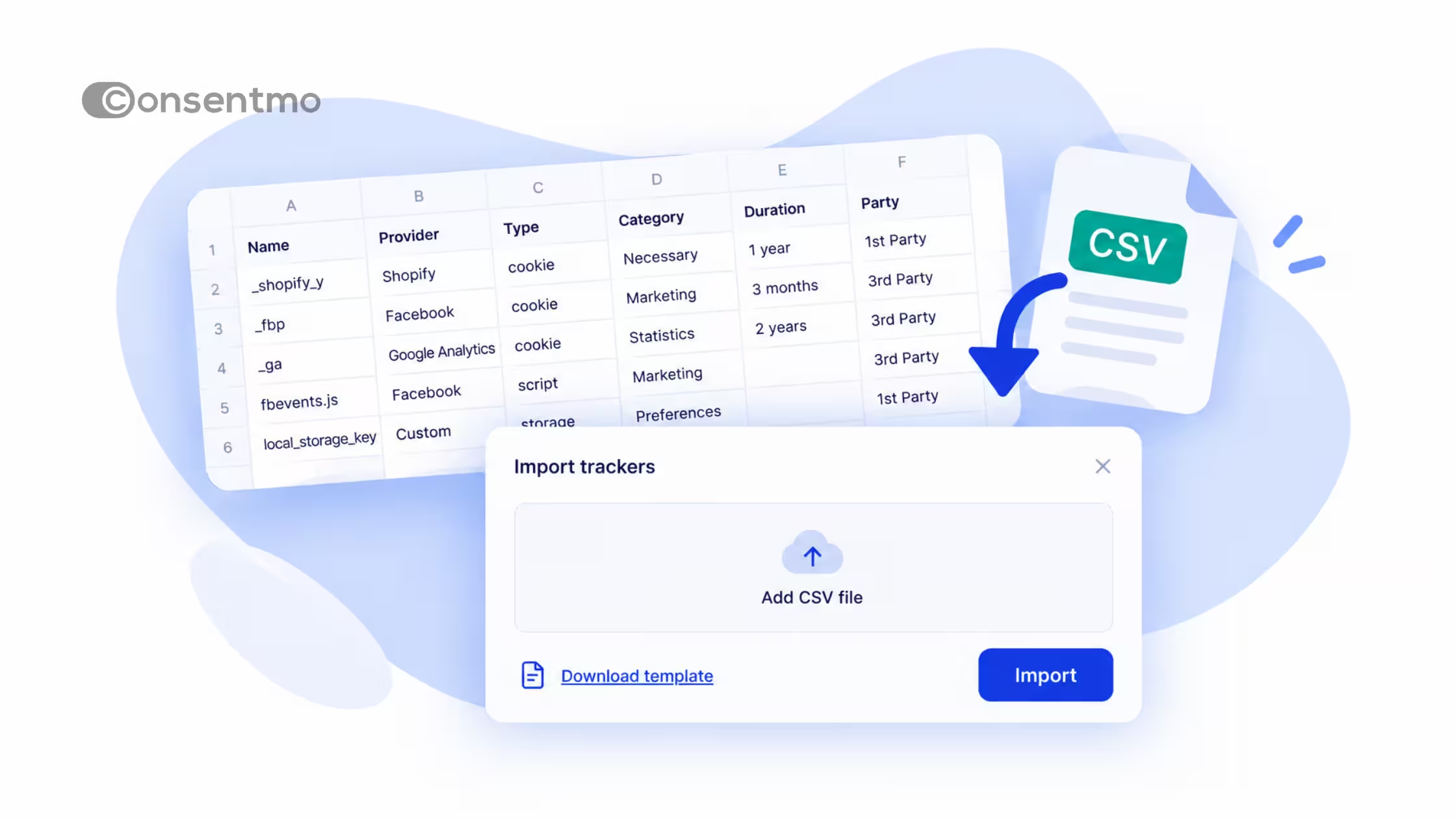
- Tracker Manager, organize detected services
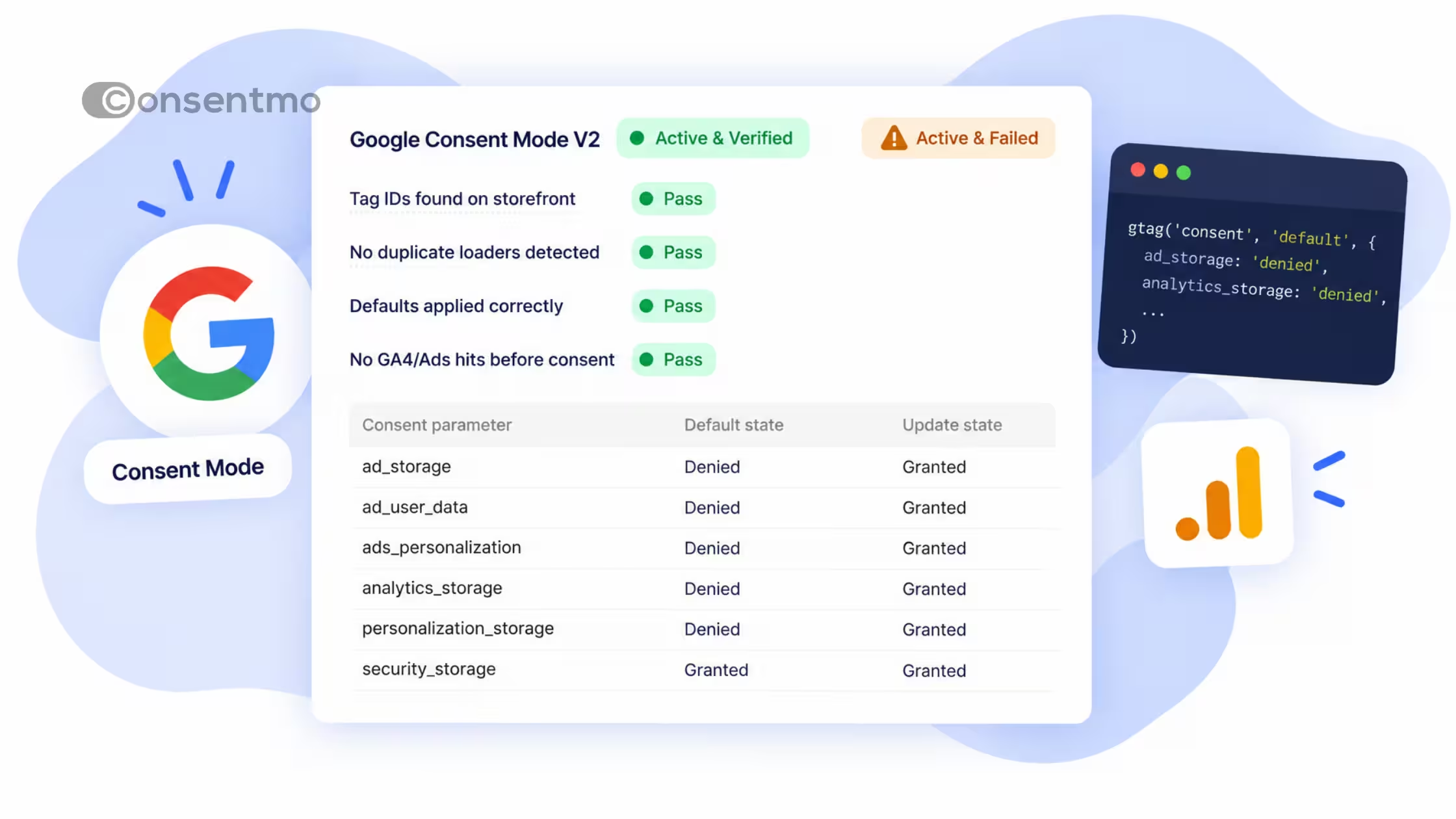
- Google Consent Mode v2 and related integrations, pass consent signals to supported marketing platforms
- Consent records, keep evidence of when and how choices were made
- Privacy pages / cookie policy, disclose technologies in language shoppers can actually use
- Preference / withdrawal paths, let people change their mind later
Final thoughts
Shopify is moving into AI commerce in public: Catalog distribution, agent discovery files, and ChatGPT as a product discovery channel. That is exciting for merchandising. It does not invent a new privacy exemption for storefront tracking.
OpenAI’s cookies belong in OpenAI’s story. Your Shopify cookies, pixels, and consent UX belong in yours.
Get the distinction right, keep Catalog settings intentional, scan what your store really loads, and keep policies honest. That is how you sell into AI-assisted journeys without confusing shoppers or creating a compliance mess you did not mean to ship.
If you want help turning a fresh scan into banner categories, geotargeting rules, and an up-to-date cookie policy on Shopify, Consentmo is built for that day-to-day work.


.avif)