TL;DR
- Shopify's Spring '26 Editions dropped 150+ platform updates on June 17, 2026.
- New WhatsApp marketing channels, AI-powered agentic commerce checkouts, marketing consent on sign-in, 365-day customer sessions, and product compliance disclosures all shift what merchants are responsible for.
- This article breaks down each one, explains the legal exposure, and shows where the compliance gaps remain.
What Spring '26 Updates Bring
Shopify becomes a multi-surface commerce platform in the fullest sense. Your store now sells inside ChatGPT, Microsoft Copilot, Meta ads, the Shop app, and WhatsApp. Customers can check out without ever seeing your website. AI agents complete purchases on their behalf.
That expansion is commercially exciting. Legally, it creates exposure that most merchants haven't mapped yet.
The EDPB's 2026–2027 enforcement priorities (transparency, consent management, AI disclosures, and cross-channel data transfers) align almost exactly with what Shopify just shipped. Regulators are watching the same surfaces Shopify is opening up.
Here are the 8 updates that matter most for your compliance posture.
Update 1: Marketing Consent on Sign-In
What Shopify shipped: Merchants can now capture email marketing opt-ins directly on the customer sign-in page, not just at checkout.
Why it matters for GDPR/CCPA: Under GDPR Article 7, consent must be freely given, specific, informed, and unambiguous. Adding a pre-ticked opt-in checkbox or burying consent language in the sign-in flow creates significant legal risk. The sign-in page is a high-friction moment when users are trying to access their account, not decide on marketing preferences. Regulators treat consent collected at moments of functional necessity with heightened scrutiny.
What you need to do:
- Ensure the opt-in checkbox on the sign-in page is unchecked by default
- Include clear, plain-language disclosure of what the customer is consenting to
- Store a consent record with a timestamp, source page, and checkbox state
- Provide an equally accessible opt-out path
A consent management solution that logs opt-in events with full audit trails is essential here. Shopify's native customer profile stores consent state, but it does not provide the evidentiary record regulators require if a complaint is filed.
Update 2: Self-Serve Returns and Cancellations
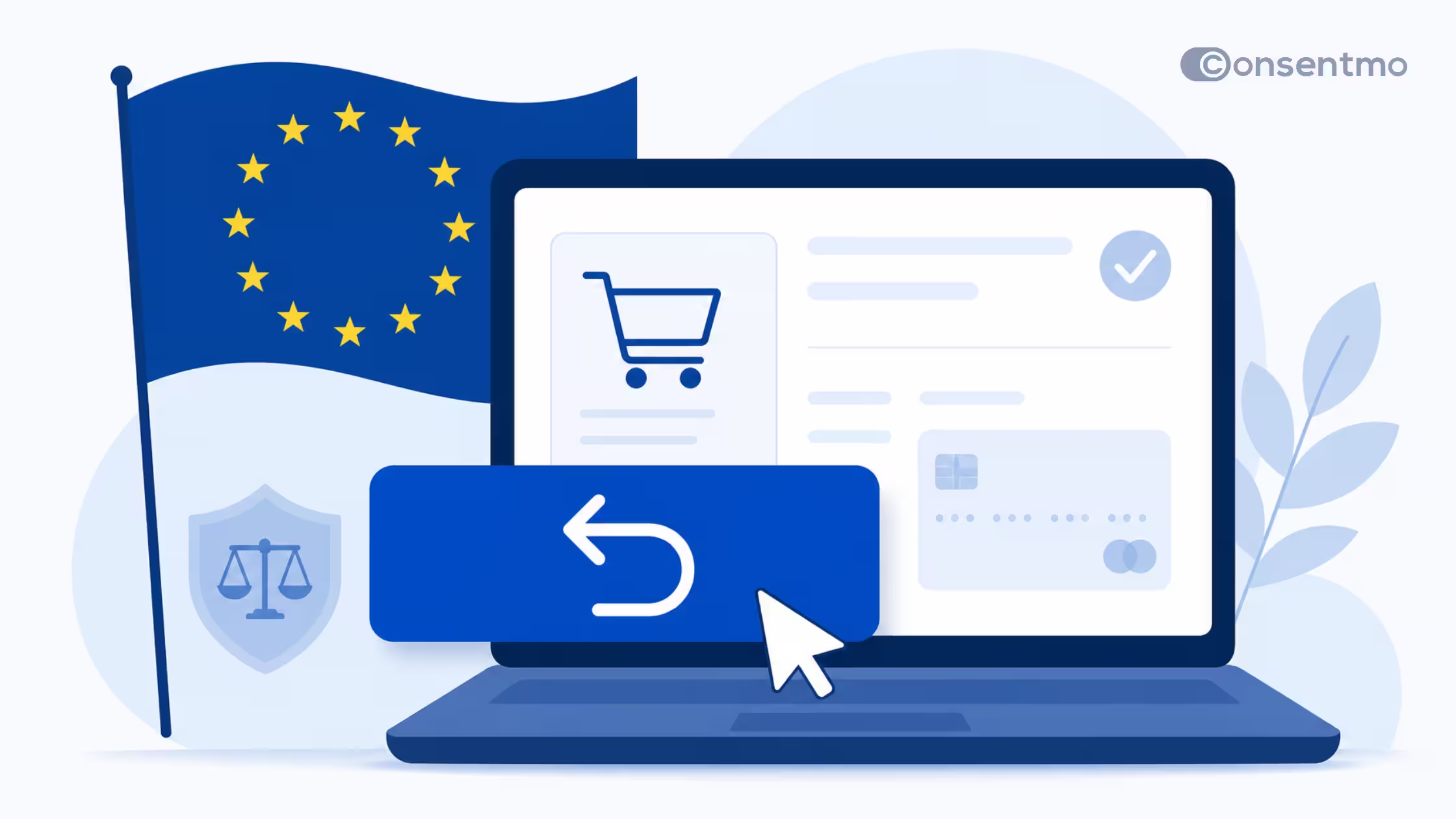
What Shopify shipped: Customers can now submit return requests for fulfilled orders and cancellation requests for unshipped items directly from their account page or order status page, without contacting the merchant. Merchants control which request types are available and can define final-sale collections and return rules.
Why it matters: For merchants selling to EU customers, this feature maps directly to the EU Consumer Rights Directive's 14-day withdrawal right, which gives consumers the right to cancel or return a distance purchase without giving a reason. Having a structured, self-serve withdrawal flow is not just good UX. It's the cleanest way to demonstrate you're meeting that obligation in practice.
Consentmo already covers the EU withdrawal rule in full, including withdraw order page, form, email flow for confirmation, detailed withdraw records and activity logs. Page is easily translated based on the customers language, styled, branded and can be controlled from your side. Read more here and get ready for June 19.
_converted.avif)
Update 3: WhatsApp as a Native Marketing Channel
What Shopify shipped: Merchants can create and manage WhatsApp marketing campaigns directly inside Shopify Messaging. This is a new channel, not a third-party integration, but a native Shopify feature.
Why it matters for GDPR/CCPA: WhatsApp marketing operates under a double compliance burden. First, GDPR applies because WhatsApp processes EU personal data. Second, Meta's own WhatsApp Business Platform requires prior explicit opt-in from every recipient before a business can send marketing messages and this requirement applies globally, not just in the EU. WhatsApp's opt-in requirements are stricter than email marketing standards and violating them can result in your WhatsApp Business account being suspended in addition to regulatory exposure.
What you need to do:
- Collect explicit, documented WhatsApp opt-in consent before sending any marketing message
- Record the opt-in source, timestamp, and consent language used
- Provide a clear opt-out mechanism in every message
- Do not import phone numbers from your email list and assume WhatsApp consent applies (they are separate consent streams)
Update 4: WhatsApp Consent Management in Customer Profiles
What Shopify shipped: Merchants can now control WhatsApp marketing consent directly in each customer's profile, alongside existing email and SMS consent fields.
Why it matters for GDPR/CCPA: This is a positive step. Centralized consent management across channels is a compliance best practice. But the addition of a new consent field does not automatically satisfy legal requirements. The field needs to reflect documented, granular consent that was collected through a proper opt-in flow, not inferred from other channel consent.
Under GDPR, consent for WhatsApp marketing is a separate legal basis from consent for email marketing. A customer who opted into your email newsletter has not consented to WhatsApp messages, even if both fields sit in the same customer profile.
What you need to do:
- Treat WhatsApp consent as legally distinct from email and SMS consent
- Never pre-populate the WhatsApp consent field based on other channel preferences
- Sync WhatsApp consent status with your consent management platform so you have a complete, channel-by-channel audit trail
Update 5: Agentic Commerce - The Consent Gap
What Shopify shipped: Products listed on your Shopify store now appear and sell across AI channels - ChatGPT (via Shopify Catalog and Universal Commerce Protocol), Microsoft Copilot, and soon Meta ads, without requiring any action from the merchant. Customers can complete purchases inside these AI surfaces using Shop Pay, without ever visiting your website.
Why it matters for GDPR/CCPA: This is the most significant compliance challenge in the entire Spring '26 release, and it has no native solution.
When a customer purchases through your Shopify store, your cookie banner fires, your consent banner appears, and your tracking scripts run against a documented consent record. When a customer purchases through ChatGPT or Copilot, none of that happens. There is no storefront visit. No cookie banner. No consent popup.
The data generated by that transaction (like purchase history, browsing behavior, payment details) still flows back to your Shopify store and your connected marketing tools. But the consent basis for that data processing was never established at the point of sale.
Shopify's position is that the Universal Commerce Protocol and Shop Pay handle the transaction. That does not satisfy GDPR's requirement for a lawful basis for data processing in your marketing stack. Klaviyo, Meta Pixel, Google Analytics, and any other tool that receives customer data from an agentic order still requires a valid consent basis.
AI-driven traffic to Shopify stores grew 8x year over year by early 2026, and agentic orders grew 15x. This is not a niche edge case as it is rapidly becoming a primary channel. Regulation written for human shoppers is not designed for AI agent interactions, and the legal framework is still catching up.
What you need to do right now:
- Audit which data tools receive data from Shopify orders, regardless of channel origin
- Review your privacy policy to disclose that purchases may be completed through AI third-party channels
- Work with your consent management provider to understand how consent records can be attached to agentic order events
- Do not assume that because Shopify handles the checkout, your downstream data processing obligations are also handled
Consentmo is actively tracking this space. If you want to understand how your current consent setup handles agentic commerce data flows, check how GDPR-friendly your AI tooling is as a starting point.
Update 6: 365-Day Customer Sessions
What Shopify shipped: Customers who sign into their Shopify account now stay signed in for a full year, reducing friction for returning shoppers.
Why it matters for GDPR/CCPA: Session persistence is a form of data processing. Under GDPR, the legal basis for storing a session token, and any associated behavioral data collected during that session, must be documented. A 365-day session is not inherently non-compliant, but it raises specific questions:
- Does your privacy policy disclose that session tokens persist for up to 12 months?
- Are behavioral analytics tools (Google Analytics, Meta Pixel, heatmaps) collecting data across sessions attributed to the same signed-in user? If so, what consent basis covers that long-term profiling?
- Under CCPA, does the long session duration constitute a form of sale or sharing of personal information if session data is transmitted to third-party analytics tools?
What you need to do:
- Update your privacy policy to reflect the 365-day session duration
- Review which analytics and tracking tools receive data from signed-in sessions and confirm your consent basis covers long-term session tracking
- Ensure customers have an easy way to sign out and delete their session data on request
Update 7: Product Compliance Disclosures
What Shopify shipped: Merchants can now add mandatory product warnings and compliance disclosures to individual products. These disclosures appear on the online store, in the Shop app, and across AI channels.
Why it matters for GDPR/CCPA: This feature is aimed at product safety compliance (chemical warnings, age restrictions, regulatory notices) rather than data privacy. But its extension to AI channels is significant. When product data appears in agentic surfaces, mandatory disclosures must appear alongside it. If your store sells regulated products (cosmetics, supplements, electronics, food), you now have a mechanism to push required disclosures across every channel.
Failure to display mandatory disclosures in AI channels is a product liability and regulatory compliance risk that goes beyond GDPR, touching sector-specific regulations like the EU's General Product Safety Regulation (GPSR) and California's Proposition 65.
What you need to do:
- Audit which products in your catalog carry mandatory disclosure requirements under applicable law
- Use the new Product Compliance Disclosure feature to add those warnings at the product level, not just in your terms of service
- Confirm that disclosures display correctly in the Shop app and agentic surfaces
What Shopify Handles vs. What You Handle
A persistent source of merchant confusion: Shopify's infrastructure handles payment security, data storage, and platform-level security certifications. It does not handle your consent management obligations.
Your legal exposure under GDPR and CCPA is as a data controller. Shopify is a data processor. That means the obligation to collect lawful consent, maintain audit trails, respond to subject access requests, and disclose data flows to customers - this belongs to you, not to Shopify.
Every new surface Shopify opens (AI channels, WhatsApp, Sign-In) is a new point where your consent management needs to extend. The platform grows; so does your compliance perimeter.
How Consentmo Covers These Updates
Consentmo is a consent management platform built specifically for Shopify merchants. As Shopify extends into AI channels, WhatsApp, and persistent account sessions, Consentmo's role extends with it - maintaining consent records across channels, powering compliant cookie banners, and giving merchants the audit trail they need if a regulatory question ever arises.
If you run a Shopify store and sell to EU or California customers, now is the right time to confirm your consent setup covers every surface your store sells through, not just your online storefront.