


Promotions are not bad.
Countdown timers are not bad either.
A real deadline can help a shopper understand an offer and make a decision. It tells them how much time they have and what will happen when that time ends.
The problem starts when the deadline is not real. If a timer reaches zero and starts again, the timer was not giving useful information. It was creating pressure with a false claim.
That is the line Shopify merchants need to understand: A real deadline informs the customer. A fake deadline manipulates the customer.
This difference matters for conversion. It also matters for customer trust, privacy, and compliance.
What Is a Dark Pattern?
A dark pattern is a design, message, or user flow that pushes people toward a choice they may not have made if the information had been clear.
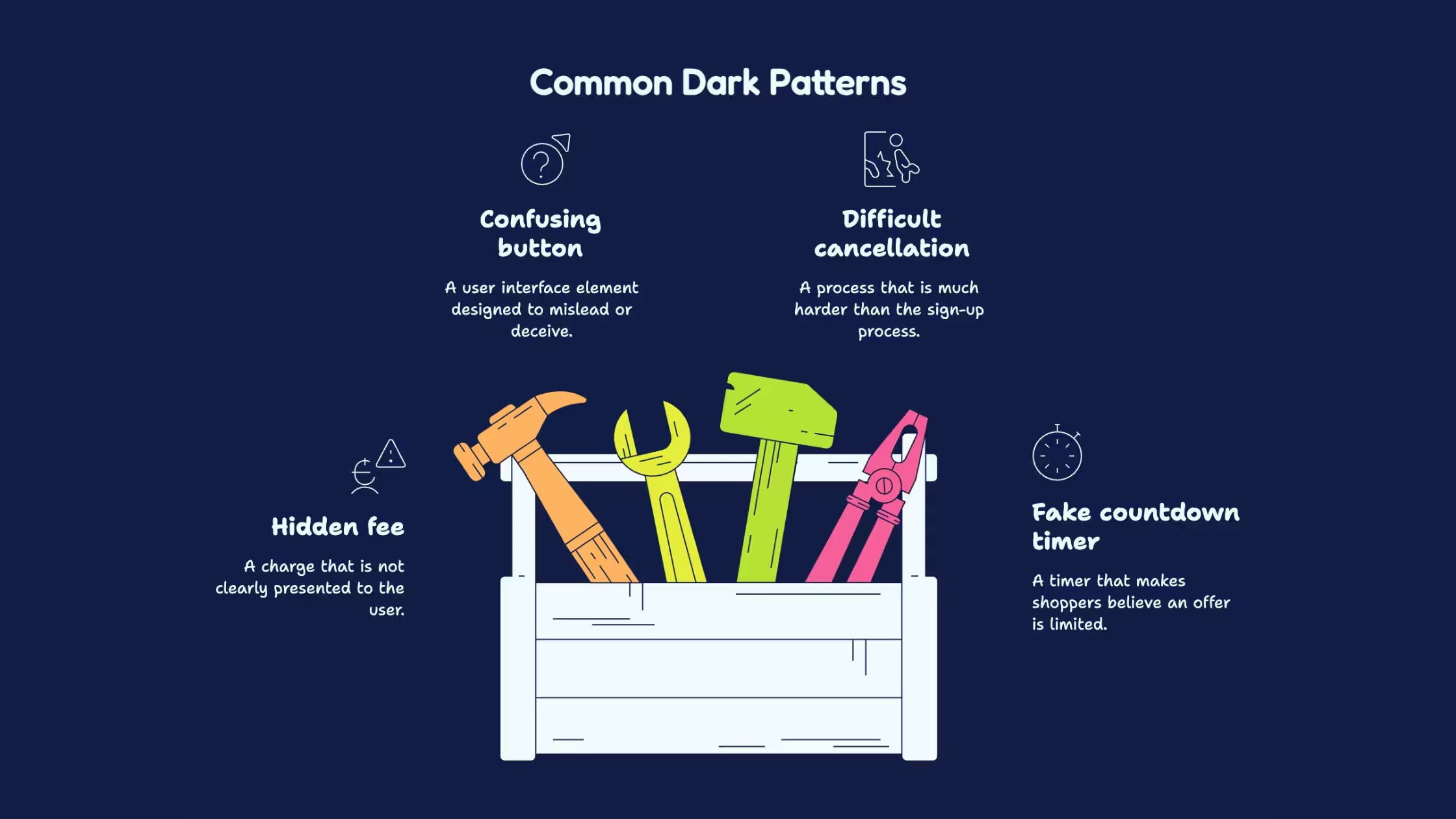
It can be a hidden fee.
It can be a confusing button.
It can be a cancellation process that is much harder than the sign-up process.
It can also be a fake countdown timer.
The U.S. Federal Trade Commission includes false countdown timers among the common dark patterns used online. These timers make shoppers believe they have only a short time to buy, even though the offer is not truly limited. This is not a small or unusual problem.
The European Commission and national consumer authorities screened 399 online shops. They found at least one dark pattern on 148 of them. Forty-two websites used fake countdown timers. Other stores hid important information or used design and language to push shoppers toward certain choices. You can read the European Commission’s findings here.
Dark patterns may create a quick sale. But they can also teach customers not to believe what the store says.
When Does Urgency Become Misleading?
Urgency becomes misleading when the message and the real situation do not match.
For example:
- The store says an offer ends in ten minutes, but it starts again after the page is refreshed.
- A banner says “Today only,” but the same offer appears every day.
- A product page says “Only two left,” even though the stock level is much higher.
- A discount is called “exclusive,” but every visitor receives the same public code.
- Important conditions appear only after the customer enters checkout.
In the EU, the Unfair Commercial Practices Directive specifically covers false limited-time claims. It prohibits falsely saying that a product or special condition is available for only a very limited time in order to force an immediate decision. The full rule is available in Annex I, point 7 of the Directive.
Rules can vary by country, offer type, and store setup. But the practical lesson is simple:
If your promotion says something is limited, the limit should be real.
6 Promotion Patterns Shopify Merchants Should Avoid
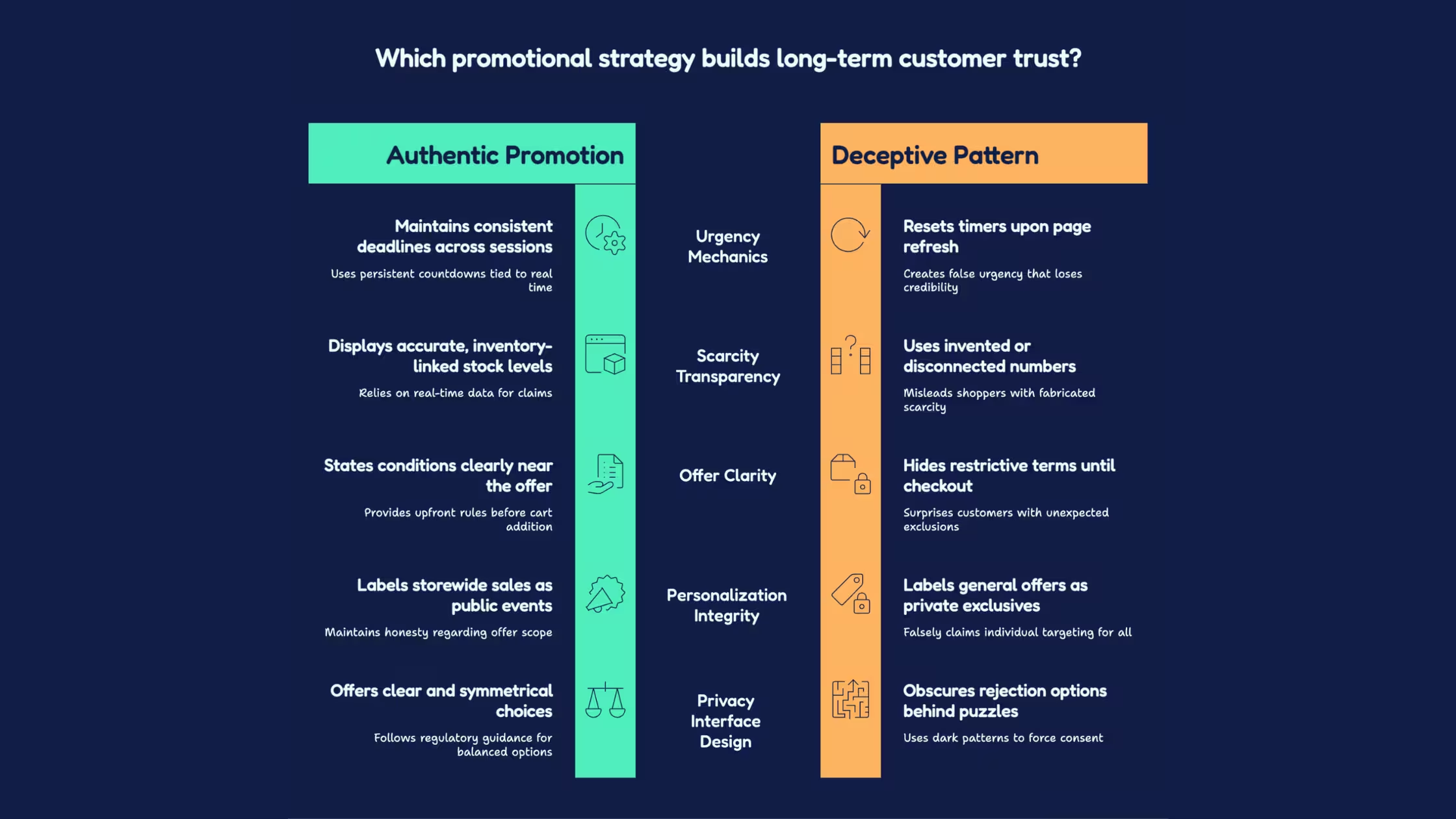
1. The Timer That Resets
A shopper sees that an offer ends in 15 minutes.
They leave the page and return later. The timer is back at 15 minutes.
At that point, the timer no longer creates urgency. It proves that the first deadline was false.
A real timer should continue from the same deadline. Refreshing the page or opening another tab should not create a new offer.
2. The Sale That Never Ends
“Final hours.”
“Last chance.”
“Ends tonight.”
These messages are strong because they promise a clear ending. If the sale continues tomorrow, the words lose their meaning.
A store can run frequent promotions. But each promotion should have honest dates and conditions. When one campaign ends, do not quietly replace it with the same “last chance” offer.
3. False Scarcity
Scarcity is about quantity, not time.
Messages such as “Only three left” or “Almost sold out” can be useful when they come from real inventory data.
They become misleading when the number is invented or disconnected from actual stock.
If inventory changes, the message should change with it. If the store cannot confirm the number, it should not display the claim.
4. Hidden Conditions
A 20% discount may sound simple. But the customer may later discover that it:
- Applies only to selected products
- Requires a minimum order value
- Cannot be combined with another offer
- Excludes sale items
- Adds a subscription to the order
Conditions should not appear as a surprise at checkout.
Show the important rules near the offer. Use plain words. Customers should understand what they are accepting before they add the product to their cart.
5. Fake Exclusivity
“Selected just for you” is a promise.
If every visitor sees the same message and uses the same public code, the offer is not personal.
This does not mean every promotion must be personalized. A public storewide sale is completely valid when it is presented as a public storewide sale.
The problem is calling a general promotion “private,” “personal,” or “exclusive” when it is none of those things.
6. Privacy Choices Designed to Push One Answer
Dark patterns are not limited to purchase buttons.
They can also appear in cookie banners and privacy settings.
For example, “Accept all” may be large and bright while the option to reject tracking is hidden behind several screens. The words may be confusing. The visitor may have to solve a puzzle just to say no.
The California Privacy Protection Agency says privacy choices should be clear and balanced. It also warns that interfaces can be dark patterns based on their effect, even if the business did not intend to mislead anyone. Its dark patterns enforcement advisory recommends clear language and symmetrical choices.
Trust should continue through the whole experience—from the promotion to the privacy choice.
What Does Real Urgency Look Like?
Real urgency starts with a real reason.
That reason could be:
- A Black Friday campaign with a fixed end date
- A shipping deadline before a holiday
- A product launch price that ends at a stated time
- A flash sale with limited hours
- A personal offer with a unique expiration time
The format can change. The basic rules do not.
1. Give the Deadline a Real Meaning
Do not add a timer only because timers can attract attention.
Ask what will actually change when the timer ends.
Will the price return to normal? Will the discount code stop working? Will same-day shipping no longer be available?
If nothing changes, there is no real deadline.
2. Use One Deadline
The same offer should show the same remaining time across the shopping journey.
The product page, cart, and other store pages should not show different deadlines. Refreshing the page should not restart the clock.
One offer needs one source of truth.
3. Make the Expiration Real
When the timer reaches zero, the promised benefit should end.
If the offer uses a discount code, that code should stop working. If the promotion has ended, the store should remove the campaign message.
The system behavior must match the words on the screen.
4. Explain the Important Terms
Customers should be able to answer these questions:
- What do I receive?
- Which products are included?
- Is there a minimum order?
- When does the offer end?
- What happens after it ends?
Do not hide the answers inside long legal text.
5. Do Not Replace an Expired Offer Immediately
Imagine that a personal offer ends. One second later, the visitor receives another offer with a new timer.
The first deadline now feels meaningless.
A cooldown period gives the expiration weight. It also prevents the store from surrounding the shopper with constant pressure.
6. Use Urgency Only When It Adds Value
Not every visitor needs a discount.
Not every product needs a timer.
Not every page needs a popup.
Urgency works best when it gives relevant information at the right moment. When it appears everywhere, customers learn to ignore it.
Personalized Offers Add a Privacy Question
A storewide campaign can show the same message to everyone. A personalized campaign works differently.
It may use information such as:
- Pages or products viewed
- Cart activity
- Number of visits
- Traffic source
- Device type
- Previous purchases
This can make an offer more relevant. It can also involve personal data, cookies, or similar tracking technologies.
Do not assume data is anonymous only because it does not include a name or email address. An identifier stored in a cookie may still relate to an individual or device.
Under the GDPR, a business needs a valid legal basis to process personal data. When consent is used, it must be freely given, specific, informed, and unambiguous. The European Data Protection Board explains these requirements in its small-business data protection guide.
The EDPB also explains that storing or accessing non-essential cookies generally requires informed consent under European cookie rules. Technically necessary cookies are treated differently. Its cookie consent FAQ provides a simple overview.
In California, consumers may have the right to opt out when personal information is sold or shared for cross-context behavioral advertising. The exact duty depends on how the store and its vendors use the data. The California Privacy Protection Agency’s CCPA overview explains the main consumer rights.
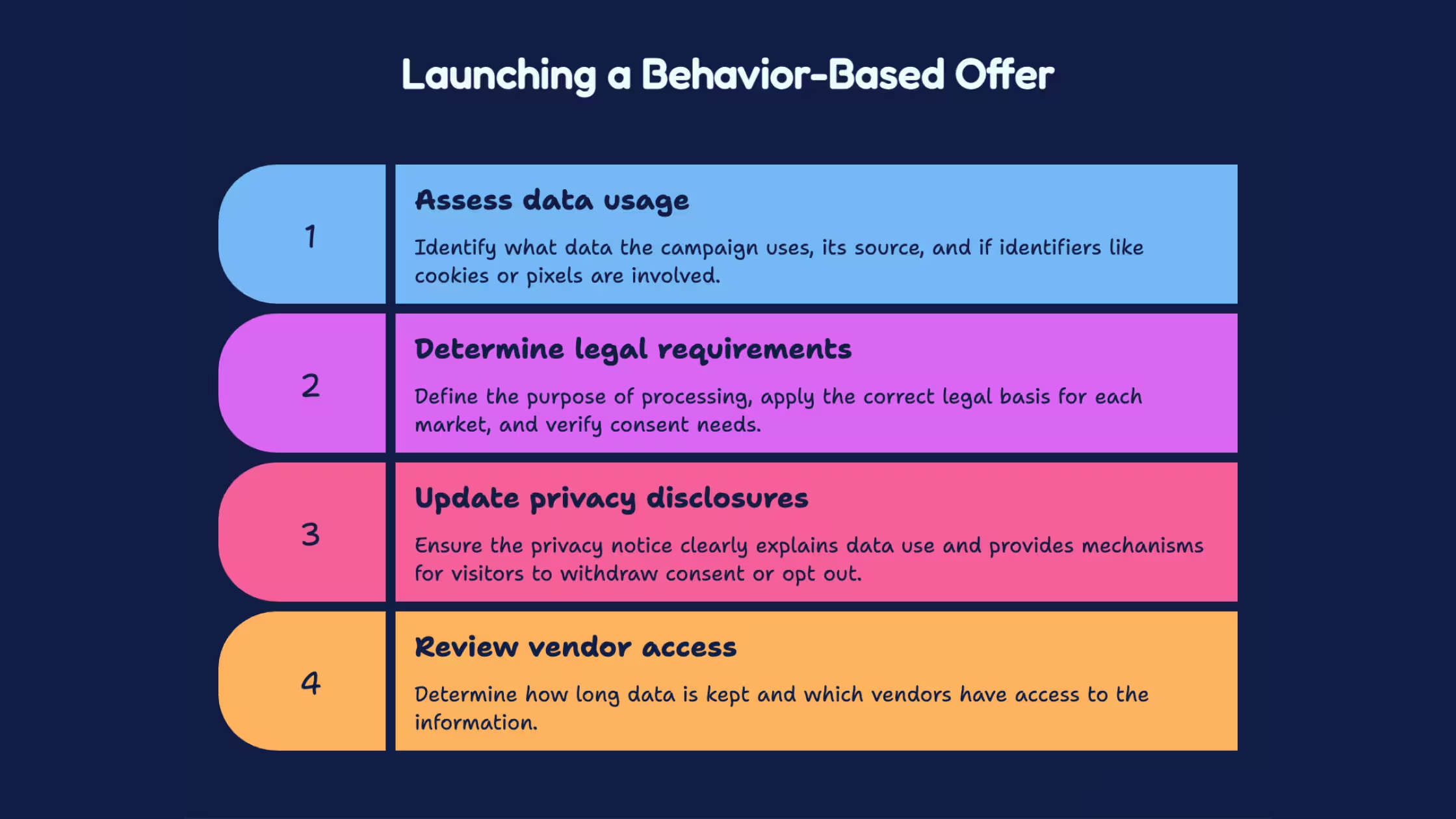
Before launching a behavior-based offer, merchants should ask:
- What data does the campaign use?
- Where does that data come from?
- Is a cookie, script, pixel, or other identifier involved?
- What is the purpose of the processing?
- What legal basis applies in each market?
- Must the tool wait for consent before it starts?
- Does the privacy notice explain this use clearly?
- Can visitors withdraw consent or opt out?
- How long is the data kept?
- Which vendors can access it?
These questions should be answered before the campaign goes live, not after a complaint.
A Practical Ethical Promotion Checklist
Before publishing a time-limited or personalized promotion, check the following:
If several boxes are unchecked, the campaign is not ready.
How Consentmo and Growth Suite Support Different Parts of the Experience
Trust requires more than one tool.
For the privacy side, a consent management platform such as Consentmo can help Shopify merchants present consent choices, manage settings by region, control non-essential scripts, and keep privacy information available to visitors.
For the promotion side, the offer system must keep its promises.
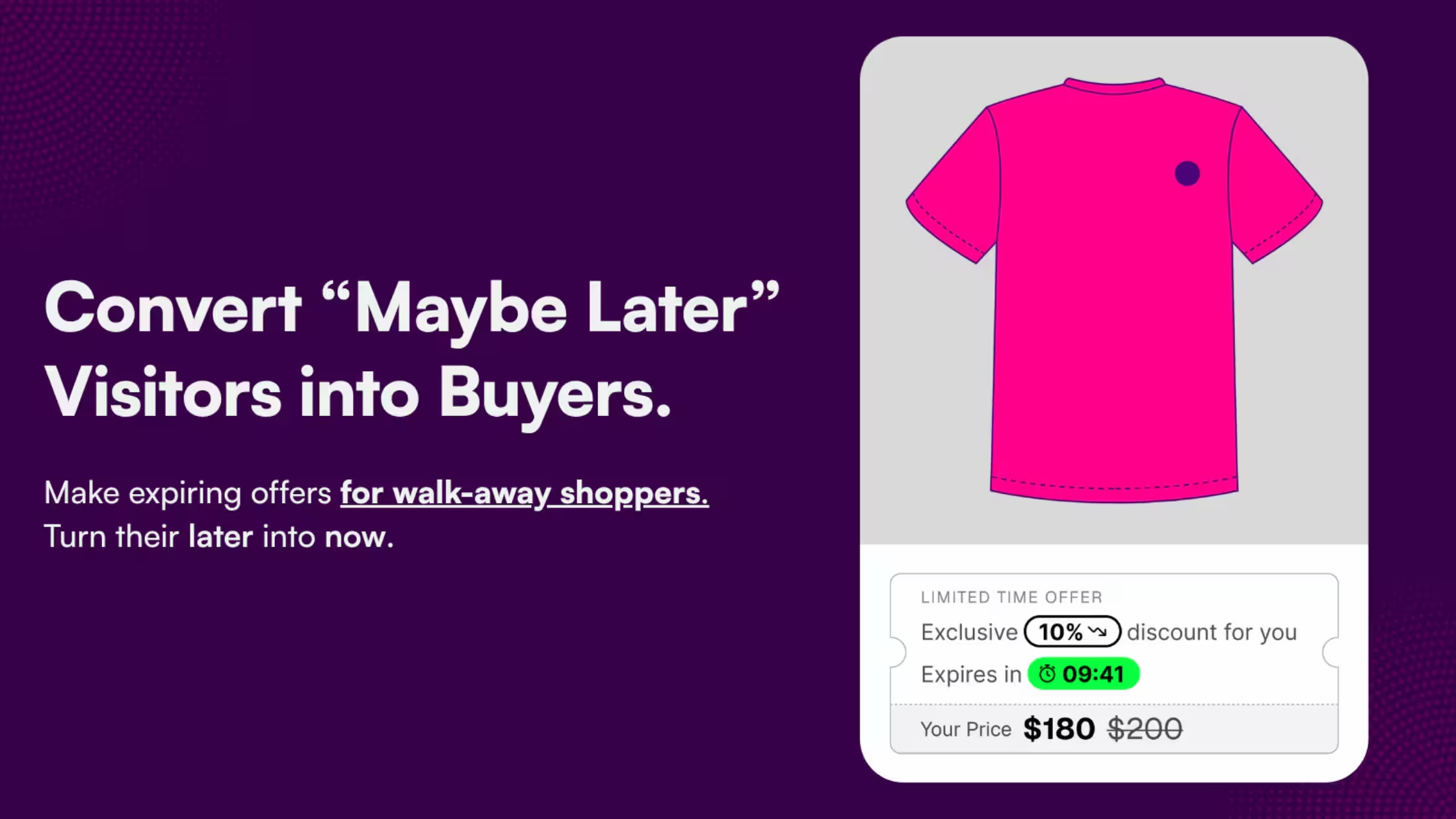
Growth Suite is designed around personal offers with real expiration. It can create a unique discount code for a visitor, apply it to the cart, keep the same countdown running across the experience, and remove the discount when time expires. A cooldown period prevents the same visitor from receiving another offer immediately.
These tools handle different responsibilities.
Consent management does not make a false promotion honest. An honest timer does not remove the need to review privacy and consent requirements.
Merchants need both sides:
- Clear choices about data
- Clear promises about the offer
That is how conversion and trust can work together.
Final Thought
Urgency is not the problem. The broken promise is the problem.
A good promotion gives the shopper useful information and a clear choice. A bad promotion creates pressure with a deadline, stock claim, or personal message that is not true.
Before launching a campaign, ask one simple question: If the customer understood exactly how this promotion works, would they still feel comfortable buying?
If the answer is yes, you are likely building urgency in the right way.
This article provides general information and does not constitute legal advice. Privacy and consumer protection requirements can vary by location and business setup. Merchants should review their specific practices with a qualified legal professional.
Sources and Further Reading


_converted.avif)