Key Takeaways
- Missouri signed the Act Against Abusive Website or Web Content Access Litigation (SB 907). It takes effect August 28, 2026.
- Qualifying businesses that take substantial, good-faith steps to fix identified accessibility issues within 90 days of notice can get a rebuttable presumption that a later claim is abusive.
- Qualifying Missouri residents and registered entities can bring a separate civil action against the claimant, attorney, or law firm. Courts may award attorney fees, costs, and possible sanctions.
- This is not automatic immunity and does not cancel legitimate ADA obligations.
- Utah and Texas also have related notice-and-cure frameworks. Details differ by state.
- Shopify merchants still need a real accessibility plan: WCAG-minded storefront work, documentation, and tools that support visitors with disabilities.
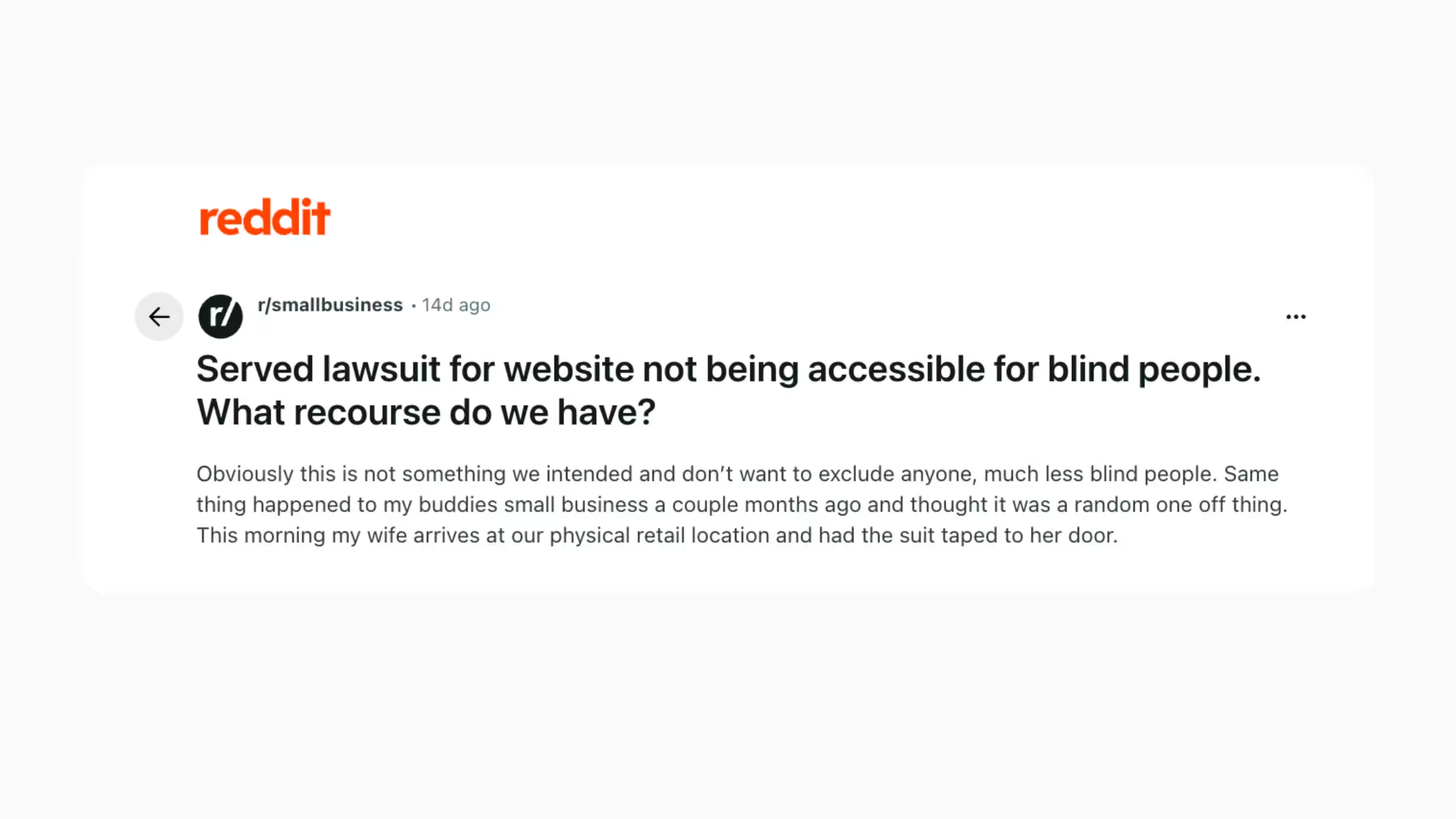
Website accessibility lawsuits have become a familiar risk for online stores. Demand letters and cookie-cutter complaints often land on small and mid-size merchants first. Settlement pressure is part of the model: defending the case can cost more than paying to make it go away.
Missouri just passed a law aimed at that pattern. For Shopify merchants, the practical question is simple: what changed, who is protected, and what should you do if a notice arrives?
This guide explains Missouri’s new statute in plain language, compares it with similar rules in Utah and Texas, and outlines a careful response path for ecommerce operators. It is educational only. It is not legal advice. Talk to a qualified attorney in your state if you receive a demand letter or complaint.
What Missouri passed regarding ADA lawsuits
In May 2026, Governor Mike Kehoe signed SB 907, which establishes the Act Against Abusive Website Access Litigation and takes effect on August 28, 2026.
Missouri lawmakers designed the act for website and web content accessibility claims. That matters for Shopify storefronts, product pages, checkout flows, and related web content, not only for traditional brick-and-mortar ADA cases.
90-day process
People often call this a “grace period.” That phrase is useful as a shortcut, but it is not the full legal picture.
Under Missouri’s framework:
- A business receives written notice, or is served with a sufficiently detailed complaint, that identifies website or web content accessibility problems.
- The business then has 90 days to take substantial, good-faith steps and correct the identified issues.
- If the business corrects the issue within that window, it can receive a rebuttable presumption that a subsequent website-accessibility claim tied to that issue is abusive.
- The presumption is not automatic immunity. A plaintiff can still try to overcome it. If a court finds the violation was not corrected within 90 days, the presumption does not apply.
Important notes for merchants:
- The statute does not clearly ban someone from filing right away.
- The 90-day process mainly strengthens the business’s position in a later abusive-litigation action.
- Documentation is everything. Courts look at what you fixed, when you fixed it, and whether the effort was substantial and in good faith.
For a Shopify merchant, that means treat every demand letter as an operations event. Log the date received. Capture screenshots. Assign owners. Track remediation tickets. Keep proof of what changed on the live storefront.
The right to sue for abusive litigation
Missouri’s law also lets a qualifying party bring a civil action against the party, attorney, or law firm that started the accessibility litigation, and ask a Missouri court to decide whether that case was abusive.
In everyday language, people say “countersue.” Legally, it is framed as a separate civil action, not always a counterclaim inside the original lawsuit.
This is the piece designed to change the economics of high-volume demand-letter campaigns. If the original case looks more like a settlement engine than a good-faith accessibility effort, the business may have a path to push back.
Attorney fees and sanctions
If a court finds the original accessibility case abusive, it may award the business:
- Reasonable attorney fees and costs from defending the original case
- Fees and costs from bringing the abusive-litigation action
- Possible punitive damages or sanctions of up to three times the attorney-fee award
“May” is the key word. Awards are discretionary. A successful fix on your website does not guarantee fee recovery. A court still has to find the original litigation abusive under the statute’s standards.
What counts as abusive litigation
The core question is purpose. Was the primary goal to improve access for people with disabilities, or to extract payment because defense is expensive?
Courts can look at factors such as:
- Whether the plaintiff or firm files many substantially similar cases
- Whether reasonable notice and a real chance to correct were given
- Prior sanctions or bad-faith findings
- The nature and reasonableness of settlement demands
- Whether Missouri rules against frivolous or improper filings were violated
For merchants, the takeaway is practical. A vague threat letter with a quick settlement demand and little detail is a red flag. A specific notice that identifies concrete barriers and allows time to fix them is a different posture. Either way, get counsel involved before you reply.
Who qualifies under Missouri’s law
Protections are limited. The law is written around Missouri connections, including:
- Individuals who reside in Missouri
- Entities registered with the Missouri Secretary of State
- Missouri state and local government entities
A brand that only sells to Missouri customers through Shopify, without a qualifying Missouri registration or residency, may not automatically qualify. Entity status and venue facts matter. Confirm with a Missouri attorney before you assume coverage.
Other states with notice-and-cure style protections
Missouri is not alone. Several states have notice-and-cure or anti-abusive-litigation concepts. The legal effect varies a lot.
Utah
Utah enacted SB 68, often described as an Act Against Abusive Website Access Litigation style reform. Reporting places the governor’s signature around March 23, 2026, with effect around May 6, 2026.
Utah’s structure is close to Missouri’s idea:
- Good-faith remediation can support a rebuttable presumption of abusive litigation
- Completing fixes within defined windows strengthens the business position
- Courts may award fees, costs, punitive damages, and sanctions if a case is abusive
Like Missouri, this is stronger defense architecture, not a pure “nobody can sue for 90 days” rule.
Texas
Texas has one of the clearest website-related cure provisions under Texas Human Resources Code § 121.0041:
- The claimant must give at least 60 days’ written notice before filing the covered state-law action
- The notice must identify each alleged violation in reasonable detail
- The business may correct the issues during that period
- The statute expressly includes claims involving Internet website accessibility guidelines
- A court may grant up to an additional 60-day abatement when remediation started on time but could not reasonably finish
Texas is closer to a genuine pre-suit notice system for covered state claims. It still does not rewrite the federal ADA by itself, and it does not automatically block every standalone federal Title III case.
What Shopify merchants should do now
State reforms help. They do not replace preparation.
1. Audit the customer journey
Review the pages that matter most for shoppers with disabilities:
- Homepage and collection pages
- Product detail pages
- Cart and checkout
- Account login and order status
- Blog and policy pages linked from the footer
- Cookie banner, accessibility widget, and popups that can trap keyboard focus
2. Fix high-impact barriers first
Priority issues usually include:
- Missing or weak alt text on product images
- Low color contrast on buttons and sale badges
- Keyboard traps in menus, drawers, and modals
- Form fields without clear labels
- Videos without captions
- Focus indicators that disappear
- App overlays that block assistive tech
3. Document every remediation step
If a notice arrives:
- Preserve the letter and envelope or email headers
- Record the date received
- Route it to counsel before you negotiate
- Create a ticket list mapped to each alleged barrier
- Keep before/after evidence on the live theme
- Note third-party app owners when the issue sits outside your theme code
That paper trail is what makes a 90-day cure path real in court, not just in a blog post.
4. Proceed carefully on settlement pressure
Demand-letter campaigns often rely on speed and fear. Missouri’s law is one reason to slow down, fix what is real, and involve counsel. Do not treat the statute as a free pass. Do not ignore legitimate barriers either.
5. Build accessibility into your app stack
Theme edits alone are rarely enough. Cookie tools, upsell popups, reviews widgets, and chat apps all affect accessibility. Choose vendors that support keyboard use, screen readers, and clear controls.
How Consentmo supports store accessibility
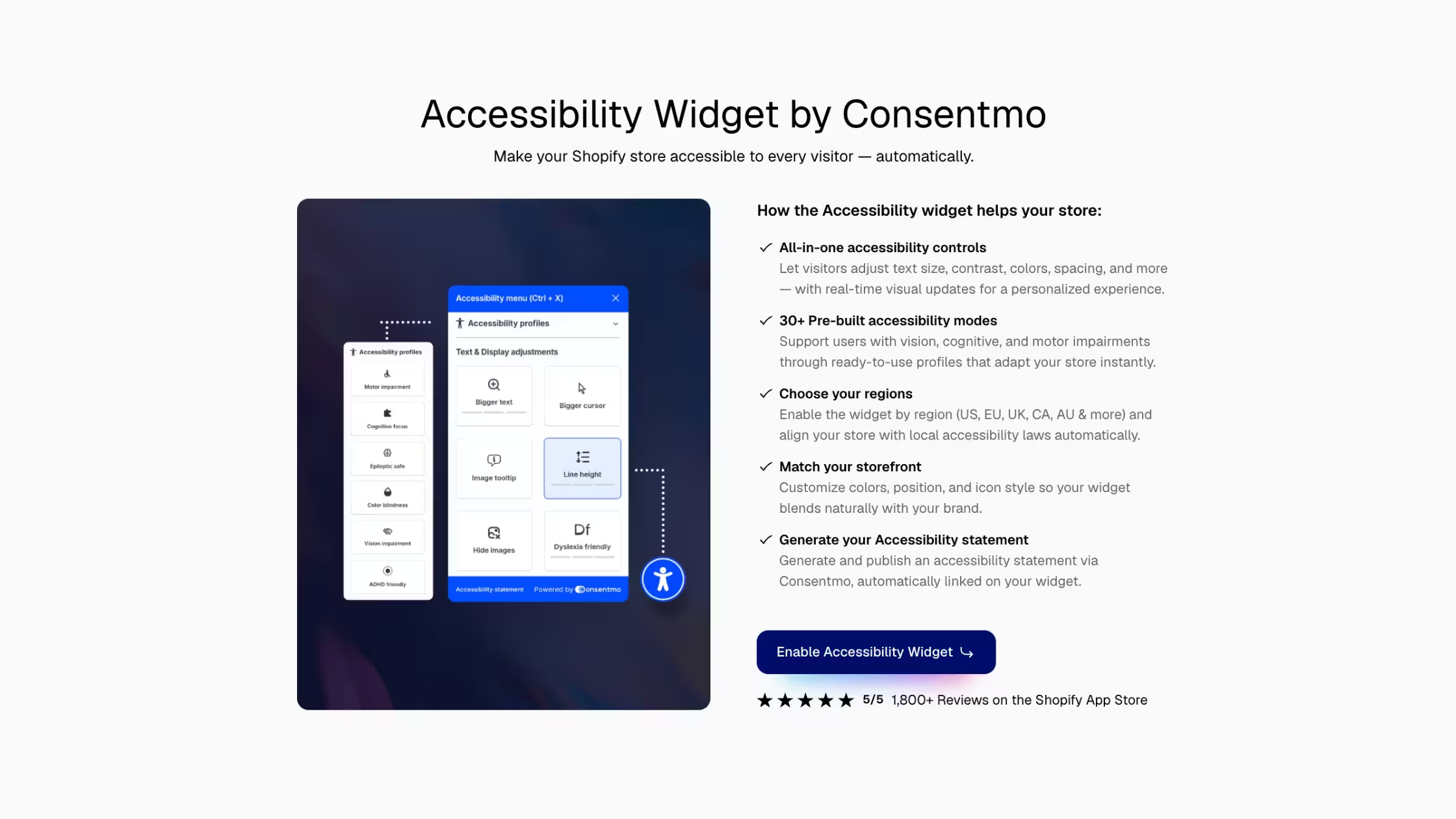
Accessibility work is easier when core storefront tools already support it. Consentmo includes accessibility-focused features for Shopify merchants, including an accessibility widget, accessibility statement support, region-based accessibility controls, and accessibility analytics so you can monitor usage and iterate.
If you want privacy compliance and accessibility support in one Shopify app stack, start here:
Install Consentmo on the Shopify App Store
Pair the app with theme-level WCAG work and a documented remediation process.
Bottom line for Shopify merchants
Missouri’s new law is real progress against abusive website accessibility litigation. Starting August 28, 2026, qualifying Missouri businesses that correct identified barriers in good faith within 90 days can strengthen their defense posture and, in the right case, pursue fees against abusive filers.
Utah offers a similar anti-abusive model. Texas offers a clearer pre-suit notice-and-cure path for covered state claims.
None of these laws replace the core duty: make your Shopify store usable for people with disabilities. The strongest position is still the simplest one.
Accessible storefront first. Fast, documented remediation second. Legal strategy third.
If a notice is already on your desk, preserve it, call a Missouri-experienced ADA attorney, and start fixing the concrete issues with a dated trail of evidence.
This article is for general information only and is not legal advice. Laws and enforcement practices change. Confirm details with qualified counsel for your facts and jurisdiction.