Key Takeaways
- Safari joins native GPC support in beta: On November 3, 2026, Apple released the Safari 27.3 beta alongside OS 27.3 developer betas, adding a user-toggleable "Use Global Privacy Control" setting in Safari's Advanced preferences.
- Driven by regulatory shifts: The move aligns with California's Opt Me Out Act (AB 566), which requires browsers operating in California to provide consumer-configurable opt-out signals by January 1, 2027.
- GPC does not replace cookie banners: Browser opt-out preference signals communicate a preference not to sell or share personal data under frameworks like California's CCPA/CPRA. They do not supply affirmative prior consent required for non-essential cookies under European GDPR and ePrivacy regulations.
- Shopify stores need dual handling: Shopify's Customer Privacy API collects and honors GPC signals for configured data-sale regions, but third-party marketing tags and ad scripts running outside native sandboxes still need proper consent configuration.
On November 3, 2026, Apple seeded the first beta of Safari 27.3 alongside its OS 27.3 developer betas. While the initial Safari 27.3 beta release notes focused on standard web platform refinements, early testing and reporting across developer communities revealed a notable addition: a dedicated toggle labeled "Use Global Privacy Control" inside Safari's Advanced settings.
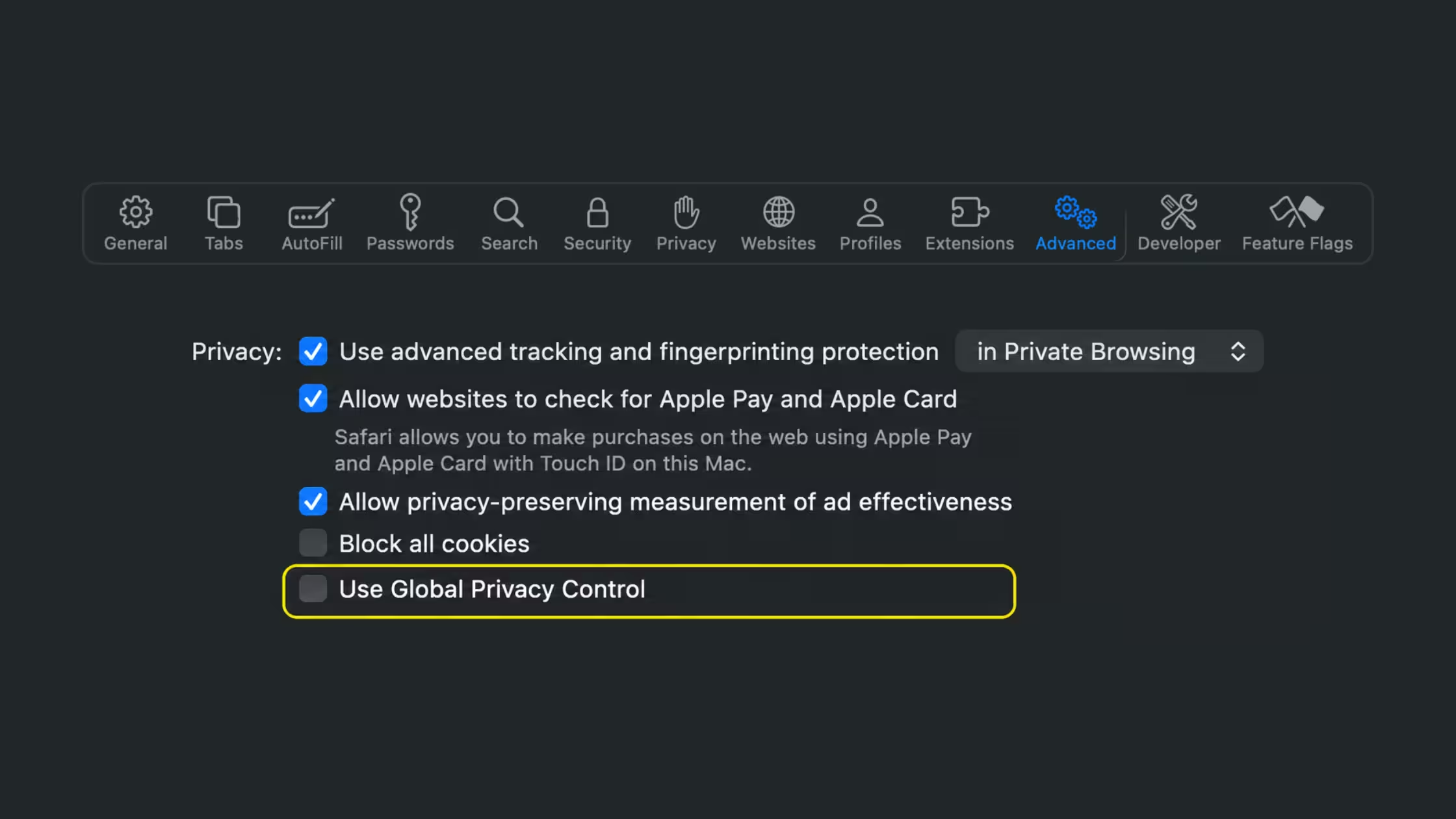
The setting is currently manual and disabled by default in beta builds, but its presence marks a major milestone for web privacy standards. Safari commands substantial browser market share, especially on mobile devices. When built-in browser settings allow everyday shoppers to transmit universal privacy signals with a single switch, online storefronts see an immediate increase in automated opt-out requests.
For Shopify merchants, this development raises practical operational questions: Does an opt-out preference signal mean cookie banners will disappear? How does Shopify handle incoming browser signals? And what steps must store owners take to keep tracking pixels, reporting, and consent flows properly aligned?
What Is Global Privacy Control?
Global Privacy Control (GPC) is a standardized browser-level specification developed by privacy advocates, publishers, and technology companies. It allows a user to set their privacy preference once at the browser level, rather than having to locate and submit manual opt-out requests on every single website they browse.
Consider a practical example. A shopper living in San Diego activates GPC in their browser settings. When they open your Shopify store, their browser transmits the GPC signal alongside its initial page request. Under applicable privacy laws, your storefront must detect that signal and treat it as a valid, immediate request to opt out of the sale or sharing of their personal information. The customer should not have to hunt for a footer link, complete a multi-step form, or click a "Do Not Sell or Share My Personal Information" button to exercise that right.
Why Apple Is Adding GPC Before 2027 Matters
Apple has not issued an official statement attributing the addition of GPC in Safari 27.3 to a specific regulation. However, the timing coincides directly with statutory preparations for California's Opt Me Out Act (AB 566).
Enacted by California in 2025, AB 566 takes effect on January 1, 2027. The statute amends the California Consumer Privacy Act framework to place direct obligations on browser vendors. Under California Civil Code § 1798.136, any business that develops, provides, or maintains a general-use desktop or mobile browser used by California consumers must include a clear, accessible opt-out preference signal configuration setting.
Does Global Privacy Control Mean Cookie Banners Will Disappear?
Whenever browser-level privacy settings make headlines, a common question follows: will universal opt-out signals eliminate cookie banners altogether?
The short answer is no. Global Privacy Control does not replace cookie consent banners because the underlying legal requirements and privacy mechanisms govern different activities.
GPC communicates an opt-out preference regarding the sale or sharing of personal data, primarily designed around North American privacy architectures. Cookie banners exist largely to collect affirmative prior opt-in consent for storing and accessing information on a user's device under European and international frameworks.
Why Stores Still Need Both
- GPC does not communicate consent: Under the EU GDPR and ePrivacy Directive, non-essential cookies (such as analytics, conversion pixels, and session recording tools) cannot load before the visitor provides explicit opt-in consent. A visitor arriving with GPC enabled has expressed an objection to data selling and sharing. That signal does not give a store permission to drop marketing cookies on their device. A compliant European cookie banner is still required.
- First-party operations remain distinct: GPC does not prohibit necessary shopping functionality, essential security cookies, or legitimate first-party operations that do not constitute selling or cross-context tracking. Determining what tracking is restricted depends on the purpose of each script and the governing legal jurisdiction.
- Regional targeting dictates the experience: A European shopper visiting an online store needs an opt-in consent banner. A California shopper visiting the same store needs an opt-out mechanism and immediate recognition of their browser signal.
Browser preference signals and regional consent banners solve complementary problems. Storefronts operating internationally must support both.
What Safari's GPC Support Means for Shopify Merchants
Modern Shopify storefronts rely on an interconnected tracking and analytics ecosystem. On an average store, customer data flows through several parallel systems:
- The native Shopify Customer Privacy API and checkout analytics.
- Google tag implementations, Google Analytics 4, and Google Consent Mode v2.
- Direct advertising pixels for Meta, TikTok, and Pinterest.
- Independent marketing, affiliate, review, and heatmap scripts loaded through app blocks or theme files.
When Safari begins passing GPC signals natively, your storefront must ensure that third-party advertising tools stop receiving behavioral data for those visitors.
How Consentmo Helps Shopify Stores Respect GPC Signals
Consentmo includes a dedicated Global Privacy Control (GPC) integration designed specifically to bridge browser signals, Shopify privacy settings, and third-party tracking behavior.
When enabled and configured, Consentmo coordinates storefront compliance automatically:
- Signal detection: Consentmo detects incoming GPC preferences transmitted by compatible browsers via client-side JavaScript or HTTP headers.
- Immediate opt-out: The app translates the browser signal into an active data-sale opt-out, updating both Shopify's native privacy API and Consentmo's tracking state.
- Banner adaptation: The visitor does not need to manually click a "Do Not Sell or Share" link. Consentmo adjusts its interface to confirm that the visitor's browser preference has been acknowledged.
- Regional precision: By pairing GPC detection with Consentmo's Smart Geotargeting, stores can present strict opt-in consent banners to EU visitors while honoring automated opt-out signals for California and US state privacy visitors.
Step-by-Step Setup in Consentmo
Enabling GPC support for your Shopify storefront takes only a few minutes:
- In your Shopify Admin, open the Consentmo application.
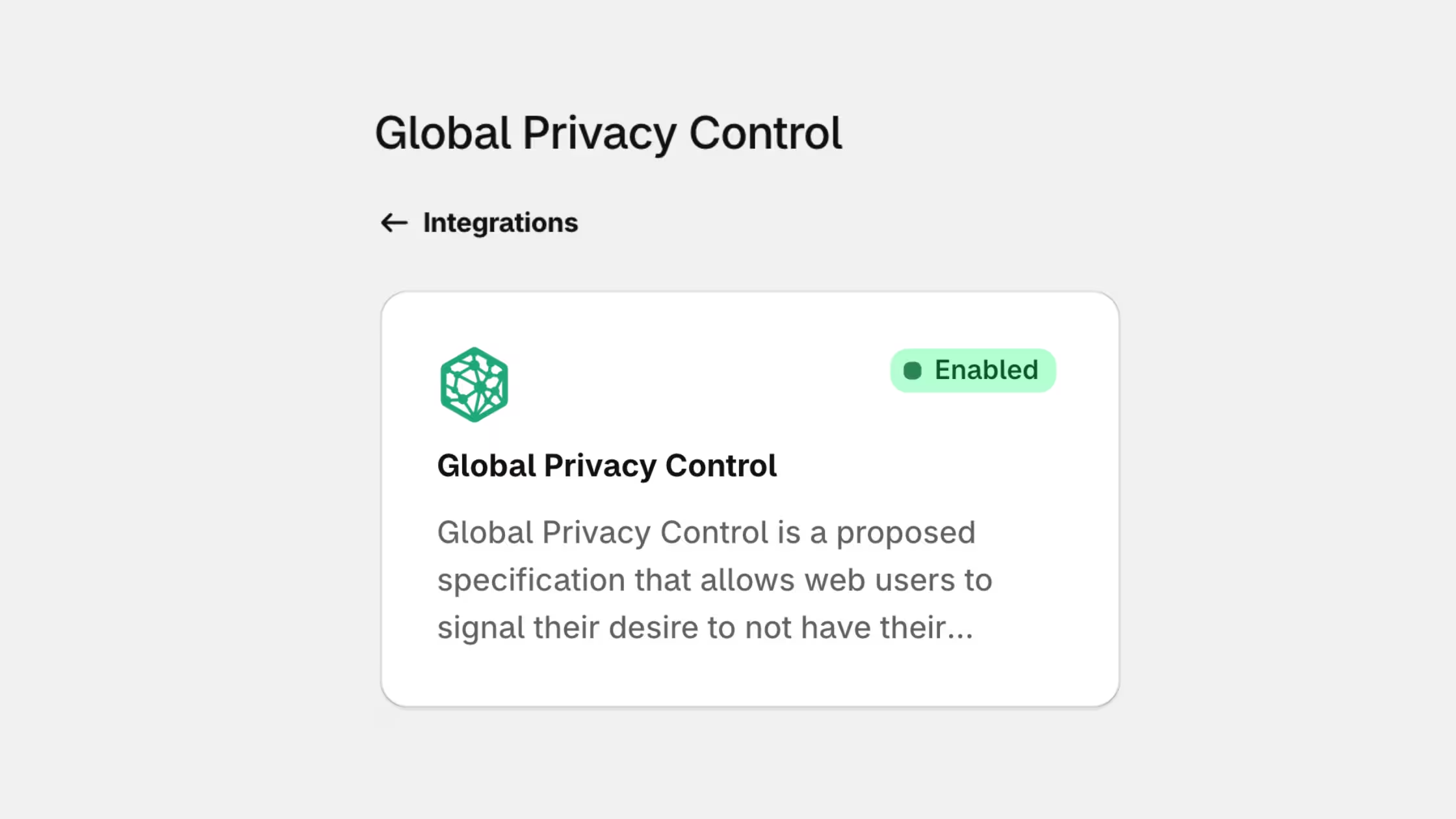
- Go to Integrations from the left navigation and select Global Privacy Control.
- Toggle the integration to Enabled and save your changes.
- Next, open your Shopify Admin Settings → Customer Privacy.
- Under the Data sales opt-out section, review your configured countries and regions (such as the United States / California).
- Verify that your marketing and analytics channels are linked to your Customer Privacy settings so Shopify passes opt-out states cleanly across connected pixels.
For detailed instructions and advanced configuration parameters, consult the official Consentmo GPC setup documentation.
The Bigger Shift Toward Automated Privacy Preferences
Safari’s new GPC setting makes it easier for people to share their privacy preferences as they browse. Instead of making the same request on every website, they can enable one setting in their browser.
For Shopify merchants, this is a good time to check that your store recognizes those signals and that your tracking tools respect visitors’ choices. Cookie banners still have a role, too, especially when your store serves customers in regions with different privacy requirements.
As Safari 27.3 is still in beta, keep an eye on its release status. In the meantime, reviewing your GPC and regional privacy settings can help you prepare for more visitors using browser-level opt-outs.