Shopify stores almost always need both a privacy policy and clear cookie disclosures. Merchants still mix them up: one long privacy page with a single “we use cookies” sentence, or a cookie banner with no real policy behind it.
This guide separates the two documents, explains how they work with your consent banner, and shows what Shopify merchants should put in place under EU, UK, and US rules. It also covers how to keep a cookie policy accurate when apps and pixels change, including Consentmo’s Smart Cookie Policy page.
TLDR
- Privacy policy covers personal data broadly: what you collect, why, who receives it, how long you keep it, and how people exercise their rights.
- Cookie policy (or a dedicated cookies section) focuses on cookies and similar technologies: purpose, provider, duration, and how visitors control them.
- Neither replaces a working cookie banner / preferences UI. The banner collects a choice; the cookie policy explains what that choice covers.
- EU/UK: ePrivacy / PECR + GDPR style rules mean clear information and consent for non-essential cookies.
- US: state laws (led by CCPA as amended by CPRA) emphasize notice and opt-out of sale/share/targeted advertising more than EU-style prior consent for every analytics cookie.
- Static cookie lists go stale when you install apps. Scan your storefront and keep disclosures in sync. Consentmo can generate a cookie policy from your tracker scan and keep a Smart Cookie Policy page current after new scans.
What is a privacy policy?
A privacy policy is the store’s main notice about personal data. Laws such as the GDPR in the EU and the CCPA and other US state laws expect you to explain how you collect, use, share, and protect personal information.
A solid privacy policy typically covers:
- What you collect (names, emails, order history, device data, and so on)
- Why you collect it (orders, support, marketing, legal duties)
- How you use and share it (processors, partners, authorities where required)
- Legal bases where GDPR-style rules apply
- Retention and deletion practices
- International transfers
- Security measures at a high level
- User rights and how to exercise them (access, deletion, correction, opt-out, and so on)
- Contact details for privacy questions
- How you announce updates
It is the umbrella document. Cookies and pixels can also be mentioned, but they usually need more detail than one paragraph can hold.
What is a cookie policy?
A cookie policy is a public document (often its own page) that tells visitors which cookies and similar technologies your site uses, what each one does, who provides it, how long it lasts, and how someone can accept, refuse, or change their choices.
A cookie is a small file of letters and numbers downloaded onto a computer when someone visits a website. The same rules cover similar technologies that store or access information on a device, including local storage and other tracking methods.
On a Shopify store, “similar technologies” often include:
- HTTP cookies
- localStorage / sessionStorage
- pixels and tags (Meta, Google, TikTok, and others)
- SDKs embedded by apps
A useful cookie policy covers the full tracker inventory, not only classic analytics cookie names. For a deeper explainer on categories, see Understanding digital cookies: the four key categories.
Key elements of a strong cookie policy:
- Categories and purposes (necessary, preferences, statistics, marketing), aligned with your banner labels
- Inventory: name/ID, provider, purpose, duration, type, first vs third party
- Consent and control: how to accept, refuse, or open preferences again
- Third parties and where visitors can learn more
- Link to the privacy policy for broader personal-data practices
- Last updated date and a way to refresh when the stack changes
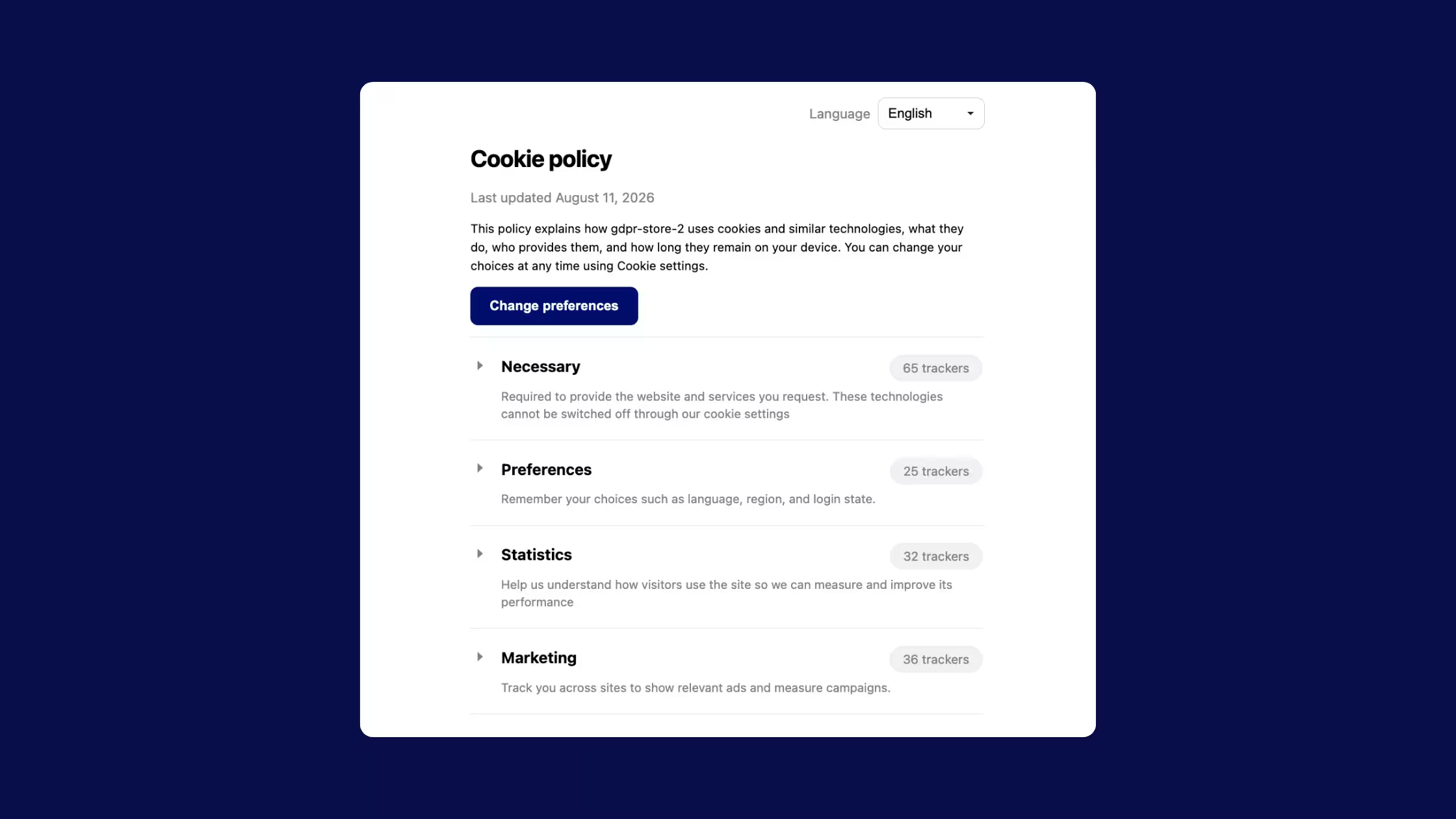
A privacy policy can include a cookies section. Many stores still publish a separate cookie policy page so the banner can link to a short URL and so marketing can update trackers without rewriting the whole privacy notice.
None of these replaces the others:
- Banner without a real disclosure → consent is hard to call informed.
- Policy without a working banner → you describe choices visitors cannot exercise.
- Privacy policy alone with one line about cookies → usually too thin for ePrivacy-style transparency.
For preferences UI details, see Cookie Preferences Popup: What Shopify merchants need to know.
Critical differences at a glance
1. Scope of data
Privacy policy: all personal data the business handles (checkout, accounts, support, marketing lists, and more).
Cookie policy: data collected or accessed through cookies, pixels, storage, and similar tech on the device.
2. Purpose of the document
Privacy policy: full lifecycle of personal data and legal bases/rights.
Cookie policy: why each tracking technology runs and how the visitor controls it.
3. Legal drivers
Privacy policy: GDPR, CCPA/CPRA and other state laws, and comparable regimes worldwide.
Cookie policy: ePrivacy Directive / PECR-style rules plus GDPR when identifiers are personal data; in the US, notice and sale/share/targeted-ads rules that often sit next to the privacy notice.
4. User controls
Privacy policy: access, delete, correct, port, opt out of sale/share, limit sensitive data use, and similar rights.
Cookie policy: accept/refuse categories, open preferences again, browser controls as a secondary path, and links into opt-out flows where US rules apply.
5. How shoppers meet them
Privacy policy: usually a footer link; more static reading.
Cookie policy: linked from the banner and footer; tied to interactive consent or opt-out UI.
What should each document include? (Shopify checklist)
Privacy policy checklist
- Identity of the business / data controller
- Categories of personal information and sources
- Purposes and (where required) legal bases
- Sharing / sale / processors
- Retention
- Rights and how to submit requests (Privacy Center / request pages help here)
- Security overview and international transfers
- Children’s data if relevant
- Contact and update process
- Footer link on the storefront
Cookie policy checklist
- Plain-language intro for this store
- Categories matching the banner
- Inventory from a real scan (not a competitor’s template)
- Change preferences control
- Third-party notes
- Link back to the privacy policy
- Last updated date
- Languages that match the storefront where you serve multiple locales
How Consentmo helps
Consentmo is built for Shopify merchants who need the banner, the disclosures, and the ongoing ops layer in one place:
- Cookie banner and preferences so visitors can accept, refuse, or change non-essential cookies where required
- Script control so tags respect those choices
- Tracker scans that feed accurate cookie lists
- Cookie policy page options: static HTML from your scan on eligible setups, and Smart Cookie Policy (Enterprise plan) for a storefront page that can auto-update after new scans
- Privacy Center and related compliance pages for rights requests and regional flows
- Compliance Score / Review and monitoring on higher plans so missing or unlinked pages surface before shoppers hit a 404
Install or open the app: Consentmo on the Shopify App Store.
Common mistakes
- Copy-pasting another brand’s cookie table
- Banner categories that do not match the policy
- Non-essential tags firing before consent while the policy claims you wait
- US traffic with no clear sale/share or targeted-ads opt-out path when those rules apply
- Never rescanning after installing apps
- English-only policies on a multilingual storefront
- Privacy policy only, with no workable cookie disclosure linked from the banner
Conclusion
A privacy policy tells the full story of personal data on your store. A cookie policy tells the focused story of tracking technologies on the device. Your banner and preferences UI turn those stories into real choices. EU and UK rules center on prior information and consent for non-essential cookies; US state laws lean on notice and opt-out of sale, sharing, and targeted advertising.
For Shopify merchants, the hard part is maintenance. Scan what actually runs, keep both documents accurate, align labels across banner and policy, and refresh when the stack changes. Consentmo helps with consent UI, scans, cookie policy generation (including Smart Cookie Policy), and the privacy surfaces that sit next to them.
This article is for general education. It is not legal advice. Confirm requirements with qualified counsel for your markets.