_converted.avif)
What Changed from 2.3 and What Shopify Merchants Need to Do
Consentmo has upgraded its IAB Transparency and Consent Framework support from TCF 2.3 to TCF 2.4. The update is already live. Stores that already use TCF receive it automatically. There is no action required.
IAB Europe’s web deadline for TCF 2.4 is 23 October 2026. Consentmo’s CMP ID remains 435.
This guide covers:
- what TCF 2.4 changes in the framework
- what shoppers see on the second layer of the banner
- what merchants need to do (and what they do not)
- where TCF 2.4 applies in Consentmo, and where it does not
TL;DR - TCF 2.4 in one minute
- Consentmo applies IAB TCF updates automatically. Your TCF banner now includes the TCF 2.4 Feature explanations, examples, and the updated Special Feature 2 name. Existing visitor choices are kept.
- Ordinary Features show official IAB explanations and short examples from the Global Vendor List, in the visitor’s language
- Ordinary Features still have no toggle; Special Features still use opt-in
- Special Feature 2 now uses the IAB name: “Identify devices based on information actively requested”
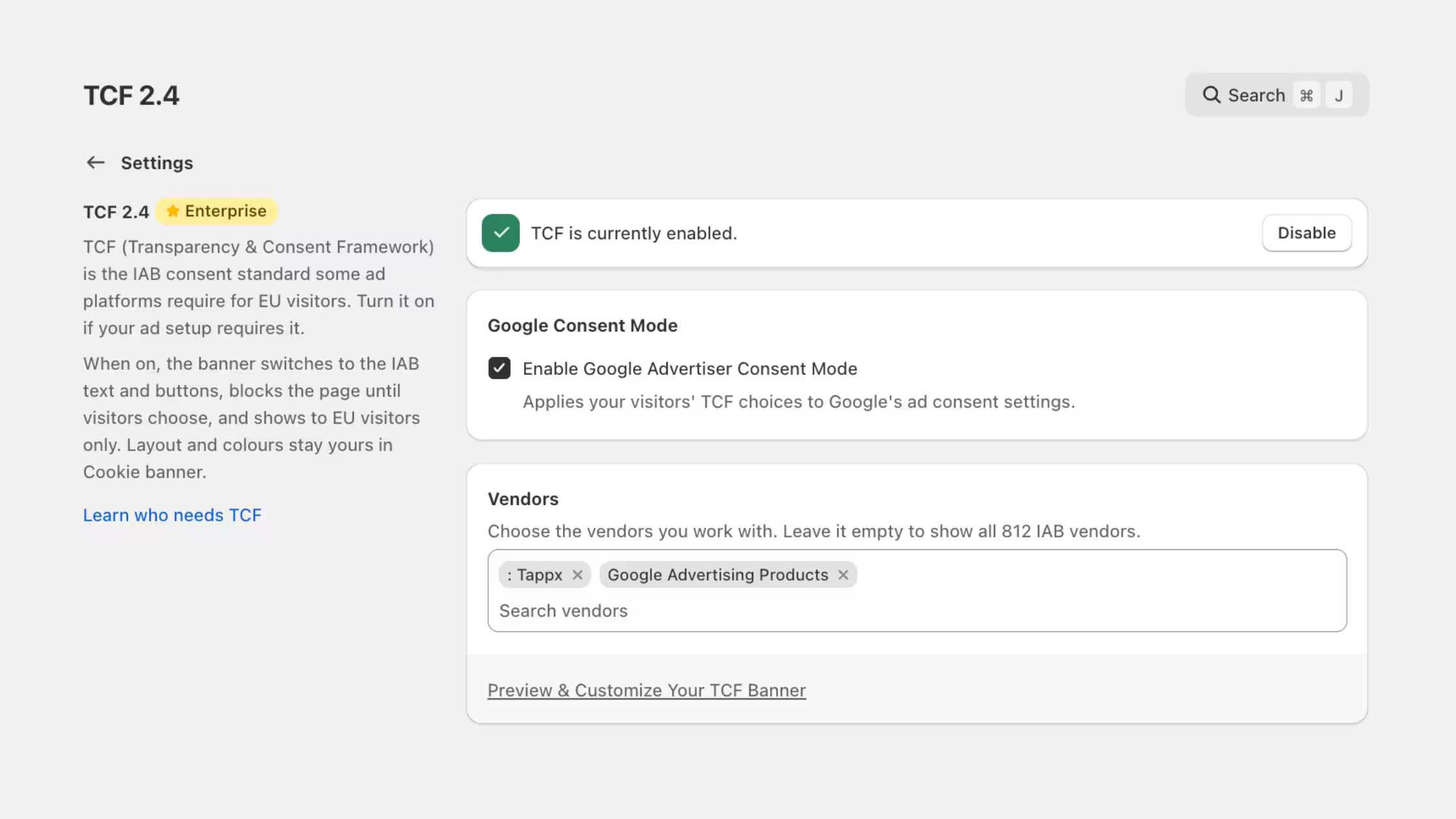
- Vendor selection, the TCF on/off switch, and the Google Consent Mode bridge stay where they are
- Applies to the storefront cookie banner (theme embed, existing script, headless). It does not add a TCF banner to checkout, mobile apps, or connected TV
Quick refresher - what TCF does
The IAB Europe Transparency and Consent Framework is the shared standard between websites, CMPs, and many ad platforms in Europe.
When a shopper makes a choice on a TCF banner, that choice is encoded into a TC string. Vendors and platforms read the string to decide whether they may process personal data for advertising, measurement, and related purposes.
TCF is an industry framework. It sits on top of GDPR and ePrivacy rules. It does not replace them.
What is new in TCF 2.4
IAB Europe published TCF Policies amendments covering multi-device consent, UI improvements, and Special Feature 2 clarification, then confirmed the Policies v5.0.b and Specifications v2.4 timeline for CMPs and vendors (CMP & Vendor Notifications).
TCF 2.4 is mainly a clarity and policy update on top of TCF 2.3. It is not a full rebuild of the TC string model merchants already use.
Clearer Feature disclosures
Ordinary Features describe how data is processed for purposes the visitor already chooses. They are not a separate yes/no.
On the second layer of the banner, each ordinary Feature now includes:
- the official IAB explanation
- a short example
Those texts come from the IAB vendor list, in the visitor’s language. Consentmo does not write or shorten them, and merchants cannot edit them.
Ordinary Features still do not have a toggle.
Updated Special Feature 2 wording
Special Features still require opt-in.
Special Feature 2 now uses the official IAB name:
Identify devices based on information actively requested
Guidance under TCF 2.4 clarifies how this relates to information such as Client Hints when used for fingerprinting-style device identification. The name and explanation visitors see follow the IAB text.
Cleaner vendor signals
TCF 2.3 already required the disclosedVendors segment so the string records which vendors were actually shown.
TCF 2.4 removes the legacy legitimate-interest workaround that some Special Purpose-only vendors used. Their disclosure path is the disclosedVendors segment that was already mandatory. That keeps vendor signalling cleaner for platforms that parse TC strings.
Clearer cross-device rules (policy, not a new Consentmo sync)
Where a publisher or CMP shares privacy choices across devices, TCF 2.4 expects users to understand the scope of that choice, and expects a clear approach when device-level and account-level choices conflict.
That is a policy update. It is not automatic activation of consent syncing across phones, browsers, or customer accounts.
Consentmo does not sync TCF choices across devices or customer accounts in this release. What Consentmo can do, when you already use it, is cross-domain consent sharing on the domains you configured (see below).
What shoppers see
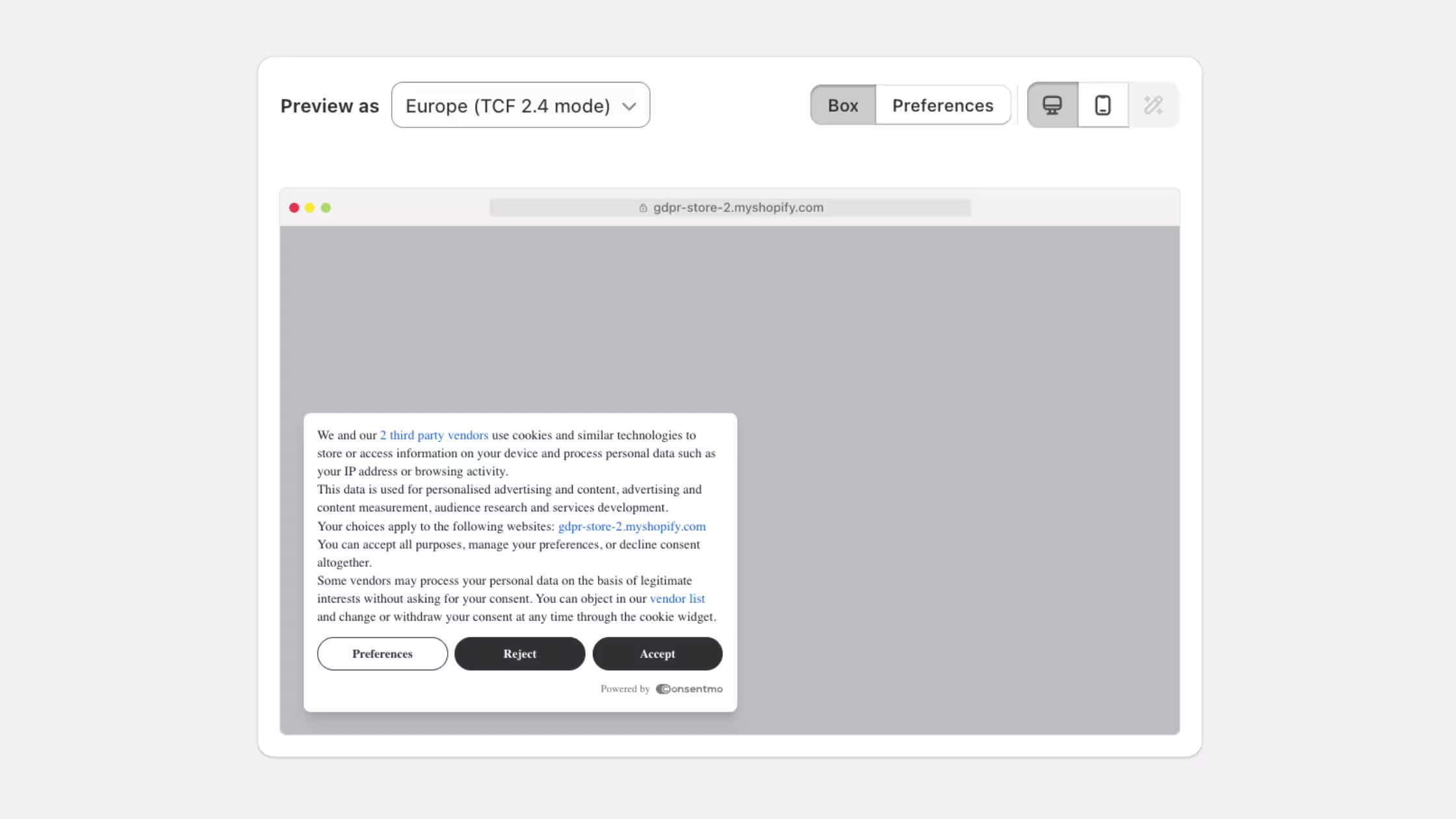
On stores with TCF enabled:
- First-layer purpose choices work as before
- Second-layer ordinary Features show IAB explanations and examples
- Special Features still use opt-in, with the updated Special Feature 2 name
- Visitors who already made a choice are not asked again only because the version changed
- Their saved choice stays until it expires, or until they change it or withdraw it
- A new choice is stored under the 2.4 rules
Visitors still see the banner when a choice is missing, expired, or withdrawn. Do not read “existing choices are kept” as “the banner never appears again.”
What merchants need to do
Nothing, if TCF is already on.
- Vendor selection stays where it is
- The TCF on/off switch stays where it is
- The Google Consent Mode bridge stays where it is
- Purposes are not removed
- The settings screen can show TCF 2.4
Consent duration stays editable. While TCF is on, the stored choice cannot last longer than 365 days. A shorter duration you set is kept.
Cross-domain consent sharing
If cross-domain consent sharing is already on, and the current site is in that domain list:
- a new TCF choice can apply to those domains
- the first layer names the domains
- a choice made for one site only is not copied onto another domain
This is domain-list sharing for the sites you configured. It is not consent across phones, browsers, or customer accounts.
Scope of this release
TCF 2.4 in Consentmo applies to the cookie banner on the storefront:
- theme embed
- the existing script
- headless setups that already use the Consentmo TCF banner
It does not add a TCF banner to:
- checkout
- mobile apps
- connected TV
Admin preview vs live banner
The admin preview is still a separate screen. Do not treat the preview as a pixel-perfect copy of the live storefront banner.
Why this matters for merchants
TCF 2.4 is less about a new look and more about clearer disclosures and cleaner signals:
- shoppers get standard Feature explanations and examples from the IAB list
- Special Feature 2 wording matches current IAB guidance
- vendor disclosure stays aligned with the disclosedVendors rules from 2.3, without the old Special Purpose workaround
- merchants who already run TCF stay on track for the IAB web deadline without a manual migration project
Quiet compliance updates are the goal. Your ads and analytics partners still need valid, current consent signals; your team should not need a rebuild every time the framework revises labels and disclosure rules.
Merchant impact at a glance
Final takeaway
TCF 2.4 tightens how Features and Special Feature 2 are explained, cleans up a legacy vendor signalling path, and clarifies multi-device policy expectations. Consentmo already applies the storefront update for merchants who use TCF.
If TCF is on, you are on 2.4. Review vendor selection and cross-domain settings only if your ad stack or domain list changed. You do not need a separate “upgrade project” for the framework version itself.
Open your Consentmo dashboard to confirm TCF is enabled, or contact support if you want a second pair of eyes on vendor lists before peak traffic.