For years, ecommerce merchants treated cookie compliance as a visual task: install a banner, provide an "Accept" button, and store a basic interaction log in a database.
Under current regulatory enforcement and evolving case law, collecting consent is only half the requirement. The more demanding test is whether your business can demonstrate how that consent was obtained when challenged.
Understanding the legal landscape, recent enforcement trends, and concrete operational use cases shows why maintaining verifiable consent evidence has become a core requirement for online brands.
The Legal Foundation: Where the Burden of Proof Comes From
Privacy frameworks in Europe and the UK do not assume compliance; they demand demonstrable accountability.
The ICO's Evidentiary Standard
The UK Information Commissioner's Office (ICO) provides clear guidance on what constitutes an acceptable consent record. The regulator explicitly advises organizations to document:
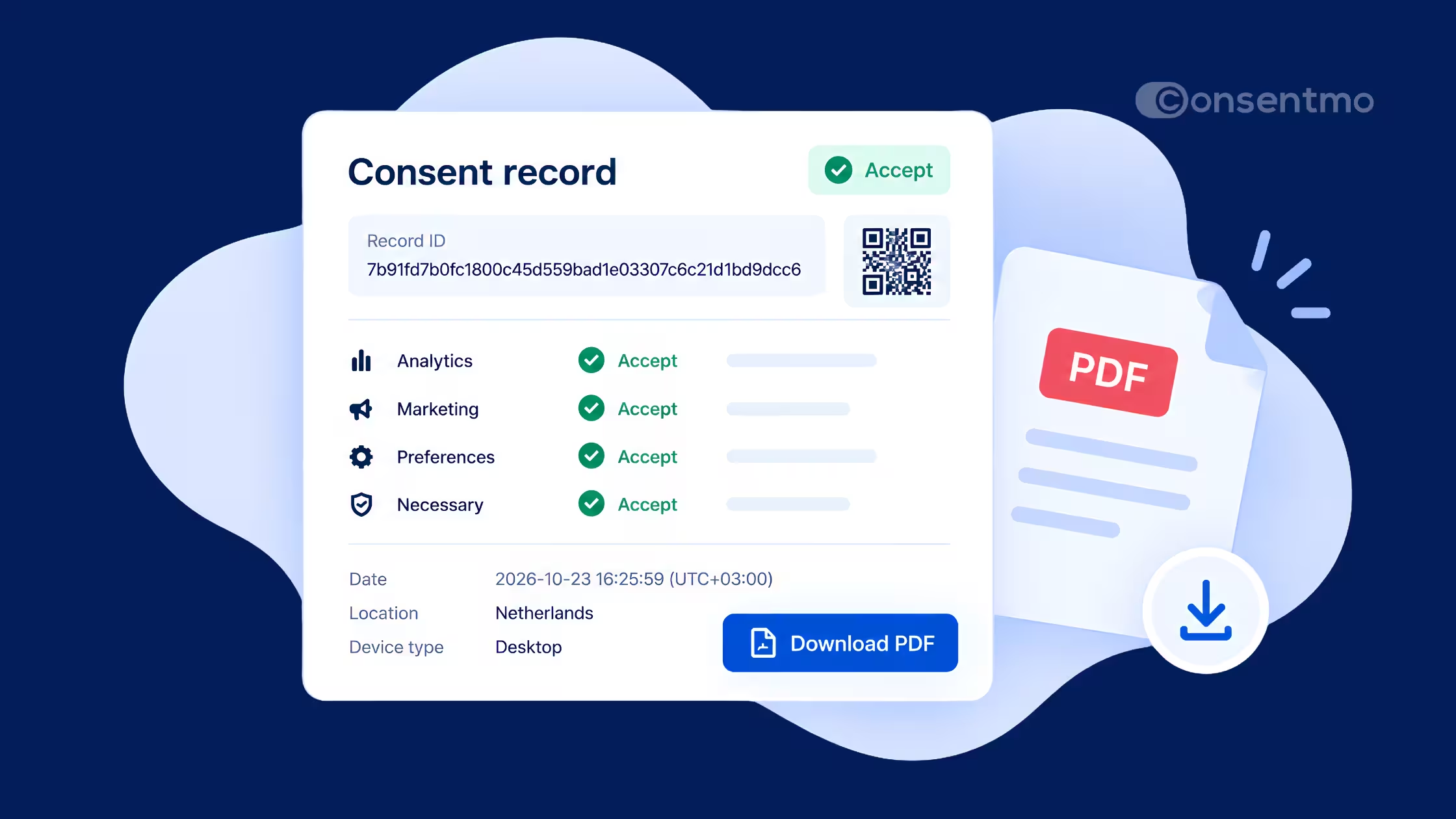
- Who consented: Identifiable session context (such as a masked IP, country, device type, and record ID).
- When consent occurred: A verifiable timestamp with timezone data.
- What the user was told: The exact text, language, and policy links shown on the banner at the time.
- How consent was given: The affirmative action taken (full acceptance, rejection of non-essentials, or custom category selection).
- Whether consent was later modified: An audit trail showing preference updates or withdrawals.
The ICO highlights a common compliance pitfall: linking to a live privacy policy does not prove what a visitor saw months earlier. Because policies and cookie disclosures change over time, compliance reviews require historical records of the specific banner version active on the date of consent.
What Recent Enforcement Actions Reveal
Regulatory penalties and court proceedings in Europe and the United States illustrate why consent records without interface context leave companies exposed.
1. French CNIL: Information Architecture and Tracker Timing
In September 2025, France's data protection regulator (CNIL) issued major penalties against SHEIN (€150 million) and Google (€325 million). While the matters involved multiple practices, core findings targeted cookie mechanisms:
- Ad trackers firing before visitors had an opportunity to choose.
- Interfaces that made refusing cookies harder than accepting them.
- Incomplete or misleading descriptions of what trackers did.
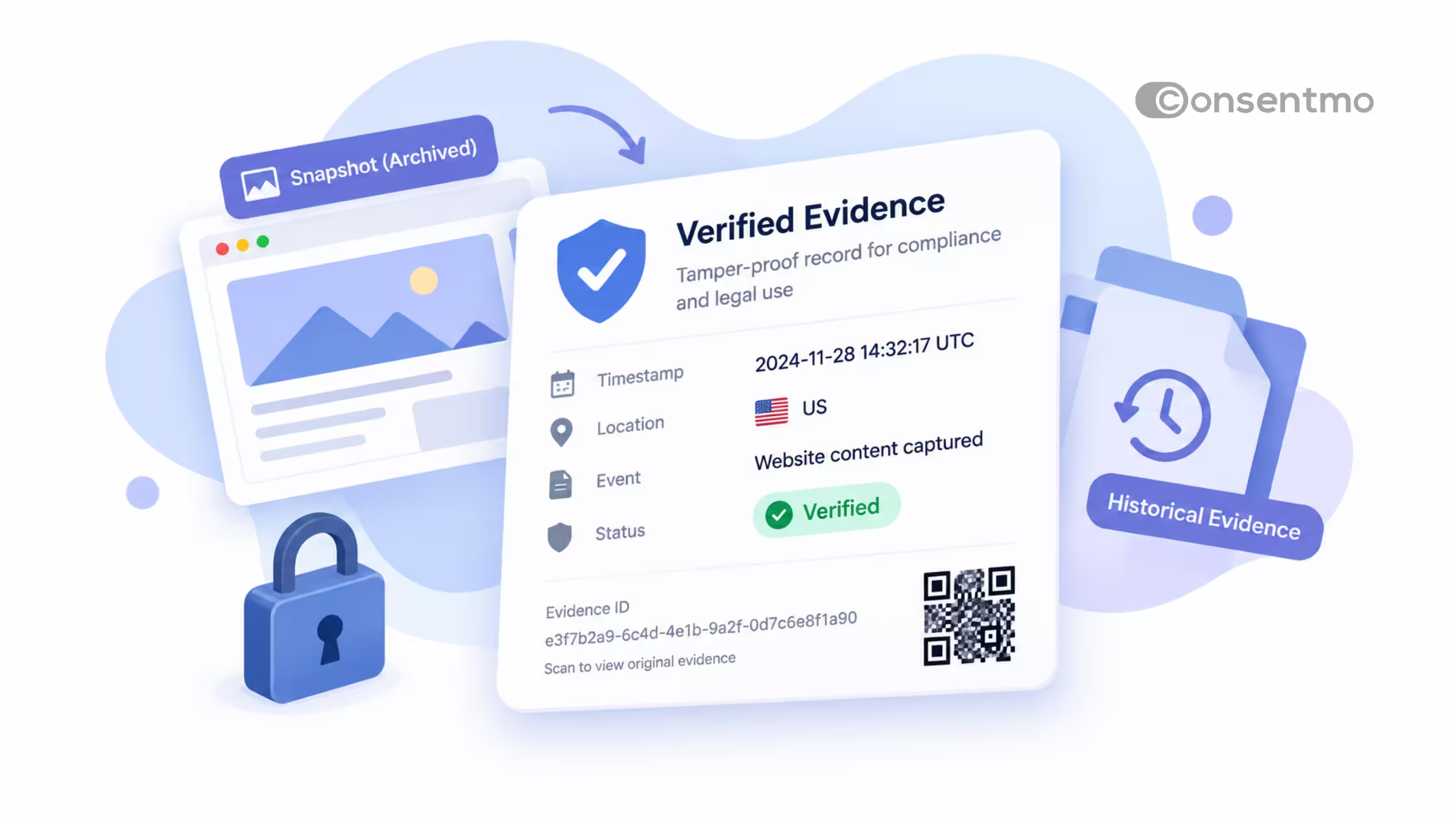
In formal guidance, the CNIL specifically notes that timestamped screenshots of consent interfaces and records of CMP configurations serve as acceptable proof of how consent was collected. Having a historical record of the exact banner layout and wording protects businesses against claims that their interface misled users.
2. UK Courts: Direct Marketing and Tracking Disputes
In the UK, privacy litigation regarding cookies and user profiling (RTM v Bonne Terre Ltd and Hestview Ltd) demonstrates that courts closely inspect the physical presentation of choices. When a claimant alleges they did not grant valid consent, the legal debate centers on what options were displayed, whether consent was freely given, and how choices were recorded. A simple server log showing a boolean flag provides little defense if the merchant cannot reproduce the interface behind it.
3. California & CIPA Tracking Claims
In the United States, website operators continue facing class-action litigation under state privacy acts and wiretap statutes (such as the California Invasion of Privacy Act, or CIPA). Plaintiffs allege that technologies like Meta Pixel, analytics tags, and session-replay software intercept customer interactions without consent.
In Javier v. Assurance IQ (9th Cir. 2022), the appellate court held that consent collected after alleged interception could not retroactively validate earlier recording. A timestamped record showing an affirmative choice made before specific scripts loaded provides crucial documentation for legal defense teams.
While California enacted SB 690 on September 30, 2026 (limiting private rights of action for certain website-related claims under CIPA Section 638.51 beginning January 1, 2027), broader statutory exposure under Sections 631 and 632 remains. Storing clear proof of affirmative notice and consent remains standard practice for US-facing storefronts.
8 Real-World Use Cases for Verifiable Consent Evidence
Maintaining historical Proof of Consent resolves practical friction across everyday business operations:
1. Responding to Formal Regulatory Audits
When a supervisory authority (such as the CNIL, the UK ICO, or an Irish DPC inquiry) requests evidence of storefront consent mechanics, merchants must demonstrate how consent was captured across specific date ranges. Verifiable records provide individual inspection sheets showing the exact banner model, text, and affirmative selections.
2. Resolving Customer Privacy Complaints
When a customer complains that they received retargeted ads or promotional tracking without permission, support and compliance teams can look up the interaction by session ID, date, or region. Demonstrating that the visitor explicitly enabled the Marketing category on a specific date resolves disputes quickly.
3. Preparing Legal Defense for Demand Letters
Receiving a demand letter alleging unauthorized cookie placement requires immediate factual investigation. Counsel needs to verify whether the visitor consented, what notice was active, and whether non-essential categories were blocked prior to that interaction.
4. Defending Past Banner Iterations
Storefronts continuously update their branding, theme copy, and design. If a complaint arises regarding an interaction from six months prior, current banner settings are irrelevant. Historical snapshots prove what wording, buttons, and layout were displayed on that date.
5. Multi-Regional Inquiries
Brands selling internationally run different consent models based on visitor location (such as Explicit opt-in for the EU/UK and notice-based models for other markets). Verifiable records capture country-level routing alongside the consent model applied, confirming that each visitor received the appropriate regional configuration.
6. Corporate Due Diligence and Partner Reviews
Enterprise partners, wholesale buyers, payment processors, and acquiring entities frequently conduct third-party vendor assessments. Being able to export verifiable consent documentation validates that the store manages consumer data responsibly.
7. Handling Data Subject Access and Rectification Requests
Under GDPR Article 15, individuals have the right to request information regarding how their personal preferences are processed. Verifiable documentation provides a clear timeline of recorded decisions for that session.
8. Documenting Pre-Consent Blocking States
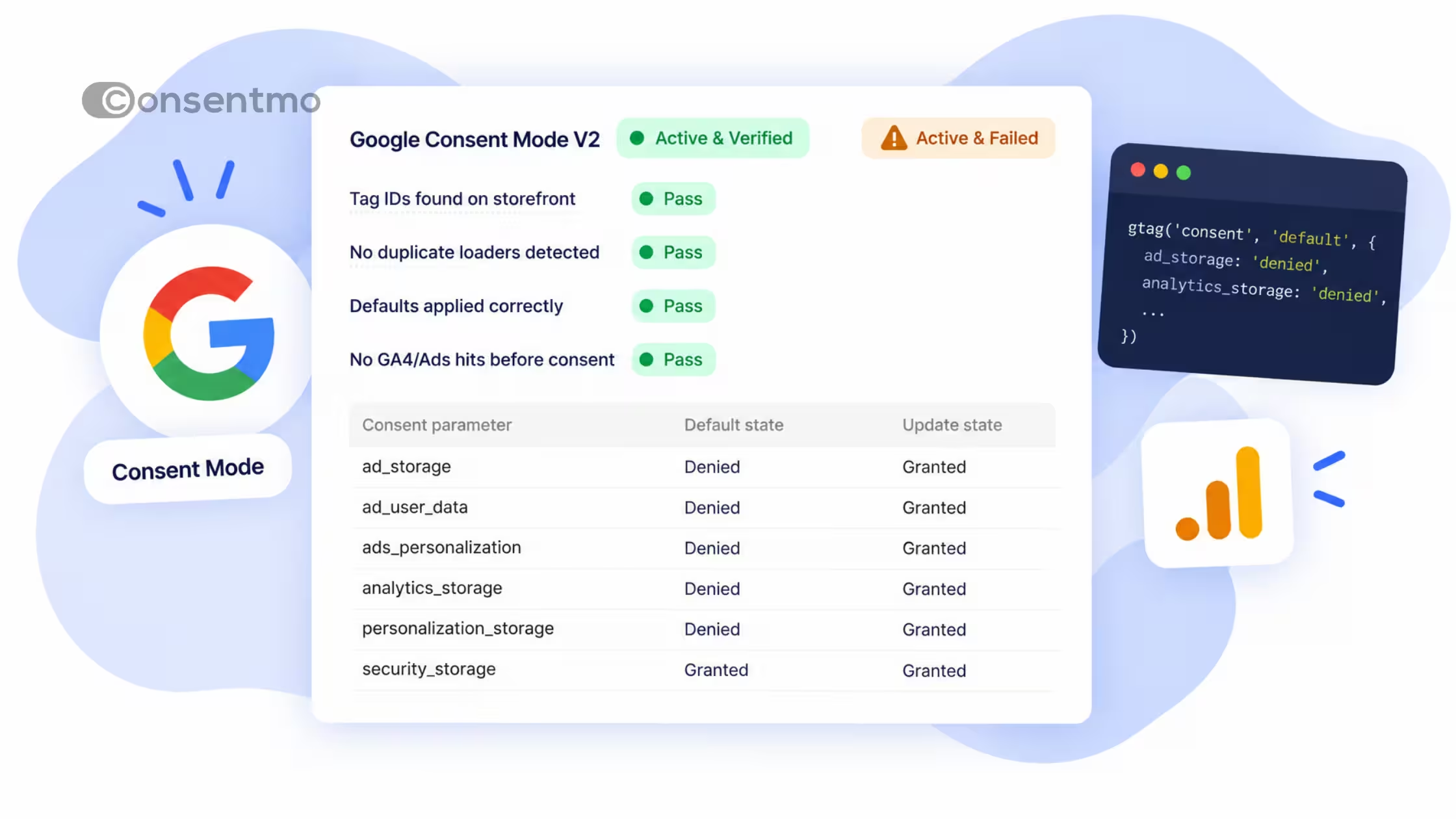
A core regulatory standard is that non-essential scripts must remain inert until affirmative consent is given. Verifiable logs document the technical baseline, confirming which cookie categories were enabled before and after the visitor interacted with the banner.
Two Halves of Storefront Compliance
Complete compliance requires addressing both intent and execution:
- Storefront Execution (Consent Monitoring): Real-time verification that your theme, scripts, and tracking tags actually respect user choices on the live storefront.
- Accountability & Evidence (Proof of Consent): Tamper-evident records showing what the visitor was told, what they selected, and how the banner appeared when they made their choice.
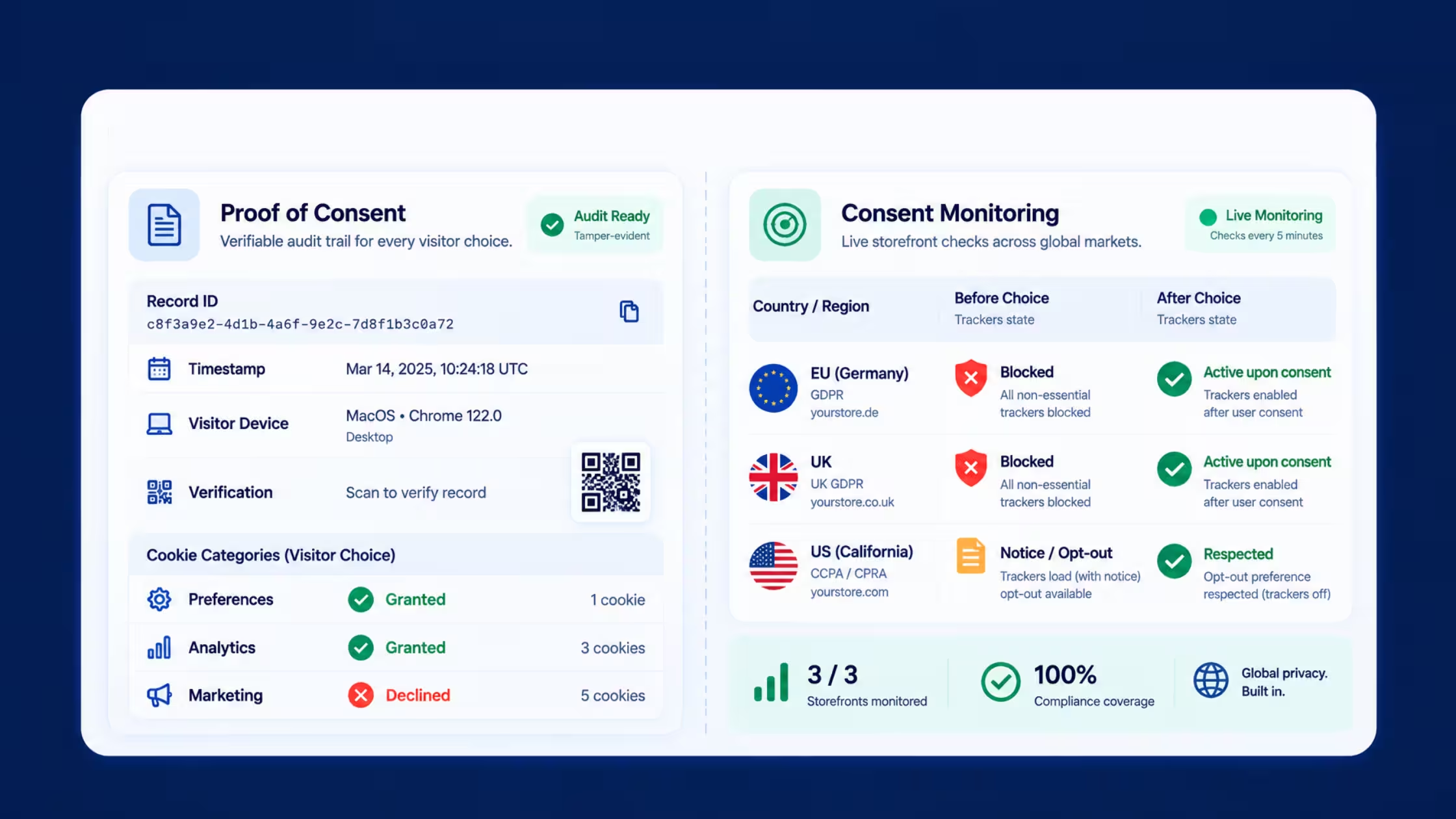
Stores using Consentmo on Shopify can access full Proof of Consent documentation on the Max plan under Analytics & Reports → Analytics → Consent records, with verifiable PDF downloads, QR-code validation, and automatic Google Drive backups. Max plan also included Consent Monitoring.
Conclusion
Data protection rules require more than a compliant banner design. When regulators, auditors, or customers ask how your store handles personal data, having verifiable evidence of what each visitor saw and selected protects your brand from unnecessary dispute.
Combining real-time storefront monitoring with historical consent documentation gives your team complete visibility over consent management, from first visit to audit response.