You've set up your influencer program. Influencers are posting. You check your dashboard and the numbers look... underwhelming. Sales are trickling in, but nothing close to what you expected.
Before you blame the influencers or kill the program, pause. There's a good chance the problem isn't the content or the influencers. It's that your tracking is broken, and you don't know it yet.
How Influencer Tracking on Shopify Works
Most Shopify brands track influencer performance in two ways:
- Discount codes: Each influencer gets a unique code. When someone uses it at checkout, you can see exactly how many sales that influencer drove.
- UTM links: Each influencer gets a unique URL. When someone clicks it, the visit gets tracked in your analytics. If they convert, you know which influencer brought them in.
When both are working correctly, you get a clear picture. Who's driving traffic, sales and what does your return on ad spend look like.
Tools like SARAL pull all of this into one place: revenue per influencer, conversion rate, cost per sale, and average order value. You can see exactly which influencers are worth scaling and which ones aren't pulling their weight.
That's the theory.
Here's where it breaks in practice:
The Cookie Consent Problem
What most brands don't realize: UTM tracking relies on cookies. And on Shopify stores — especially those selling to EU customers — visitors are shown a cookie consent banner before any tracking fires.
When a visitor clicks an influencer's link but declines cookie consent:
- The UTM data doesn't get recorded
- The visit shows up as "direct" traffic or disappears entirely from your reports
- If they convert, the sale gets attributed to the wrong channel or nowhere at all
So your influencer program looks like it's underperforming.
You start questioning whether influencer marketing even works.
You pull back the budget. And you lose a channel that was driving results because you couldn't see it.
Here’s what’s happening technically.
When someone clicks an influencer’s UTM link, analytics tools like Google Analytics, Meta Pixel, or Google Ads try to store attribution details in first-party cookies inside the visitor’s browser.
Under GDPR and the ePrivacy Directive, analytics and marketing cookies cannot be placed before the user gives consent. The same logic applies under Google’s EU User Consent Policy if you’re running Google Ads, and under CCPA or CPRA when it comes to certain data uses and opt-outs.
So if your Shopify store blocks tracking until consent and a visitor declines cookies - or ignores the banner entirely - the UTM parameters never get stored. The session cannot be tied back to the influencer. The pixel doesn’t fire. The conversion isn’t attributed.
From your dashboard’s perspective, that traffic may show up as “direct,” “unassigned,” or not be recorded at all.
The influencer still drove the visit. The consent layer simply prevented the attribution cookie from being written.
That’s compliant behavior - but it creates a visibility gap most brands don’t account for.
What Cookie Consent Costs Your Influencer Program
This isn't a data hygiene problem. It has real business consequences.
- You can't tell which influencers are driving revenue. So you can't double down on the right ones. You might even cut an influencer who's performing well because they're not showing up in your reports.
- Your ROI looks artificially low. When half your influencer-driven sales show up as "direct" traffic, the program looks like it's not working. That makes it hard to justify the budget internally, even when the channel is profitable.
- You're making decisions blindly. Without accurate data, you don't know what's working and what's not. So you either overspend on influencers who aren't converting, or you kill a program that was driving growth.
The gap between what's happening and what you can see costs money. And most brands don't realize it's happening until they've already pulled the plug.
How to Fix It
Two things need to work together to get your influencer tracking right.
Fix 1: Improve Your Consent Rate
The higher your consent rate, the more tracking fires correctly. And the more accurate your attribution becomes.
This is where Consentmo comes in.
This is where consent configuration makes a measurable difference.
Consentmo is built specifically for Shopify merchants who need to balance compliance with performance. The goal isn’t to push users into accepting everything. It’s to present consent clearly, load scripts correctly, and reduce unnecessary friction in the process.
A few things directly impact consent rates and tracking accuracy:
First, banner experience. A slow, intrusive, or poorly formatted banner - especially on mobile - increases declines and abandonment. Consentmo’s native mobile banner experience is designed to feel like part of the storefront rather than a disruptive popup. When the experience feels smoother, interaction rates improve naturally.
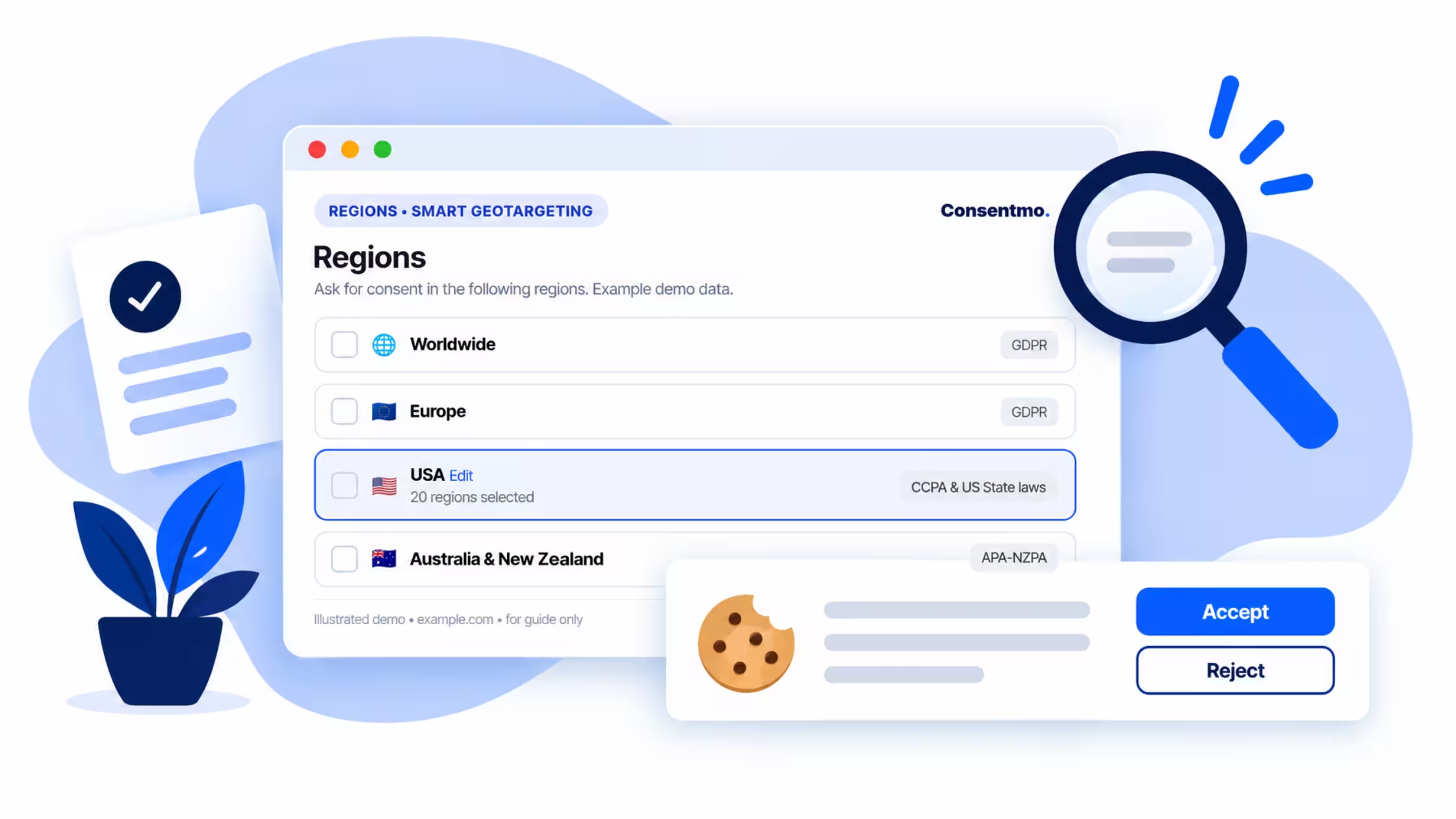
Second, geo-targeting. Not every visitor needs the same banner. Consentmo displays region-specific compliance flows, so EU visitors see GDPR-level consent options while other regions aren’t burdened with unnecessary prompts. That keeps the experience lighter where possible.
Third, proper script control and Google Consent Mode v2 integration. Consentmo blocks analytics and marketing scripts until consent is given, and when a user makes a choice, structured consent signals are automatically sent to Google. This helps preserve modeled conversions while staying aligned with Google’s policy requirements.
Finally, built-in consent records. If regulators or ad platforms request proof, you have logs of what was shown to the user, what they selected, and when. That protects your store while giving you confidence that your tracking setup is compliant.
Higher consent rates won’t eliminate every attribution gap - influencer marketing will never be perfectly trackable - but a properly configured consent layer significantly reduces unnecessary data loss.
Fix 2: Use a Platform That Tracks Beyond UTMs
Even with good consent rates, influencer marketing will never be 100% attributable. It's a word-of-mouth channel. People see a post, save it, and come back days later through a different path. Not every sale clicks through directly.
That's why SARAL tracks performance across multiple signals:
- Discount code usage (doesn't rely on cookies)
- UTM clicks and conversions (when tracking fires)
- Revenue per influencer
- Conversion rate
- Overall ROAS, including the value of the content you're getting
When your consent rate is higher and your tracking is set up in SARAL, you get a clearer picture of what's working.
Not perfect because nothing ever is with influencer marketing, but accurate enough to make smart decisions about where to invest.
What This Looks Like in Practice
For example, a skincare brand sends product to 20 micro-influencers. influencers post. A few discount codes are used. The brand checks their analytics and sees minimal traffic from UTM links.
Why? Half their customers are in Europe. Most of them decline cookies. The UTM data never fires. The traffic shows up as "direct" or doesn't show up at all.
The brand thinks three influencers performed. In reality, eight did, and they missed it.
Now run the same scenario with better consent rates and proper tracking set up in SARAL. The brand can see revenue, conversion rate, and AOV per influencer. They identify their top five performers, move them into an ongoing affiliate program, and scale from there.
Same influencers. Same content. Different visibility.
The Bottom Line
Influencer marketing works for Shopify brands. But if your tracking is broken, you’ll never know it - and you’ll kill a program that was driving results.
The fix comes down to two things working together: a properly configured consent setup that allows compliant tracking to fire when it should, and attribution tools that show you the full picture of influencer performance.
With a consent solution like Consentmo handling compliant script control, consent signals, and record-keeping - and a platform like SARAL tracking performance across multiple signals - you reduce blind spots and make decisions based on data you can trust.
Get both right, and you’ll know where to invest instead of guessing.
For Consentmo users: SARAL is offering $500 off any pricing plan, plus white glove onboarding and strategic check-ins to help you build your influencer tracking system the right way from day one. Book a demo with their team.