What changed in EU cybersecurity (and what it means for Shopify)
The EU has tightened cybersecurity rules on two tracks that often get mixed up in merchant blogs.
- Rules for EU institutions themselves. Regulation (EU, Euratom) 2023/2841 sets a high common level of cybersecurity for Union institutions, bodies, offices and agencies. It entered into force on 7 January 2024. An official EUR-Lex summary explains the governance, risk, reporting, and CERT-EU roles.
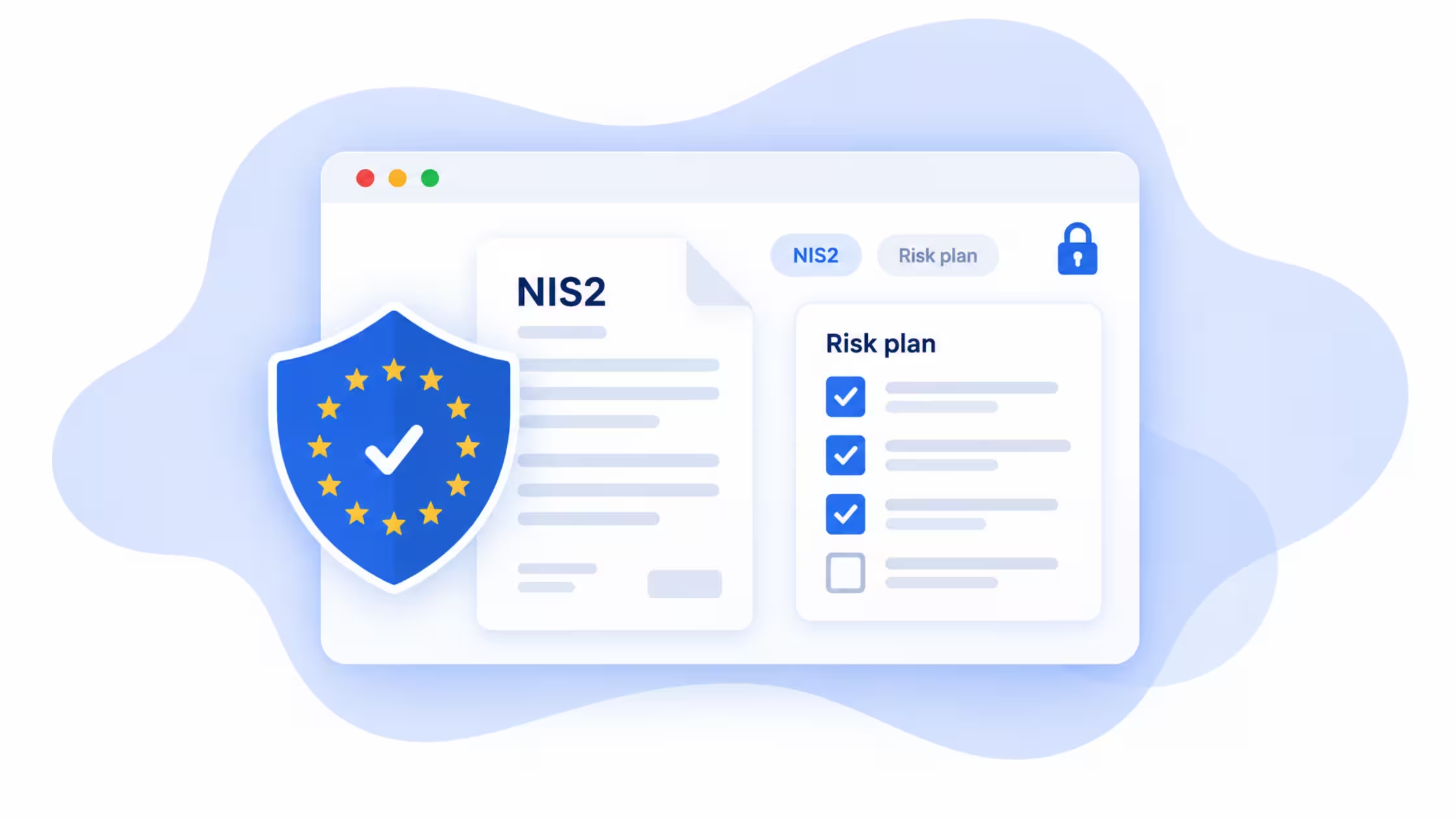
- Rules for critical sectors and many digital providers across the single market. The NIS2 Directive (Directive 2022/2555) raises the EU baseline for network and information security. It replaced NIS1 and applies across 18 critical sectors, with national transposition and supervision.
Most Shopify merchants are not Union entities under Regulation 2023/2841. Many are also not automatically “essential” or “important” entities under NIS2. The value of these rules for store owners is practical: they show what “good” looks like (risk management, incident response, supply-chain attention, management accountability) and they shape the security expectations of payment partners, marketplaces, and enterprise buyers who sell into the EU.
This article is educational, not legal advice. Scope under NIS2 depends on sector, size, and national law. When in doubt, check counsel and your Member State’s competent authority.
Regulation 2023/2841: cybersecurity inside the EU institutions
According to the EUR-Lex summary of Regulation 2023/2841, the regulation aims for a high common cybersecurity level across Union entities. It provides for:
- An internal cybersecurity risk management, governance and control framework in each Union entity
- Risk management, reporting and information sharing
- An Interinstitutional Cybersecurity Board (IICB) and an extended mandate for CERT-EU (Cybersecurity Service for the Union institutions, bodies, offices and agencies)
- Monitoring of implementation
Timetable and core duties for Union entities
The summary sets out a staged timetable (IICB guidelines by 8 September 2024, then entity-level deadlines through early 2026), including:
- Establish an internal cybersecurity risk management, governance and control framework (by 8 April 2025 in the summary timeline), covering the unclassified ICT environment on an all-hazards basis, with regular review
- Appoint a local cybersecurity officer as single point of contact
- Run cybersecurity maturity assessments (first by 8 July 2025 in the summary, then at least every two years)
- Take proportionate technical, operational and organisational measures to manage risk and limit incident impact
- Approve a cybersecurity plan, including cyber crisis management for major incidents, and revise it on a set cycle
Significant incidents and information sharing
An incident is treated as significant when it has caused, or could cause, severe operational disruption or financial loss to the entity, or considerable material or non-material damage to others. Union entities must notify CERT-EU and inform relevant national authorities as soon as possible, within 24 hours of a significant incident, with follow-up reporting. CERT-EU coordinates, shares threat information, and can issue alerts when impact crosses entities.
Personal data processed under this regime must still meet EU data protection rules for Union bodies (including Regulation (EU) 2018/1725, as noted in the summary).
Why merchants should care (even if the regulation is not “about” Shopify)
The institutional rulebook is a clear blueprint:
- Named ownership for security
- Written risk framework and plan
- Regular maturity checks
- Fast incident reporting and coordination
- Security treated as governance, not only IT
Those habits transfer cleanly to a store: staff access, app permissions, backup and recovery, and a simple incident playbook when accounts or customer data are at risk.
NIS2: the wider EU baseline for critical and digital services
The Commission’s NIS2 overview describes NIS2 as a unified framework for cybersecurity across 18 critical sectors. Member States must strengthen national capabilities, adopt national cybersecurity strategies, and apply risk-management measures and incident reporting to a broader set of entities than under NIS1.
Sectors and scope (high level). Beyond energy, transport, health, finance, water and digital infrastructure, NIS2 also covers areas such as public electronic communications, more digital services, waste and wastewater, manufacturing of critical products, postal and courier services, public administration, and space. As a rule, medium-sized and large entities in these sectors must take appropriate cybersecurity risk-management measures and notify national authorities of significant incidents.
Management accountability. NIS2 brings cybersecurity into the boardroom: top management can be held accountable for failures to implement risk-management measures.
Cooperation structures. NIS2 supports CSIRT networks, EU-CyCLONe for large-scale incidents, and the NIS Cooperation Group (Member States, Commission, ENISA) for strategic cooperation and non-binding guidance.
Timeline. NIS2 entered into force in January 2023. Member States had until 17 October 2024 to transpose it. NIS1 was repealed from 18 October 2024. Transposition and enforcement still vary by country; follow national implementation pages and competent authorities.
On 20 January 2026, the Commission proposed targeted NIS2 amendments aimed at clearer rules and simpler compliance for companies operating in the EU (as described on the Commission’s NIS2 page). Watch that package if you operate near the edge of regulated digital or platform services.
Practical takeaways for Shopify merchants under NIS2 thinking
Even when you are outside formal NIS2 scope, the directive’s themes map to store operations:
If you are in a regulated sector (for example certain digital infrastructure or managed service roles), treat NIS2 as a legal obligation, not a blog checklist, and use counsel plus national guidance.
ENISA: guidance you can actually use
ENISA (the EU Agency for Cybersecurity) publishes practical materials for both authorities and private-sector implementers.
A concrete example is ENISA’s NIS2 Technical Implementation Guidance (published 26 June 2025). It supports implementation of cybersecurity risk-management measures for certain digital infrastructure, ICT service management and digital provider entities under Commission Implementing Regulation (EU) 2024/2690, with practical advice, evidence examples, and requirement mappings.
You do not need to be in scope to skim ENISA publications for:
- Risk-management measure patterns
- Roles and skills expectations
- Supply-chain cybersecurity good practices
- Sector guides (for example health) that still teach transferable hygiene
Bookmark ENISA’s publications library and the Commission’s cybersecurity policy hub for strategy context (resilience, operational capacity, international cooperation), including newer packages such as the Cyber Resilience Act and related action plans when they touch products or AI security.
Data protection sits next to cybersecurity
EU institutional cybersecurity rules explicitly keep personal data processing under data protection law. For merchants, the everyday pair is:
- Security: access control, encryption in transit (HTTPS), 2FA, phishing resistance, app hygiene
- Privacy and consent: lawful tracking, cookie banners, preference management, and customer rights requests under the GDPR and related rules
A secure admin account does not fix a storefront that fires marketing tags before consent. A perfect banner does not fix a stolen staff password. You need both.
For baseline store practices (phishing, SSL, VPN, firewalls, 2FA), see Consentmo’s companion guide on essential cybersecurity practices for Shopify stores when that draft is live, or apply the same checklist from your security runbook.
Where Consentmo fits
Consentmo is a Shopify consent and compliance app. It is not a replacement for NIS2 entity obligations, institutional Regulation 2023/2841, network firewalls, or endpoint security.
It supports the storefront privacy layer that sits beside cybersecurity hygiene:
- Region-aware cookie banners and preference controls
- Alignment of marketing tags with visitor choices
- Privacy request flows so customers can exercise access and related rights
- Live monitoring so banner and tracker behaviour do not silently drift after theme or app changes
That matters for EU and UK shoppers under GDPR-style expectations, and it supports the “protect personal data” theme that runs through both institutional rules and commercial compliance. Pair Consentmo with locked-down Shopify staff accounts, 2FA, careful app installs, and a simple incident plan.
Merchant checklist (EU-facing stores)
- Decide whether any part of your business could fall under NIS2 (sector, size, Member State lists). If yes, get specialist advice early.
- Write a one-page incident response note: detect, contain, assess personal-data impact, notify, restore.
- Enforce 2FA on Shopify, email, payments, ads, and DNS.
- Review apps and staff quarterly; remove unused access.
- Keep checkout and admin traffic on HTTPS; avoid mixed content.
- Train anyone with admin access on phishing.
- Run consent and privacy request tooling with Consentmo for EU/UK (and other) markets.
- Skim ENISA and Commission NIS2 pages when your stack or markets change.
Conclusion
EU cybersecurity policy is no longer a single headline. Regulation 2023/2841 hardens security inside Union entities with frameworks, officers, maturity assessments, plans, and fast significant-incident reporting via CERT-EU. NIS2 raises the bar for critical and many digital sectors across Member States, with risk management, reporting, cooperation, and management accountability. ENISA turns much of that ambition into implementable guidance.
For most Shopify merchants, the honest translation is: take the same disciplines seriously on a store scale, stay honest about whether you are in regulated scope, protect personal data on the storefront as carefully as you protect admin logins, and use Consentmo for consent and privacy-request operations while you keep core security hygiene in place.