If you’re running ads in Europe, the IAB Transparency and Consent Framework (TCF) is already part of your stack, whether you actively think about it or not.
With TCF 2.3, the framework tightened the rules around how consent is recorded and validated. Nothing flashy. No visual changes. But very real consequences if your consent data doesn’t line up with the new requirements.
This guide breaks down:
- how TCF 2.3 differs from TCF 2.2
- what changed behind the scenes
- how Consentmo handles the upgrade automatically
- and how TCF 2.3 works together with Smart Geotargeting across regions
TL;DR - TCF 2.3 in one minute
- TCF 2.3 tightens how disclosed vendors must be recorded
- TC strings must now reflect exactly what users were shown
- Invalid or loosely generated consent strings are no longer acceptable
- Consentmo is already fully TCF 2.3 compliant
- No banner changes, no re-consent, no setup required
- Works seamlessly with Smart Geotargeting worldwide
Quick refresher - what TCF actually does
The IAB Europe TCF is a shared language between websites, consent tools, and ad platforms.
When a shopper interacts with your cookie banner, their choice is encoded into a TC string. Ad platforms read that string to decide if they’re allowed to:
- personalize ads
- run measurement
- process personal data at all
If the TC string is invalid, platforms may treat it as no consent, even if a banner was shown.
TCF 2.3 vs TCF 2.2 - what actually changed
Here’s a simple side-by-side to show what TCF 2.3 improves compared to 2.2.
The big shift is accuracy. TCF 2.3 removes ambiguity between what users see and what platforms receive.
.png)
What Consentmo changed for TCF 2.3
Consentmo has been fully upgraded to support IAB TCF 2.3, aligned with the latest IAB Europe requirements.
Accurate vendor disclosure recording
Consentmo now records which vendors are actually disclosed to shoppers and encodes that information directly into the TC string.
No assumptions. No gaps. What’s shown is what’s recorded.
TCF 2.3-compliant TC strings by default
All newly generated TC strings are fully TCF 2.3 compliant by default, including required disclosed vendor data.
There’s nothing to toggle or configure.
Safe handling of existing consent
Already collected consent stays intact.
When a shopper updates or renews consent, the new TCF 2.3 logic is applied automatically, keeping things compliant moving forward.
Built-in stricter validation
After the IAB enforcement deadline, Consentmo prevents invalid or non-compliant TC strings from being generated at all.
If a consent signal doesn’t meet the rules, it doesn’t get passed downstream.
%2520(1).png)
What did not change
This is the part merchants usually care about most.
- No banner redesign
- No forced re-consent
- No disruption to existing setups
- No additional configuration required
From a shopper’s perspective, nothing looks different.
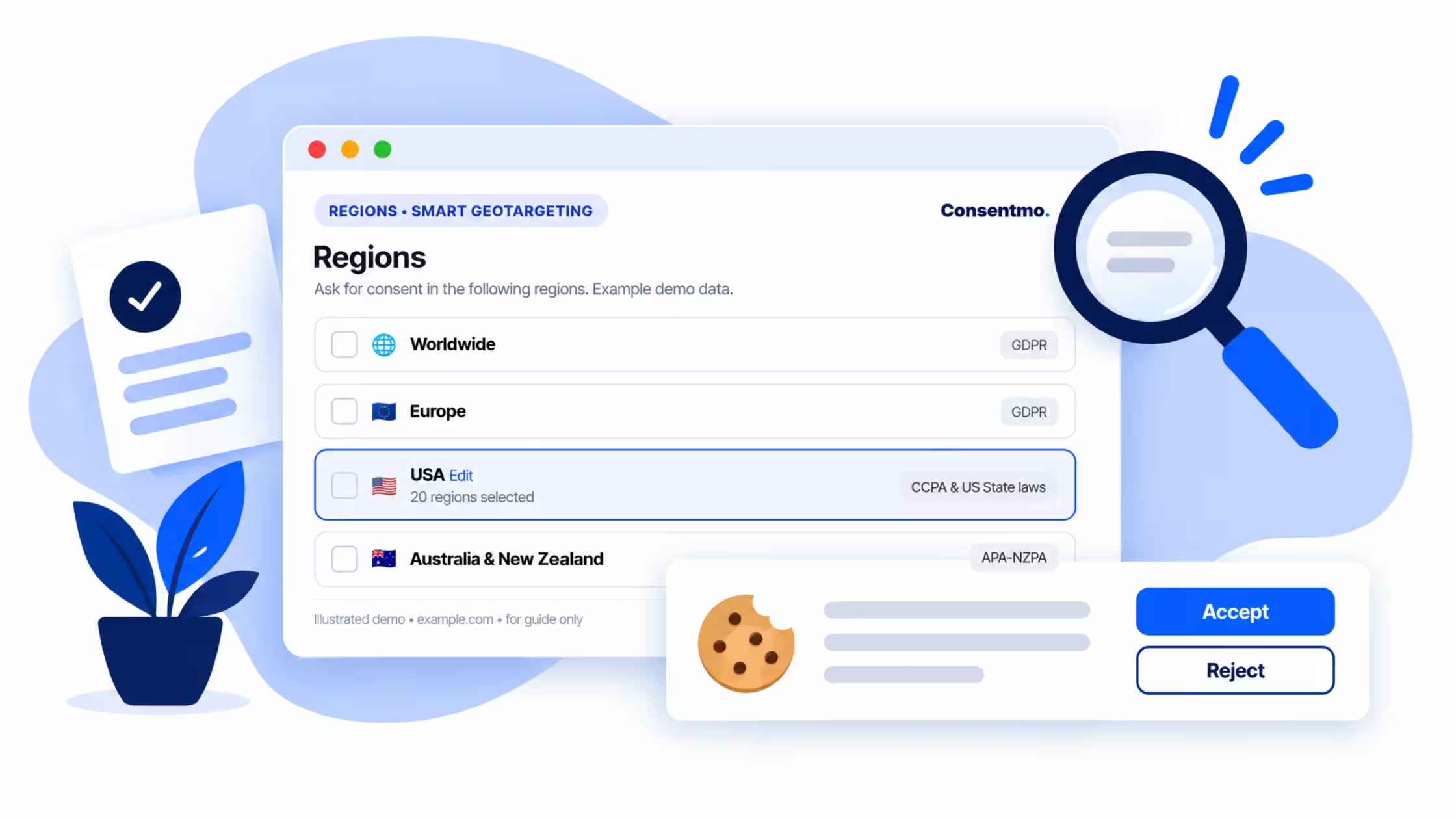
TCF 2.3 + Smart Geotargeting - how they work together
TCF only applies to regions that require it. Your store likely serves customers far beyond Europe.
That’s where Smart Geotargeting comes in.
With Consentmo:
- Europe sees a TCF-compliant banner using TCF 2.3
- United States sees CCPA / CPRA consent models
- Canada sees PIPEDA-style consent
- Brazil uses LGPD rules
- Other regions follow their respective local consent models
Each visitor sees the correct consent experience for their location, while TCF 2.3 runs only where it’s legally required.
There’s no need to manage multiple banners or frameworks manually. One setup, region-aware behavior.
Why this matters for merchants
Even though TCF operates in the background, it directly affects ads and analytics.
With TCF 2.3 in place:
- consent signals remain valid and accepted by ad platforms
- the risk of rejected or ignored consent data drops
- your store stays aligned with industry enforcement
- compliance updates happen without adding friction
This is the kind of upgrade you want handled quietly.
Merchant impact at a glance
- Fully automatic upgrade
- Invisible to shoppers
- Works with Smart Geotargeting
- Available across eligible plans
- Set-and-forget compliance improvement
Final takeaway
TCF 2.3 isn’t about changing how your banner looks. It’s about making sure the consent you collect actually holds up when platforms read it.
Consentmo already takes care of that in the background, while Smart Geotargeting ensures every visitor sees the right consent model for their region.
If you’re advertising in Europe and selling globally, that combination matters.
👉 Want to review your TCF setup or region-based consent flows? Open your Consentmo dashboard or reach out to our team.