Mobile isn’t the future of ecommerce anymore - it’s the present. Globally, more than half of all online shopping now happens on mobile devices, with mobile commerce accounting for around 59% of total ecommerce sales in 2025 and continuing to grow strongly in 2026. (Red Stag Fulfillment)
And this trend isn’t just about volume - mobile users behave differently. They browse faster, make decisions quicker, and abandon sites at the first sign of friction. Every unnecessary step - from slow load times to confusing prompts - increases bounce rates and suppresses conversions.
That’s why we’ve re-imagined Consentmo’s Native Mobile Banner - to minimize friction on mobile and help merchants convert more of the traffic they already have.
TL;DR
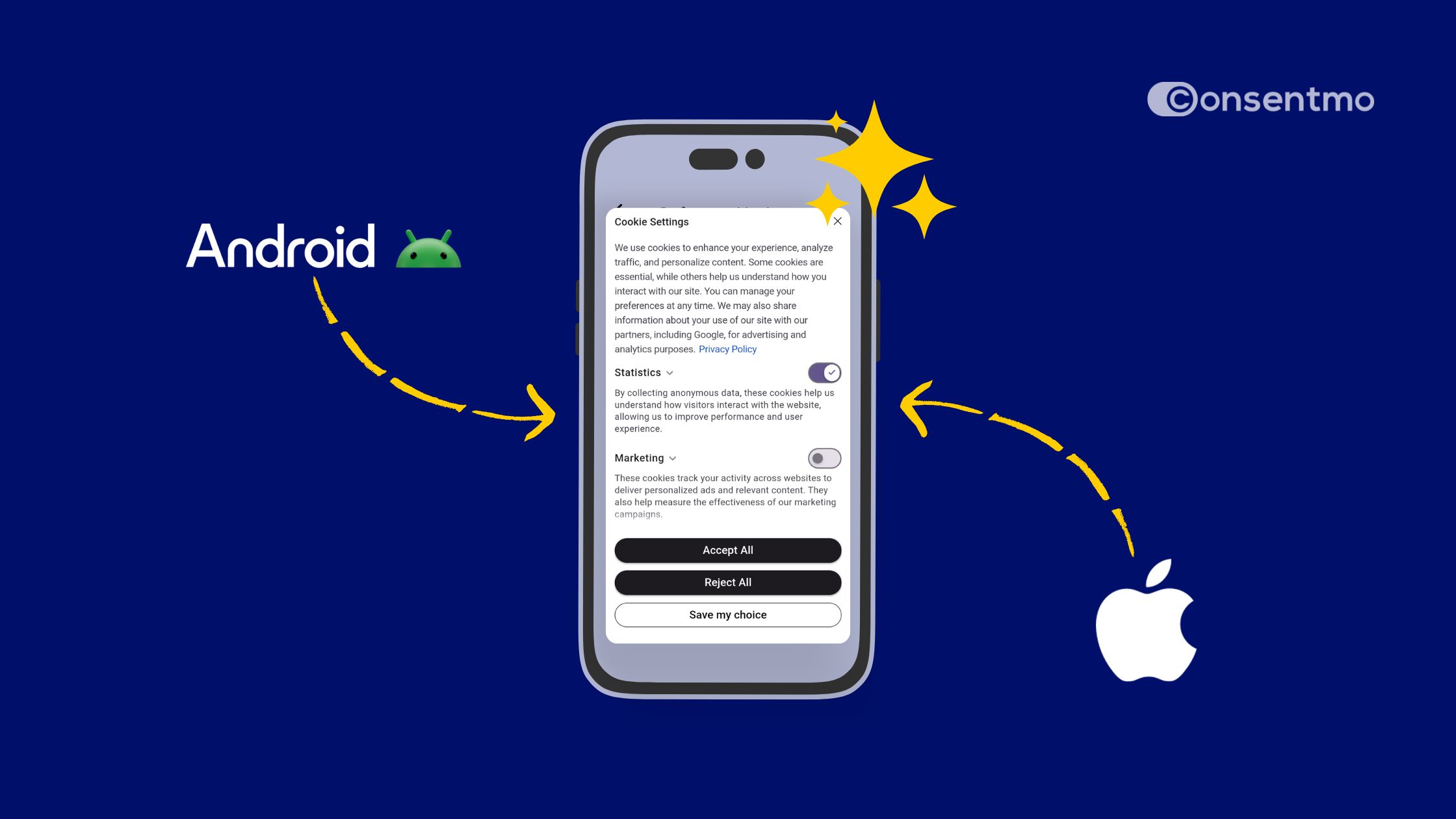
- iOS users now see Liquid Glass-style native system views
- Android users now see Material 3 system views
- Cookie details open directly from the mobile banner (no flow interruptions)
- Fully compatible with Cross-Domain Consent and Google Consent Mode v2
- Refined layout, spacing, and touch targets for all screen sizes
- Automatic upgrade for existing Consentmo users - zero setup needed
Most Purchases Happen on Mobile - So Consent Must Respect the Mobile Context
When nearly 60% of global ecommerce sales occur on mobile devices, any interruption in the browsing flow - even something as small as a cookie banner that feels foreign or clunky - can reduce conversions.
Think about the mobile experience:
- Users scroll with their thumb
- They expect familiar system controls
- They decide fast whether to stay or leave
Standard consent banners - even if compliant - can feel out of place on a small screen. That confusion creates friction: an extra cognitive step that interrupts the browsing flow and increases the odds a user drops off before purchase.
But when consent feels like a familiar part of the mobile UI - something that belongs on the device - people make decisions faster, with more confidence.
The Logic Behind Our Design Decisions
The Native Mobile Banner upgrade fixes a subtle but powerful problem:
📱 Familiar UI reduces hesitation
Mobile users expect native system elements. When something looks and behaves like the OS they use every day (like toggles, spacing, and typography), it feels trusted and clear - and users interact faster.
⚡ Fewer surprises means more conversions
Anything that disrupts browsing - especially on mobile where patience is lower - can drop conversion rates. By aligning consent with the device’s design language, we reduce that disruption.
🔄 Quick cookie management → less friction → better conversion
When users can view cookie details and make choices quickly, they spend less mental effort on compliance UI and more on shopping. That flow matters - because conversion is a funnel of friction.
How This Update Reduces Mobile Friction
Here’s what the upgrade does to make consent feel natural on mobile:
- iOS users see Liquid Glass-style native controls that match system UI
- Android users see Material 3 system views that feel familiar from device settings
- Cookie details are accessible directly from the banner without leaving the flow
- Improved spacing, hierarchy, and interaction targets make decisions easier
- Works with Cross-Domain Consent and Google Consent Mode v2 - even in complex setups
All of this adds up to a smoother mobile browsing experience that respects user expectations and supports better conversion.
Why Switch to Native Mobile Banner?
Building trust on mobile starts with visual consistency. When a consent banner looks out of place, it creates "banner blindness" or, worse, suspicion.
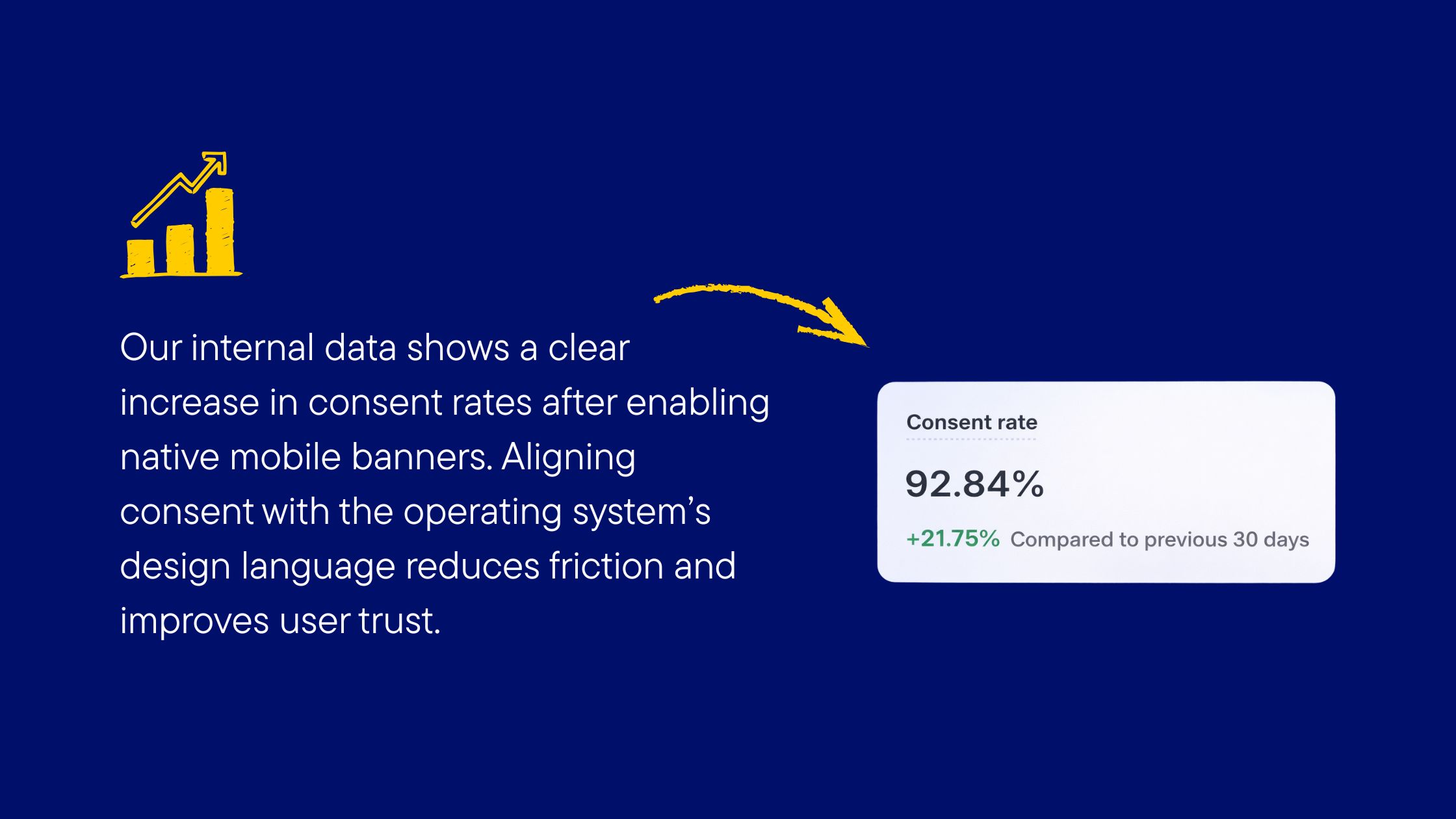
We’ve analyzed our internal performance metrics to see exactly how design affects user behavior, and the results are clear: native styling leads to higher opt-in rates from users.
Based on our internal data, switching to a native mobile banner significantly improves consent rates because it feels like a core part of the device's interface rather than an intrusive third-party pop-up.
By bridging the gap between your website and the user's operating system, you create a more professional and integrated experience. This shift from "interruption" to "integrated feature" is why we see such a positive impact on opt-in metrics across the board.
Implementation Made Easy
As you can see in the Design settings, customization is just a toggle away. You can choose your preferred position—like the bottom of the screen for better thumb reach—and decide whether to include a close button for added flexibility.
For existing users, no action is required. The update has been applied automatically.
.jpeg)
If you’re ready to boost your mobile opt-in rates, you can find these settings under Cookie Banner > Design in your Consentmo dashboard.
Why It Matters for Your Store
Mobile traffic isn’t just big - it dominates. With more people browsing and buying on phones than desktops:
👉 A mobile experience that feels native helps reduce drop-offs
👉 Faster, clearer consent management keeps users engaged
👉 Lower friction increases the likelihood of downstream conversions
In a world where mobile commerce drives the majority of sales, small improvements in user experience - especially in consent flows - can turn into measurable gains in engagement and revenue.
Ready to give your Shopify store a frictionless, native-feeling consent experience? Install or update Consentmo today on the Shopify App Store: https://apps.shopify.com/gdpr-backpack